Friday, November 20, 2009
Afghanistan: Afghanistan’s Gray Line: The Education of “Combat Platoon”
Thursday, November 19, 2009
Film: Terror in Mumbai
Outstanding. This is the kind of film I like, just because it breaks down what happened and allows the viewing public to see first hand how to combat something like this. Knowing is half the battle, and we have to expect that attacks like this will happen again, and in all corners of the world. Get prepared, and study how these things work I say. Be a ‘hero in waiting’, and foil these attacks by being able to recognize the signs and actions of it, and inserting a monkey wrench into the terror machine. That smart phone in your hand, is your weapon, along with anything else you can think of to cause harm to or stop this kind of attack. Or you can coward away, and expect someone else to save you. –Matt
——————————————————————

Synopsis
TERROR IN MUMBAI features exclusive audio tapes of the intercepted phone calls between the young gunmen and their controllers in Pakistan, and testimony from the sole surviving gunman.
The Mumbai attackers’ targets included the city’s main railway station, a popular cafe, two major hotels and a Jewish center. Leaving the city’s iconic Taj Mahal Hotel in flames, and Mumbai’s woefully unprepared police and security forces paralyzed with fear, the attacks sent an ominous message to governments around the world.
“Much as the 9/11 attacks in the U.S. did in 2001, the events that unfolded last November in Mumbai served as a terrifying wake-up call, not just to India but to the rest of the world,” says narrator Fareed Zakaria, who appears on camera in the opening and closing of the film. “It broadened the spectrum of our enemies and brought attention to the number of different terrorist groups that exist, who may be bigger and better organized than we ever imagined. The fact that a small group of gunmen was able to inflict so much pain, and the government of the second most populous nation on earth was unable to stop them for three days, should change our sense of the dangers out there.”
In the words of one of the operation’s masterminds, who remotely controlled the terrorists’ every deadly move by cell phone from neighboring Pakistan, “This was just the trailer. Just wait till you see the rest of the film.” The assailants belonged to the terrorist group Lashkar-e-Taiba, or “Army of the Righteous,” which aims to “liberate” Muslims living under Indian rule in Kashmir. Their mission: global jihad against the “infidels.”
TERROR IN MUMBAI presents a moment-by-moment account of the horrific attacks through interviews with survivors and Indian police officials, archival news coverage, extensive video surveillance footage of the terrorists in action, and chilling audio excerpts of cell-phone conversations intercepted by security forces. The phone intercepts provide a grotesque running commentary as the controllers, watching events unfold on live TV, direct the gunmen, telling them where the security forces are, which of their hostages should be killed and how to do it. With the killers wounded and asking what to do next, the tapes reveal the controllers calmly urging them to fight to the death and not allow themselves to be taken alive.
Guests from the Taj Mahal and Oberoi hotels tell how the terrorists first staged mass executions, then worked their way through the corridors, killing whenever they managed to enter a room. An elderly couple recounts how they were spared by the terrorists when it was realized they were fellow Muslims, while all around them were mowed down in a hail of bullets. Perhaps the most unsettling testimony comes from Ajmal Amir Kasab, the sole surviving terrorist, who answers his captors’ questions with startling frankness from a gurney soon after being captured.
While the Mumbai attacks differed in many ways from the Al Qaeda assault on the U.S. on September 11, 2001, the personal motives of the Laskar-e-Taiba terrorists bear some of the same hallmarks, notably the belief that there would be material wealth for their families and heavenly glory for themselves if they died for the cause of jihad.
What remains unclear is how this quest for holiness meshed with the indiscriminate nature of the killings, which mowed down Muslims and non-Muslims alike.
Film: The Surge, The Untold Story
Industry Talk: FedBizOps–Security Guard Contracts for FOB Lightening, Wilderness, Herrera, and Zormat in Afghanistan
Interesting news, and I will let you know who picks up what for this. Part of the deal for these contracts is that part of the security has to come from local nationals that live in the area. This can work, if it is done properly and is actually managed well by whatever company has taken this on. The benefits of hiring locally is that guys tend to protect their cash cow, or the job that feeds their family. So it benefits them to know about any bad guys in the area. These local guards can also help to feed the base with any local info about IED’s or bad guys in the area. But that only works when you actually engage with your guards and work with them. If you treat them as if less than, then of course there won’t be any info obtained.
These guards can also identify bad guys within the worker units coming onto the base to do work. They will know who is local and who the foreigners are, so it is smart to really work with these guards and treat them with respect. More than likely though, these guards will first and foremost show loyalty to the local tribal chief, so it is important that the company works with that individual as well. Nothing new, but it all can go pear shape if you don’t be careful. The big one is just stay engaged with everyone.
If you are a guard force supervisor, you should be checking up on your guys often, learn a little language, and apply some Jundism to your connections. Know your stuff, have the courage to do what is right, and most of all, take care of your people. And that goes for the company as well. Do not hamstring your guard force commanders, by not giving them the tools necessary to be good leaders.
The kind of tools I am talking about are disciplinary tools (the ability to fire folks, or punish by withholding pay), or giving them the time and money necessary to train or equip their guard force. You are asking a lot of your guard force commanders, the least you can do is back them up and give them everything they need to succeed. Don’t be marshmallow eaters and take the easy way out by signing on to contracts that don’t allow for that kind of support for your guard force commanders. Or by purchasing crap equipment or weapons. pffft.
These men and women you put in charge of the local national forces, are the backbone of your contract–you should treat them as such, because the security of that FOB rides on their ability to effectively lead. Better yet, take the time to pick guard force commanders that will do a good job for you, and trust-yet verify that they are doing a good job for you, and stay involved with what is going on out there. Or you can pull a AGNA, and watch your company become the embarrassment of the industry. –Matt
——————————————————————
From FedBizOps (click on the blue links)
Air Force-Afghan Security Guards – FOB Lightening
Solicitation Number: W91B4P-10-R-0014
Agency: Department of the Air Force
Office: United States Air Force Europe
Location: 48 CONS/LGC – Lakenheath
Army-Afghan Security Guard Services – FOB Wilderness, Herrera, Zormat (WHZ)
Solicitation Number: W91B4P-10-R-0015
Agency: Department of the Army
Office: Joint Contracting Command, Iraq/Afgahnistan
Location: SALERNO RCC
Building Snowmobiles: Using Social Media To Win the Fight
It’s been awhile since I posted a good Building Snowmobiles article, and I think I might have stumbled upon something with some meat. Or at least I hope. So with that said, here it is. Instead of chastising ‘citizen journalists’, we should instead encourage what good citizen journalism should be, and better yet, encourage the kind of reporting that would help us to win the fight in whatever battle we are fighting at the time. That battle could be a flood, a fire, a terrorist attack, or even some crazy Black Swan type event. To not take advantage of the human nodes that are closest to those events, is like not taking advantage of the high ground in a battle.
I will even take this a step further. The Department of Homeland Security should actually have Incident Command Teams established to work with and manage the information coming in from these nodes. Citizens with smart phones, who are savvy with Twitter and Facebook, or a personal blog, should be tapped into and we should work with them, as opposed to ignoring or fearing what they have to say. And if we were proactive, DHS could promote what good reportage is and what they are trying to do in these emergencies. It would take commercials and online marketing to get the word out, but once the online community in the US knows the protocols, I think the impact for future incidents would be amazing.
This Incident Command Team could be collecting real time information in a sort of social media fusion center, and that team would be sorting through the information using data mining, cloud computing and any other various methods. The emphasis would be on information engagement, not information control. Especially if the Incident Command Team had a online presence on Twitter and Facebook, or a Team or Incident website. I have seen websites that IC Teams have put up before for fires, so this is not new.
There is so much information coming in from these incidents, and with a little help and guidance to all of these citizen journalists walking around on the scene of the incident, we could be getting some life saving information to the first responders. And with the advent of everyone carrying smart phones, with cameras and microphones built into them, along with access to the internet, then the possibilities are endless. In essence, these citizen journalists should be looked at as walking human sensors or social media warriors, feeding the war room with the kind of information needed to gain the advantage in a quickly evolving fight. A fight that is taking place in the physical, with wounded and dead, and a fight taking place online where the impact of that carnage is being used to fuel a propaganda campaign.
The IC Team could be feeding information to law enforcement agencies that are responding. The medical personnel responding could get a better idea of how many wounded and the kind of injuries, based on these reports. The local community leaders could have better information to respond to their constituents and media with. Military response could get a better picture of the battlefield. The Team media relations officer could have a more complete info packet to give to the media, and also work with the media to help in the fight. Etc., etc. etc.
A team like this could also track inappropriate information that only works against the fight, and engage with that individual and communicate what the team needs them to do. Mrs. Moore (in the article below) could have been given guidance while she was out there. All she wants to do is help, and a Incident Command Team could have been able to reach her and give her guidance before she did any more damage. Better yet, they could work with her and actually get some usable information out of what she is experiencing.
This team can also be used to identify social media enemies on the scene. No doubt, the enemy is reading this stuff and thinking about the possibilities (kind of entering 5th Gen warfare realm now). They could easily assemble a team to work against this Incident Command team and fuel the fire of dis-information, and a real time information war can take place. It is a fight over information, and we must be organized and technologically savvy to deal with this real time information assault. They could have guys running around with camera phones, and posting pictures of the dead and wounded all over the place. They could film the scene, and post it on youtube with the typical jihadi music and banners.
The mobile smart phone is something that we must deal with, when it comes to these incidents, and if we are smart, we can create super empowered individuals with similar smart phones to counter these enemies. Just imagine if Mrs. Moore was working for the other side during this incident? Just imagine the kind of information she could instantly send out that would help the propaganda campaigns of the enemy? Or if the enemy was fueling a unknowing Mrs. Moore as to the kinds of things she should post. They could be egging her on, to only help their cause, and she might not even know that she is helping. That is why we must be prepared and we must be organized to deal with this.
Finally, to really emphasize how important this is. Disasters are a natural part of life, and tornados or fires do not Twitter or use Facebook. But the enemy (criminals, states, terrorists, insane super empowered individuals, etc.) can use Twitter and Facebook, and all other types of social media technologies. So if the enemy has the same access to these technologies as we do, then how do we get an edge in the fight? We must be more organized and prepared, and we must apply OODA to the fight. We must also be better learning organizations and apply Kaizen to all aspects of that organization, so that we can continue to stay one step ahead of the enemy(s). That is the only way in my view, and if we do not, we will definitely lose on the social media battlefield when confronted by a social media empowered enemy, or a citizen journalist that does not know what damage they are inflicting. –Matt
——————————————————————
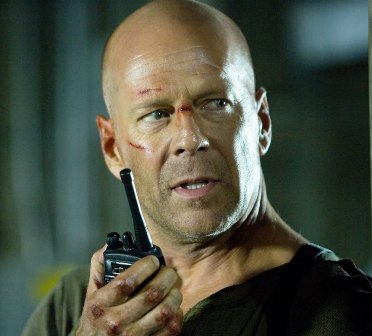
Twitter-@John_McClane, ‘I just shot one of them in the face, ten more to go. I need a cigarette.’
Ft. Hood Soldier Causes Stir on Twitter
During Fort Hood Shooting, Soldier Uses Twitter, Shares Pictures in Real-Time
By KI MAE HEUSSNER
Nov. 11, 2009—
Amid the tragedy last week at Fort Hood, as officials worked to secure the Texas military base, treat the wounded and account for the dead, one soldier turned to Twitter, sending a stream of up-to-the-minute reports from inside a hospital where the injured were being taken for treatment.
Some messages were simple observations, others expletive-laced commentary.
But in the shooting’s aftermath, the soldier, Tearah Moore, 30, has found herself at the center of a sharp debate about the real-time sharing and whether the military should police the use of new media.
As news started to break about the deadly shooting that killed 12 soldiers and wounded 30 others, some users of the micro-blogging site Twitter started to notice the messages from one user in particular.