Feral Jundi

Sunday, June 20, 2010

Industry Talk: The New Mercenaries ‘Made In Spain’

     This is cool.  I got a Facebook friend request from a security company in Spain the other day, and I decided to do a little research on this market.  I couldn’t find anything in english, but I did find some stuff in spanish and I thought it would be cool to Google Translate some stuff and post it up here. This is from last year, but still pretty interesting.

     The point of this post is that this industry is global and it is massive. There is security contracting news going on all over the world and it is easy to miss.  My readership has definitely fed me all sorts of  stories from around the globe, and has even helped in translation or with the local vibe of their market. That is information gold to me, and I really enjoy filling the archives of the blog with those stories.  Check this one out and let me know what you think.-Matt

——————————————————————

The new mercenaries ‘made in Spain’

Lucas Marco / Valencia

Thursday January 8, 2009.

Private military companies have been cropping up in the Spanish market. Formed by ex-military, they offer all kinds of services to businesses and governments in conflict areas worldwide.

Private military companies have been consolidated as a new actor in the conflict. An example is the massive presence of private contractors in Iraq with U.S. occupation troops. To the Professor of International Law and International Relations, Francisco Javier López Quel, the emergence of these companies “is part of a privatization process started in the early 90s that affects health or the prison system.” This generates “the outsourcing of basic services the state in relation to the defense” that involves “a change in structure of hosts.” The High Commissioner of United Nations Human Rights recognizes that “armed conflicts, terrorism, arms trafficking and covert operations by third Powers, among other things, encourage the demand for mercenaries on the global market.”

(more…)

Saturday, June 19, 2010

Industry Talk: U.S. Training Center Wins $120 Million Afghan Contract

     Yep. They won it alright, and if anyone at all doubts how desperate the US government is for manpower in this war, this is proof positive. The only reason why a company like this, wins this kind of contract, is because they can deliver.

     Obviously Xe is disliked by the government, but the government dislikes dead federal employees or losing the war even more.  Plus time is not on their side.  The administration has to show success in Afghanistan, and part of that strategy involves the civilian surge.(along with this military surge) Xe and the rest of my community are essential for that civilian surge to happen.  The war strategists know this, DoS and DoD knows this, and that is just the way it is.

     While big military is out killing the Taliban and doing the heavy lifting, who do you think will be doing the convoy, static and PSD work for all of these civilians?  The Afghan companies? (wait, we are investigating them for their dealings with the Taliban-yikes)  We could initiate the draft? (Oh, now that is even more politically unacceptable–election killer) We could use the National Guard and IRR? (wait, we are using them for the border or gulf spill clean up) Congress could vote for more troops to be sent to Afghanistan? (that would make the venture even more of a re-election killer for a congress and administration already on the ropes) We could put the call out to more countries to send troops? (wait, no one can afford to send any more–something about a world wide recession) How about some Ugandans? (already using them in Iraq) Any others?…. We could contract with DynCorp or Triple Canopy instead of Xe for this job? (we will and are already using them for this work, and DoS has already made their choice as to who is more capable at this time and for this contract/location–best value)

     I guess my point is, is that using security contractors and companies like Xe is essential to the war effort at this time. That is the best way I can spell it out for the reader. How are we not, if the DoS is willing to bite it’s lip and contract with this company? How is it not if we are now in the quarter million range as far as contractor numbers in both Iraq and Afghanistan?  How are we not after close to 2,000 dead and well over 40,000 injured?

     For the protection of federal employees and property in places like Iraq and Afghanistan, the best forces available right now, are the ones the companies have to offer. That is this war, and that is the politics of this event. –Matt

—————————————————————–

Firm once known as Blackwater gets Afghan contract

June 19, 2010

KABUL, Afghanistan — Part of the company once known as Blackwater Worldwide has been awarded a more than $120 million contract to protect new U.S. consulates in the Afghan cities of Herat and Mazar-e-Sharif, the U.S. Embassy said Saturday.

The United States Training Center, a business unit of the former Blackwater, now called Xe Services, was awarded the contract Friday, embassy spokeswoman Caitlin Hayden said.

The company won the contract over two other American firms — Triple Canopy and DynCorps International, she said. The one-year contract can be extended twice for three months each for a maximum of 18 months.

Under the name Blackwater, the Moyock, North Carolina-based company provided guards and services to the U.S. government in Iraq, Afghanistan and elsewhere but came under sharp criticism for its heavy-handed tactics in those missions.

(more…)

Friday, June 18, 2010

Industry Talk: CSPAN–War Time Contracts And Private Security Firms

Jundism: War Zone Corruption Allegations Up Sharply

     In Iraq, investigators have opened 67 fraud cases this year, compared with 69 for all of 2009, according to the Special Inspector General for Iraq Reconstruction (SIGIR). In Afghanistan, it’s 42 cases this year vs. four last year.

     Stuart Bowen, who heads SIGIR, says more tipsters are coming forward. “Some of these people have come back to the States, so they’re out of the threat zone,” he says. “Perhaps what they saw is gnawing at their conscience.” 

*****

     To me, this is great news.  It indicates to me that there is finally a connection between the guy on the ground and the folks tasked with investigating this stuff. That means guys and gals are talking and sending in tips because ‘they have the courage to do what is right‘ and the IG is acting on it. So bravo to you folks out there that are sticking it to these shady people and companies that think they can get away with this stuff.

     It also indicates that there are finally more investigators out there to actually investigate these tips.(contractors have been submitting stuff for awhile now) Although the government and tax payers would have been better served if they would have focused on this in the beginning of the war. Arguably, things would have been less screwed up if they had this manpower in the first place and it is a shame it has gone on this long like it has. The lesson to me, is you must have the necessary manpower and sound leadership in place to expand and contract with the dollars/stuff/people going in and out of war zones. Flexible and scaleable oversight is crucial. This kind of oversight is necessary not only for ensuring the tax payer gets a good value for their money, but that the actions of contractors or military folks does not negatively impact the war time strategy with their actions.

     That last part I cannot stress enough.  With today’s 24/7 media, the internet, blogs, cameras in smart phones, social media, etc., it is almost impossible to operate out of the public’s view. That means when a company screws up or does something it should not have done, the whole world ends up finding out about it.  And then whatever program and strategy that company was a part of in the war, is now threatened by that company who chose the wrong path. That is unacceptable in my view.

     Plus, I just love seeing shady companies/managers/individuals who screw over their fellow contractors or the government, get the heat. So keep sending in those tips to the IG, because what you have to say matters. It is an easy way to keep a company honest and on their toes. And maybe, just maybe, companies will actually start listening to their people and taking care of these problems or wrongdoing before they make their way to Youtube or the desk of the IG.

     Now one tip that I would like to present to the IG, if any of those guys are listening, is that you should also make an effort to connect with the ‘non-english’ writing, or computer illiterate contractors.  An Iraqi or Afghani contractor should have the means of connecting with you, because those folks see all sorts of wrong doings within their companies. The hordes of TCN’s from all over the world who are working on the bases, are in the same boat as well, and there should be an effort to reach out to them.  Perhaps a multi-language tip submit program involving anonymous call ins could be implemented there, because speaking a grievance would probably be better than them writing it.  Plus they could do it anonymously from the convenience of their phone. Interpreters could then translate the message and investigators can go from there.

     Also, there needs to be some pressure on the companies involved with TWISS.  I am getting lots of emails from expats and Ugandans about how screwed up that program is. And because this is an LPTA (lowest price, technically acceptable) program, the companies have all been racing to the bottom to out bid the other guy.  As a result, you have the lowest paid expats in the industry supervising poorly vetted Ugandans or whatever TCN group, and that dynamic does not promote a well running machine.  If anything, expats could care less about doing a good job, and those individuals only look at the job as a stepping stone to go onto something else. Most contractors involved with TWISS that I have talked with couldn’t wait to get out of that contract.

     LPTA does not work, it is a race to the bottom, and eventually LPTA is going to hurt the wartime strategy. The vetting of TCN guard forces like Ugandans is poor as well, and I place the blame on companies who are more concerned with cutting costs to outbid the other guy. They will say things like ‘that was the job of the training company we use in Uganda, and we had no part in that’ or ‘well company X in Uganda said they were good to go’.  Pffft. Meanwhile they man posts in Iraq with folks who are ill or cannot shoot a weapon or whatever, all because the vetting process is ‘technically acceptable’ and ‘lowest cost’. And why would US companies spend the money on this if they didn’t have to?

     It is a ‘race to the bottom’, and the government thinks this is a good idea. Wait until a poorly supervised or poorly vetted Ugandan kills some civilian or soldier, or fails at performing the duties of their post? That is not to say that there are not squared away expats or Ugandans in this program. But it is the program itself and the contracting vehicle that supports it, lends itself to such a screwed up set of circumstances. If the IG wanted a program to investigate, TWISS and the pathetic results of LPTA would be a good one to focus on. –Matt

Edit: 06/21/2010 -Doug Wethington from DCIS just responded in the comments below, and I wanted to put his information in an edit. Here is the important part:

I can also tell you we activity seek “non-English” sources of information for the reasons you site. We know these folks have valuable information and we try diligently to get the word out that we are interested in hearing what they have to say. I welcome any suggestions that will assist us with those efforts. We also welcome email tips, in whatever language, to:   icctf@iraq.centcom.mil

Forgot to add, the only phone number we currently have where a recording could be left and tranlation accomplished is the Defense hotline at 800-424-9098. I will take your suggestion and see if we can get a dedicated line with a recorder to receive complaints in country. Thanks for the advise.v/r

Douglas Wethington, Regional Director of Investigations, DCIS

——————————————————————

War zone corruption allegations up sharply 

By Aamer Madhani

June 17, 2010

WASHINGTON — The U.S. government, which is pressing Iraqi and Afghan leaders to get tough on internal corruption, is doing the same in its ranks.

Cases of suspected fraud and other wrongdoing by U.S. troops and contractors overseeing reconstruction and relief projects in Iraq and Afghanistan are up dramatically.

James Burch, the Defense Department’s deputy inspector general for investigations, says his agency is investigating 223 cases — 18% more than a year ago.

Investigators have charged an Army officer with pocketing cash meant to pay Iraqi civilian militiamen, contractors offering an Army officer $1 million for the inside track on a road project in Afghanistan, and three contractors for an alleged conspiracy to steal hundreds of thousands of dollars worth of fuel from a U.S. base in Baghdad.

Army Maj. John Cockerham was sentenced in December to 17½ years in prison for accepting $9 million in bribes for contracts to sell water and other supplies to the U.S. military.

(more…)
Monday, June 14, 2010

Industry Talk: DoS Wants To Form A Mini-army For Iraq Security

     Well duh! It all makes sense now.  CNAS comes out with a report on contractors, fully supporting our use and the future use of contractors in our wars, and now DoS wants to form a ‘mini-army’?(well…. they’ve always had a mini-contractor army)

     And the ‘monopoly of force’ argument gets another challenge by none other than…… the US Department of State? Max Weber is rolling in his grave as we speak. lol (I had to stick that one in there…)

     I am also reminded of the scenes of Air America rescuing South Vietnamese and American civilians off of the roof top during the last days of the Vietnam War. That was a contractor air force that did that, and not a military one.  The idea here is that contractors are the filler during the dangerous stages of a draw down or build up of a war.  We can fill those gaps of operational need, and as fast as they come up.  Private industry is flexible enough to do this, and account for the surprises or worse yet, poor planning of the war.

     Even with natural disasters like the BP spill in the gulf, you must have a partnership between private and public forces in order to meet the operational requirements of the disaster.  When the feds run out of a specific resource, or let’s say a disaster has done something completely unexpected, private industry can instantly address the problem. Or in some cases, the federal government can jump in and take over where private industry is faltering.  The key to me is to find some kind of equilibrium within that war or disaster, where we reach the sweet spot of private and public partnership. –Matt

Edit: 6/14/2010- I would like to correct one of the things I mentioned in this post that one of my readers brought to my attention as partially wrong.  During the draw down stage of the Vietnam war, this was largely a military effort. So I want to emphasize that the military did most of the heavy lifting, and Air America ‘assisted’ in that process. Or in other words, it was a team effort, with the military taking the lead. Here is a run down of Operation Frequent Wind, as just one example of that process.

   Also, check this out.  The author of this article changed the title of the thing.  The content is the same.  I will bet that he got some heat for putting together this original title below. The new one says “State Dept Wants Combat Gear For Security In Iraq”.  Just a tad bit less flowery or sensationalistic than the original. lol

————————————————–

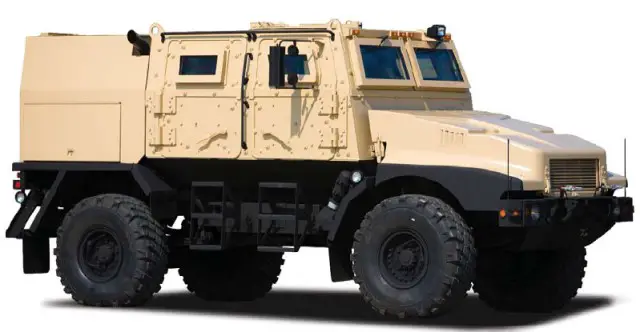
BAE Caiman

This BAE Caiman is what the DoS is requesting for their security force. They want 50. They also want 24 Blackhawk Helicopters.

State wants to form a mini-army for Iraq security

By RICHARD LARDNER

June 14, 2010

WASHINGTON — The State Department is quietly forming a small army to protect diplomatic personnel in Iraq after U.S. military forces leave the country at the end of 2011, taking their firepower with them.

Department officials are asking the Pentagon to provide heavy military gear, including Black Hawk helicopters, and say they will also need substantial support from private contractors.

The shopping list demonstrates the department’s reluctance to count on Iraq’s army and police forces for security despite the billions of dollars the U.S. invested to equip and train them. And it shows that President Barack Obama is having a hard time keeping his pledge to reduce U.S. reliance on contractors, a practice that flourished under the Bush administration.

In an early April request to the Pentagon, Patrick Kennedy, the State Department’s under secretary for management, is seeking 24 Black Hawks, 50 bomb-resistant vehicles, heavy cargo trucks, fuel trailers, and high-tech surveillance systems. Kennedy asks that the equipment, worth hundreds of millions of dollars, be transferred at “no cost” from military stocks.

Contractors will be needed to maintain the gear and provide other support to diplomatic staff, according to the State Department, a potential financial boon for companies such as the Houston-based KBR Inc. that still have a sizable presence in Iraq.

(more…)

« Newer PostsOlder Posts »

Powered by WordPress