Feral Jundi

Tuesday, April 6, 2010

Mexico: Drug War Refugees And Comparisons To Colombia

   Could we have a situation where violence gets so bad in Mexico, that we will actually see war refugees gathering at the border?  Imagine thousands of people, all trying to get on the US side of the border, all because things have gotten so bad in Mexico that the people no longer trust that their government can protect them. Things are already bad enough economically there, that people are willing to risk illegal immigration to cross into the US.  If you add the fear of violence caused by the drug war to the mix, well then now you can see how this is something we need to look at.

   At this point, we are just seeing the political asylum cases increase.  The next stage if things got really bad, is just camping out at the border.  If cartels are taking over entire towns, and the Mexican military is having to retake those towns, then you could see why people wouldn’t want to live there.

  And to follow this train of thought, where would we put them all?  Well, if things got that bad, I am afraid that my tent city idea that I brought up for illegal immigrants, would more than likely turn into refugee camps. When you start thinking about the problems in Mexico in this way, it really puts into perspective as to what the potential is and why we should care. I also think that looking at other drug wars like in Colombia are particularly helpful, just to get an idea of where it is all going.

   Finally, check out the last story I posted.  It is about a coordinated attack on Mexican army bases, by cartel henchmen.  That is a new chapter in this drug war, and I am sure we will see more of this.-Matt

——————————————————————


Will we see this in the U.S., in order to deal with a humanitarian crisis caused by the drug war in Mexico?

Worse Than Colombia

by Brandi GrissomMarch 31, 2010

The violence raging in Mexico’s drug war is worse now than the terror that enveloped Colombia during the 1980s and 1990s ever was, Texas Department of Public Safety Director Steve McCraw told state lawmakers Tuesday.

“Colombia was never threatened like the government of Mexico is with the level of violence,” McCraw told the House Select Committee on Emergency Preparedness at a Capitol hearing.

The committee and its chairman, state Rep. Aaron Peña, D-Edinburg, focused many of their questions about the state’s emergency preparedness on the current violence just across the border in northern Mexico, particularly in Juárez. “Each and every day we hear about killings, shootings, assassinations, kidnappings,” said Peña, whose hometown is about 10 miles from the Mexican city of Reynosa. While McCraw said the violence will get worse before it gets better and has already outpaced the scariness of Pablo Escobar’s Medellín cartel in Colombia, at least one border expert disagreed, saying that the United States would never let the situation in its neighboring country devolve into the lawlessness that plagued Colombia. “I think maybe he’s exaggerating,” said University of Texas at El Paso professor Howard Campbell.

Peña asked McCraw to compare the violence in Mexico to that during the drug war in Colombia. McCraw said the situation in Mexico is worse. The United States eventually intervened to help the Colombian government quell the violence and take down Pablo Escobar in 1993. “That hasn’t happened in Mexico,” McCraw said. Though Mexican President Felipe Calderón is trying to control the violence, McCraw said those efforts so far have not worked. “There has never been a more significant threat as it relates to cartels and drug and human smuggling on the border today,” he said. Juarez alone has seen more than 4,800 drug war deaths since 2008, according to recent reports in the El Paso Times, including at least 600 killings this year.
(more…)

Monday, April 5, 2010

Bounties: $100,000 Reward For Eduardo Ravelo–Leader Of the Barrio Azteca Gang

   Let’s get this clown.  Eduardo supposedly had some plastic surgery done, and is doing a pretty good job of eluding capture.  But like the article below says, if you put a high enough price out on his head, someone will turn him in. If he had a hand in the deaths of Americans, then I would like to see that reward jump up to at least a million, if not more. Either a competitor, or some family member or former friend would jump all over that reward.

   This is also the captain of Barrio Azteca, and his capture could help put together the pieces as to who is training these folks.  Eduardo’s hit squads are very good at what they are doing, and they are very organized. Ed has also established networks that will provide warning and protection, much like most criminal enterprises.

   The quicker he can be captured, the better, and I do hope we get him.  Good luck out there, and happy hunting to all that are involved with tracking him down. –Matt

——————————————————————

This is pre-plastic surgery, so who knows what he looks like now. 

NEW TOP TEN FUGITIVE

Leader of Violent Barrio Azteca Gang   10/20/09

Eduardo Ravelo—leader of a violent street and prison gang operating out of Juarez, Mexico—is the second of three new additions to our Ten Most Wanted Fugitives list. We are offering up to $100,000 for information leading directly to his arrest.

Ravelo heads the Barrio Azteca gang in Juarez, and is charged with a variety of crimes, including racketeering, money laundering, and possession with intent to distribute heroin and cocaine. Although he has not been charged with murder, Ravelo and his gang members are allegedly hitmen for a Mexican drug cartel and are responsible for multiple homicides.

“From everything our intelligence sources tell us,” said Special Agent Samantha Mikeska, who has been working cases related to the gang since 2003, “Ravelo is a ruthless killer who has absolutely no respect for human life.”

In Juarez, there is a war going on between rival drug cartels, said Mikeska, who works in our El Paso office, and Barrio Azteca is affiliated with one of them—the Vicente Carrillo Fuentes drug trafficking organization. The city, located on the other side of the border from El Paso, Texas, has had about 2,000 murders so far this year.

Barrio Azteca has approximately 600 active members who engage in murder, assault, extortion, human and drug trafficking, and other crimes. Many of the members are in U.S. and Mexican prisons and benefit from the gang’s illicit profits by having funds placed in their prison commissary accounts, Mikeska said. “They are well organized,” she added, “and they are dangerous.”

Ravelo, also known as “Tablas,” is believed to be in his mid-40s. He is 5-feet-9-inches tall and weighs between 150 and 180 pounds. He has a scar on his face and tattoos on his chest, abdomen, and back, although authorities believe he may have had plastic surgery and even altered his fingerprints. Ravelo is considered armed and extremely dangerous.We need your help. If you have any information concerning Ravelo, please contact your local FBI office or the nearest U.S. embassy or consulate or submit a tip electronically.

“If he gets picked up,” Mikeska said, “it will put a big dent in the gang’s operation.” The bottom line, she added: “Ravelo needs to be brought to justice.“

Link to Press Release here.

REWARD

The FBI is offering a reward of up to $100,000 for information leading directly to the arrest of Eduardo Ravelo.

Link to reward here.

——————————————————————

He’s called the face of Ciudad Juarez terror

Authorities say Eduardo Ravelo has helped turn the border city into Mexico’s homicide capital. Now investigators think he played a role in the U.S. Consulate slayings.

By Richard A. Serrano

April 5, 2010

Reporting from El Paso

Authorities think he had his fingertips altered to disguise his prints and plastic surgery to mask his face. Except for his dark eyes, federal officials doubt he looks anything like his 12-year-old FBI most wanted photo — round face, trim mustache and a scar along his cheek. (more…)

Law Enforcement: Binational Contract Killers–Barrio Aztecas And The Artistic Assassins

   Interesting story and this ties in with my bounties post on Eduardo Ravelo, the captain of the Barrio Aztecas.  The one point to clue in on, is that these guys are getting good at what they are doing with each and every operation, and their hits are becoming increasingly more complex and coordinated.  The question is, who is training and developing such lethal programs, and what is the next level? I personally think that we will see more IED related hits in the future, and these hit squads will evolve much like Al Qaeda and company has evolved.  They will use the most efficient means necessary to get the job done and strike terror in their opponents.  If hit squads are targeting cops or military with IEDs, that will definitely change the tune of operations real quick.

   The other point is the whole ‘binational contract killer’ concept.  Yet again, these groups have found the weakness that lies within the states.  These folks are using the border to their advantage, and because they enjoy being somewhat binational, they can operate pretty freely on both sides and blend in.  Of course law enforcement does not have that luxury, nor do bounty hunters or any other tools of the state. –Matt

——————————————————————

New adversary in U.S. drug war: Contract killers for Mexican cartels

By William BoothWashington Post Foreign ServiceSunday, April 4, 2010

CIUDAD JUAREZ, MEXICO — A cross-border drug gang born in the prison cells of Texas has evolved into a sophisticated paramilitary killing machine that U.S. and Mexican officials suspect is responsible for thousands of assassinations here, including the recent ambush and slaying of three people linked to the U.S. consulate.

The heavily tattooed Barrio Azteca gang members have long operated across the border in El Paso, dealing drugs and stealing cars. But in Ciudad Juarez, the organization now specializes in contract killing for the Juarez drug cartel. According to U.S. law enforcement officers, it may have been involved in as many as half of the 2,660 killings in the city in the past year.

Officials on both sides of the border have watched as the Aztecas honed their ability to locate targets, stalk them and finally strike in brazen ambushes involving multiple chase cars, coded radio communications, coordinated blocking maneuvers and disciplined firepower by masked gunmen in body armor. Afterward, the assassins vanish, back to safe houses in the Juarez barrios or across the bridge to El Paso.

“Within their business of killing, they have surveillance people, intel people and shooters. They have a degree of specialization,” said David Cuthbertson, special agent in charge of the FBI’s El Paso division. “They work day in and day out, with a list of people to kill, and they get proficient at it.”

(more…)

Thursday, April 1, 2010

Arizona: States Boost Border Security As Pleas To Washington Go Unmet

   I have to tell you, this just gets me fired up.  If the border states are asking for more resources, and Americans are getting killed because of this border violence, then damn it, send the the reinforcements.  And if you can’t send the military or enough border patrol folks to get the job done, then contract it out. I guarantee that plenty of folks would answer the call if there was a demand for such a thing.

   But my guess is that because of the politics of the matter, the feds are trying to hold off doing anything effective or visible like this.  But like I have mentioned before, the deaths of Americans trump politics any day of the week, and the citizens of the border states are getting pissed.  Especially after the death of Americans a few weeks back, and the recent death of rancher Robert Krentz.  Robert’s death will come to symbolize what is going on at the border, and for today’s federal government not to act upon this, will only further erode the people’s trust in that government.

   I also have a suggestion for how to enforce the border.  If an immigrant wants to ‘illegally’ enter into this country, then I say treat them like criminals.  I say put up massive tent city prisons along the borders, and instead of  shipping these folks back to Mexico, put them in these outdoor prisons and have them serve some time.  I would put Sheriff Joe Arpaio in charge of the whole thing, and truly make the act of ‘illegally’ entering into the US a punishable offense.

   We could also use those prisoners for work details along the border.  They could help repair roads, pick up trash that other illegal immigrants left, repair the fence, help repair damage done to personal property like Robert Krentz’s ranch and otherwise pay the US for their crimes in the form of labor. I would imprison them all too.  Murderers, drug smugglers, people smugglers, etc.  Keep them all detained, and have them all enjoy the great outdoors at a tent city for awhile. –Matt

Edit: Be sure to check out Sheriff Joe’s inmate powered bicycle generator project. lol He is tweeting about it as we speak.

——————————————————————

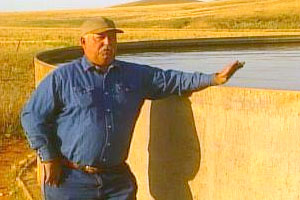
Krentz

The deceased Arizona rancher, Robert Krentz. 

States Boost Border Security as Pleas to Washington Go Unmet

March 31, 2010

Border states are looking to take matters into their own hands, boosting law enforcement to patrol for illegal immigrants while their pleas for federal assistance go unmet in the wake of the killing of a prominent Arizona rancher.

Border states are looking to take matters into their own hands, boosting law enforcement to patrol for illegal immigrants while their pleas for federal assistance go unmet in the wake of the murder of a prominent Arizona rancher.

Local authorities suspect Robert Krentz, found dead on his cattle ranch Saturday night, was killed by an illegal immigrant who fled back across the border into Mexico.

(more…)

Monday, March 29, 2010

Aviation: Drones Slowly Becoming The New ‘Virtual Fence’ On Border

   So are we actually shutting down the virtual fence, or are we just using a different method of creating a virtual fence? I also want to highlight another ongoing saga involving drones and a call for troops.  In Texas, governor Perry has been fighting to get more drones and more troops on the border in order to stop the spill over of violence, and has met a lot of resistance from the feds on this.

    Over the last year, this has been more political than anything, seeing how Perry is Republican and the Administration and Congress is mostly Democrat. Increasing border security activities goes against any kind of immigration reform or amnesty initiatives, because it sends a mixed message to the U.S. citizenry.  The narrative is this– ‘Do we want to stop illegal immigrants from crossing the border so we can stop them from killing Americans or bringing over drugs/supporting the cartels, or do we want them coming over and giving them a free pass so we can get cheap labor? I side on the idea that people should come to my country legally, and go through the same process that all immigrants have gone through who have come to the US.  Why the Mexican immigrant is a special case, is beyond me. Especially when drug cartels are taking advantage of these immigrants and a weak border, and flooding my country with their drugs.

   But back to border security.  As soon as Americans die, either on the border or on either side of that border, I think politics tends to go out the window, and reality sets in. The attack on diplomats and the astronomical increase in deaths across the border in places like Juarez, have presented a reality where border security might start getting the attention it needs.  Our use of drones will probably increase along the border, as will our assistance to the Mexican government in stopping the cartels. American deaths are game changers, and those acts will only put the war back into the ‘drug war’. The bitter irony is American deaths have already been high do to drug overdoses or drug related crimes in the US. I guess it takes killings on the border to really drive home the point.-Matt

——————————————————————

Drones silently patrol U.S. borders

By Ed Lavandera

March 12, 2010

Fort Huachuca, Arizona (CNN) — It’s a frigid, dark night in the mountainous border region of southeast Arizona. A group of 31 suspected illegal immigrants are walking up and down rocky ridges toward Tucson, Arizona. They’re wearing small backpacks and stop to rest every few minutes.

This isn’t a scene unfolding before the eyes of Border Patrol agents on the ground. It comes from a video image provided by a Predator B unmanned aircraft 19,000 feet overhead. In fact, the nearest Border Patrol agents are far away.

Jerry Kersey is the Customs and Border Protection agent in charge of this night’s Predator mission. He and his two-man crew relay the information to Border Patrol agents from a small trailer 40 miles from the scene.

Kersey directs the agents on the ground, who are wearing night-vision goggles.

“Stop! Stop! They’re to your right,” Kersey firmly dictates over a radio transmission. “They must see you. The group is running.”

(more…)

« Newer PostsOlder Posts »

Powered by WordPress