Feral Jundi

Wednesday, April 6, 2011

Letter Of Marque: Ben Franklin’s ‘Privateer’ Fleet

This is a great documentary. What I thought was interesting is that Ben Franklin used privateers as a way to get British prisoners, in order to do a prisoner exchange with Britain for American prisoners. But because he did not provide incentive for the privateers to keep prisoners and deliver them or hold them, that the privateers just let them go. So I put the blame on Ben for not posting a bounty for prisoners captured, or at least some payment system that would motivate his privateers to capture and hold these prisoners.

Also, he poorly vetted the privateers he gave commissions too. I mean Ben really stumbled through this first effort of privateering. Although I am glad that the practice was improved upon and later turned into a key element of the Revolutionary War. It was private industry that targeted the logistics and commerce of the British, and basically made the American venture for Britain very costly.  Sun Tzu would refer to this as attacking weakness with strength, and British commerce and logistics was ravaged by American privateers.

What is also interesting is that with this bad experience, Ben made the conclusion that he did not like using privateers. Personally, I just think he didn’t have a clue on how to use them. Because if you look at the history of privateer usage in the War of 1812, congress used a bounty system to secure prisoners that privateers would have captured–all so they could do a prisoner exchange. In other words, America created a better offense industry using better rules and incentive. –Matt


Tuesday, March 29, 2011

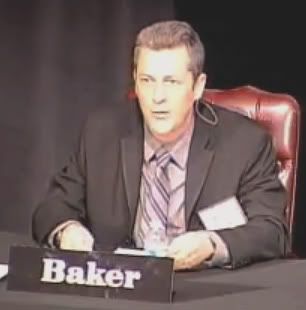
Industry Talk: In Libya, Fight Mercenaries With Mercenaries, By Dr. Deane-Peter Baker

Filed under: Industry Talk,Letter Of Marque,Libya — Matt @ 7:25 PM

I have received several emails and Facebook forwardings in regards to this particular op-ed, and I thought I would put it out there for folks to check out.  I have never talked with Dr. Deane-Peter Baker, but he does have some credentials and a few books under his belt.

My personal view is that we should not get involved with Libya’s civil/tribal war. But going beyond opinions, I wanted to focus on the capabilities of PMC’s and if in fact they could have an impact on the ground in Libya. I think so, because like Dr. Baker presented, there is precedent for companies participating in offensive operations  abroad and succeeding. The Flying Tigers and Executive Outcomes were mentioned below as companies that did such a thing, and I have my own list of folks that get an honorable mention (check my history section).

Now it has been established that companies have the potential to do this, but what is missing in the present is the legal will to do such a thing.  Operations like this would require a blessing from the highest levels of government, and the license would have to give a company all the same freedoms and liberties that today’s militaries enjoy–and then some. If you want success out of a company, and you care to achieve victory in a war, you must give that company total freedom to do what it needs to do. You must also give it the assurance that they will not be turned into criminals for the warfare they wage, and this is very important.

That’s not saying that a company would want the freedom to commit atrocity and war crime.  It’s just the company must know that it is legally authorized to do what it has to do in the context of the chaos and unpredictability of war.  Of course that is why I keep harping on the Letter of Marque and Reprisal or similar type license that is approved and signed in blood by the highest authorities of that issuing country.  Until that happens, the serious and most capable of companies will always default to the contracts that give them the happy medium of profit and legality.

Now of course a company can go off the grid and attempt to arrange a contract without anyone’s blessing. In a perfect world and free market society, this would work out just fine. But in today’s modern times, countries still rule the military and legal battlefields, and they will always exert control when it’s best interest is threatened or could be enhanced. If I had a dollar for every company that ‘wanted’ to provide a service in let’s say Somalia, and yet to be shut down or intimidated by any of the super powers or other authority… So yeah, the legal blessing is the key here.  The money and everything else involved with war fighing else is just business, but the legal authority along with the moral/legal will of the issuing party, is the most valuable thing that a company could have if they wanted to go down this path. Just my two cents on the whole thing. –Matt


In Libya, fight mercenaries with mercenaries
By Deane-Peter Baker
March 29, 2011
It is time to state the glaringly obvious. Without at least some boots on the ground in support of the rebels, the conflict in Libya will in all likelihood settle into a grinding stalemate. The air cover provided by the United States and a slowly growing coalition has pegged back Col. Moammar Gadhafi’s forces, but it will take more than air cover to ensure a rebel victory. (more…)

Saturday, March 26, 2011

Quotes: Libyan Rebels ‘Considering Hiring Security Experts’, Says Reporter

Filed under: Industry Talk,Letter Of Marque,Libya,Quotes — Matt @ 4:55 PM

A hat tip to Wired’s Danger Room for finding this little nugget of information.  As far as I have heard, the only involvement of PSC’s in Libya was the initial stages of rescuing clients caught in the chaos.  Although it would not surprise me if there are already a few freelancers running around doing their thing–but that is not confirmed.?As to involvement of PMC’s in the actual offensive operations or advising the rebels?

Boy, whatever company that takes that on will need some serious blessings from the highest levels of government.  I am talking a license from the US government or from the UN, or both.  Preferably both, and that license should cover everything.  The US already has such a thing that they issue through ITAR.  But that is for other than offensive operations.

For offensive operations or actual authorization to kill Qaddafi and his troops, it will take something with a little bit more legal teeth.?What I am talking about is somewhere along the lines of a death warrant, bill of attainder or Letter of Marque and Reprisal.  Something that gives the acting party the ultimate in legal protections to do what it has to do out there.  That document must also have all the right signatures and blessings.?Of course the other way to contribute is via the outlaw way, or just do it without official legal blessing.

Good luck getting any of the serious players in this game with that kind of set up.  They would much rather stick to the safe and ‘legal’ PSC work in Iraq and Afghanistan.?I am also reminded of what happened in Rwanda and the world’s reaction back then.  At that time everyone sat and watched as a genocide played out before our eyes.  There were also calls to do something, and no one sent troops to stop it.  The UN was so desperate at the time that they reached out to Executive Outcomes and asked for a quote for their services. Of course the UN was not hip on contracting the services of a capable PMC. They also thought EO’s price was too expensive, and yet ended up spending even more money for a UN only mission that responded way too late to the massacre and failed at saving lives. I often wonder how many people could have been saved if EO was contracted and tasked to saved the day there? –Matt

They do know that.  And it‘s an emotional thing.  They don‘t want to see Gadhafi thrown out by the 82nd American Airborne Division, or the 101st or anything like that.?But if there were groups of 12 Team Alphas, the Special Forces here, hidden away someplace, giving them advice and communicating with aircraft, I know they would accept that.  I spoke with some rebel leaders who definitely want that.?They‘re even considering hiring security experts on their own—and there are a lot of I guess you could call them mercenaries that are available on the open market, British, SAS, people who retired and are now working more or less freelance.  They‘re looking actively to hire people like that, and it would certainly be more effective and cheaper and less chaotic than having all of the wannabe Rambos flowing in if they had some sort of direct communication with the people who are giving them military cover.-Richard Engel, Reporter In Libya.

Monday, February 14, 2011

Legal News: Ted Reilly’s Swaziland Royal Warrant And Combating Poachers

     Rangers may search and arrest without a warrant; may use all reasonable force necessary to affect arrest; may bear arms and use them in life threatening circumstances; and in doing any of the above in the course of duty, rangers are not liable to prosecution;  (This became necessary when arrested poachers invariably and as a matter of course, brought their own fictitious charges of assault against arresting rangers, who were then prioritised and called to trial while poaching cases were relegated to the back of the queue).

     Game Rangers gazetted under the Game Act or appointed by Royal Warrant have powers Kingdom wide (such game rangers can only be gazetted by order of the Head of State through the King’s Office). -From the Game Act, Swaziland

     I was very intrigued with the concept of the Royal Warrant after watching this video about Ted Reilly and his war against poachers in Swaziland. He is certainly a warrior who has dedicated his life to protecting the wildlife of Swaziland, and after reading his history and the desperation of the situation in Swaziland, I was certainly impressed by his efforts.

    Recently I have also highlighted other anti poaching efforts in Africa, and specifically the Iraq war security contractor Damien Mander and his International Anti Poaching Association.  Both Ted’s effort in Swaziland, and Damien’s efforts in Zimbabwe and Africa highlight two examples of the kind of extreme efforts needed to combat this poaching scourge.  The kind of poaching driven by such market forces as Rhino horn being worth as much as cocaine.(almost $50,000 a kilo)

     It is also important to note that there has been an increase in poaching activity, and rangers in places like South Africa have been very busy arresting and killing poachers in the line of duty. But even with these efforts, the global recession and lack of jobs, along with the high value of poached animal horns and parts, the crimes are actually increasing. It reminds me of the piracy business model and how lucrative that is.  I am sure in the countries with weak laws on poaching or minimal resources, it is a free for all for poachers.

     So what is the answer? Well Swaziland is an interesting example of success when it comes to stopping poachers, and maybe there is something to be learned here? The Reilly family’s efforts and the tough actions against poachers blessed by the king in the form of a Royal Warrant are examples of some tough solutions.  If you read through the Game Act below, it gives an idea as to the kind of teeth that is involved with this Royal Warrant. Although I am sure any lawyer reading through the act would probably freak out on how much power has been granted to these rangers, and the possibilities of abuse of their powers.

    But on the other hand, the form of government in Swaziland is a monarchy and what the king wants, the king gets. lol If he wants his park rangers to drop the hammer on poachers, then so be it. It would be interesting to see what other countries have in the way of laws, as it pertains to the powers of individual rangers and officers, and see which country is most effective at stopping poaching? I would guess that the country with the strictest laws and most fearful anti poaching efforts are most successful at stopping it.

     Concepts like the Royal Warrant or the Letter of Marque and Reprisal might be out of style with today’s modern states, but I think there should be an effort to look at such things and reevaluate their utility. Piracy or poaching are also old criminal acts, and yet they are still around and making a strong comeback. Are modern states and their advanced rules of law keeping up? You be the judge. –Matt

‘King gave me powers to shoot to kill’

Reilly History

The Game Act

The Rhino War

Ted Reilly feeding his pet.

‘King gave me powers to shoot to kill’

Nov 29,2009

By MFANUKHONA NKAMBULE

MBABANE – Ted Machobane Reilly, the Big Game Parks proprietor, is displaying to the world a Royal Warrant purportedly signed by His Majesty the King, giving him powers to shoot to kill poachers.

Over 25 000 people have viewed Machobane’s video displayed on the youtube.com website.Big guns that could match the AK 47 were also displayed. Reilly said the Big Game Parks (BGP) had the ammunition to counter-attack armed poachers.

The nature conservationist says in the video that commentators and poachers were trying to make a case against him because everyone knew the consequences of poaching.He said security in the game reserves under his supervision was undoubtedly the best in Africa. He said the Game Act of 1991 was passed as a result of sharp increases in poaching, adding that the rhino was the main target for illegal game hunters.

He said they sold the rhino horn for USD 15 000 (about E105 000).Reilly showed the viewers poaching towers and narrated how rangers diffused or counterattacked shootings from the poachers.  (more…)
Wednesday, February 9, 2011

Letter Of Marque: War Of 1812 Privateers Website

     Now this is a cool resource for those of you out there that are researching the LoM and it’s possible uses for modern times.  The War of 1812 provides many examples of how this concept was used by all sides, and how involved private industry really was during that war. The legal references mentioned in the Prize Court section are very good as well.

     What is interesting here is the culmination of hundreds of years of admiralty courts and privateering present in the conduct of all sides. The legal mechanisms, the regulations, the codes of conduct for privateers, the tactics–all of it evolved over time and presented itself in this war.  I often wonder how modern technology and legal processes could have contributed to this type of naval warfare? Or better yet, what would privateering and the LoM look like if it never went out of style? Check it out and let me know what you think. –Matt

War of 1812: Privateers

The War of 1812 saw the apogee of privateering; with the activities of American privateers greatly adding to the offensive capability of the United States.The information available on the privateers and letters of marque is far greater than generally realized, with much material held in the uk at www.nationalarchives.gov.uk

This site aims to make this information, particularly on American POWs, more widely available.

This sites aim is to provide research sources for the study of privateering during the War of 1812.

Much of the data was gathered as part of a project for the, late, Institute of Maritime Studies , University of St. Andrews with most of the material coming from the National Archives at Kew, London.

May 2010…update:

Two works are currently in progress:

The indexing of Lloyd’s List for the period 1812-1814; as yet 1812 completed that has generated 26,000 entries.

Indexing of the Registers of letters of marque against France 1793-1815:

The period 1803-1815, Adm 7/649, is now available.

this will give every British armed merchant ship which operated during this period and the name of the master.

Further as a new Letter of marque had to be issued with each change of master, it will give an indication of a master’s career over this period to which voyage information can be found through Lloyd’s List.

Link to website here.

« Newer PostsOlder Posts »

Powered by WordPress