Feral Jundi

Sunday, November 29, 2009

Maritime Security: Security Contractors on Spanish Ship Thwarts Somali Pirate Attack

   That’s right!  This is the kind of good news I love reading.  The security contracting industry is answering the call and we are doing the good work of protecting these ships. No word on what company these guys worked for, but it has been in the news that Spain is really into using private security instead of military for protecting their fishing boats. –Matt

—————————————————————–

Spanish ship thwarts Somali pirate attack

November 29, 2009

MADRID — A Spanish fishing boat thwarted an attack by pirates in the Indian Ocean in the early hours of Sunday morning, Spain’s defence ministry said.

The pirates fired bullets and threw a grenade at the Spanish-flagged Ortube Berria, before being fought off by the ship’s onboard private security guards, the ministry said in a statement.

The attack happened at 5:37 am (0437 GMT) some 230 nautical miles (426 kilometres) southwest of the Seychelles.

“No injuries or damage to equipment have been recorded,” the ministry said.

Around 50 private security contractors were sent from Spain in mid-November to protect Spanish fishing trawlers from piracy attacks.

(more…)

Strategy: Privateering and National Defense, by Larry Sechrest

“Every possible encouragement should be given to privateering in time of war.” -Thomas Jefferson

*****

    I am telling you, this is an interesting paper to read if you can find the time.  If you are a big Ayn Rand fan or a Mises Institute fan, then you will enjoy this.  Even if you aren’t into that stuff, I still think you will like this treatment of the subject.

    It is basically all about privateering and how it could be used for national defense. To basically use free market forces to defeat an enemy.  The reason why this is not being implemented, even though the mechanism is still in place in the constitution is that big government and it’s military is really not down with sharing the stage with private industry. Although if you look at the evolution of the industry the last eight years or so, you could make the case that we are sharing the stage.  Either way…..

     Larry has pointed out that private industry is certainly capable of doing extreme damage to an enemy, if given an opportunity. And as you can see with his final commentary on the subject, the professor thought it would have been a good tool to use against Usama Bin Laden and Al Qaeda. I wonder if we could have got him by now, if we would have set up a system like this to go after his merry gang of miscreants?-Matt

Edit: 11/30/2009- Mr. Lozzi has made a comment on the article Larry Sechrest wrote to correct the record.  You can find this quote in the comments section and I will post it here in the edit.

*****

From Edward Lozzi & Associates:

Although there was a group of Fortune 500 Companies who raised over a billion dollars to finance mercenaries to kill Bin Laden within weeks after 911, and 2 years before Bush sent in U.S. troops, something needs to be made clear to your readers. The article from Seacrest in 2001( repeted on your site) implies that myself and my company raised these funds. U.S. News & World Report broke the story. But it is not the case that we raides-or help raise the funds. In fact our public relations firm was only brought in to consult on spreading the quest and to liason with the media- we were retained by the cooperating Fortune 500 companies who remained secret fearing more planes crashing into their corporate offices in New York and Los Angeles. There was intent fear of this happening for almost a year. Thank you.

Edward Lozzi, President Edward Lozzi & Associates Beverly Hills

——————————————————————

Privateering and National Defense: Naval Warfare for Private Profit

September 1, 2001

Larry J. Sechrest

Abstract: The claim that all legitimate defense functions can and must be privately supplied flies in the face of certain economic doctrines that are almost universally accepted. Almost all economists declare that national defense is a “public good” that will be provided in sub-optimal quantities—or not provided at all—by private, profit-seeking firms. The purpose of this paper is to challenge just that sort of statement. The attack on national defense as a public good which must be provided by the state will be two-pronged. One part, the briefer of the two, will raise theoretical questions about public goods in general and national defense in particular. The second part will be devoted to a detailed survey of privateering, a form of naval warfare conducted by privately-owned ships which lasted from the twelfth century to the nineteenth century. What privateers were, how they operated, the legal customs that grew up around them, how effective they were, how profitable they were, and why they disappeared will all be addressed. The common employment of privateers during wartime will be offered as empirical evidence that defense need not be monopolized by the state.

 Download PDF File of the Full Paper

Larry J. Sechrest is a Research Fellow at The Independent Institute in Oakland, California, and a professor of economics at Sul Ross State University. (Larry also passed away in 2008)

—————————————————————–

Let Privateers Troll for Bin Laden

September 30, 2001

Larry J. Sechrest

In the wake of the Sept. 11th attacks, a group of American businessmen has decided to enlist the profit motive to bring the perpetrators to justice. Headed by Edward Lozzi of Beverly Hills, California, the group intends to offer a bounty of $1 billion—that’s billion with a “b”—to any private citizens who will capture Osama bin Laden and his associates, dead or alive.Paying private citizens to achieve military objectives seems novel but is hardly untried.

(more…)
Monday, November 23, 2009

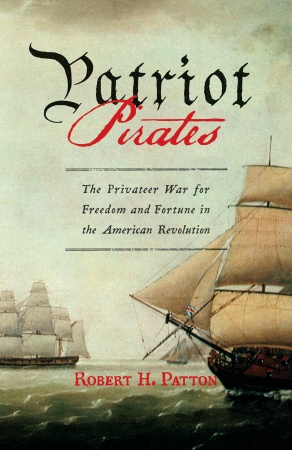
Podcasts: The Pirates of ’76’–NPR Interviews Robert Patton, Author of Patriot Pirates

     Check it out. It is a little old, but still a pretty cool little show about Robert Patton’s book. Probably the most interesting parts are the comparisons between today’s Somali pirates or security contractors in the war, and yesteryear’s privateers.  

   The one thing they did touch on that I thought was particularly interesting, and might be a future Building Snowmobiles topic, is the privateer versus privateer concept.  I guess the British got so fed up with the American pirates, that they started issuing letters of marque to their own privateers to go after these American privateers.  They even were able to get some Loyalist privateers out of New York to go after these guys, and according to Patton, these privateer vs. privateer battles were some of the most bloodiest and most desperate battles.  The fear of being captured by one side or the other, plus the fight over hard gained loot, all contributed to a fierce desire to win the fight. Interesting stuff.-Matt

—————————————————————— 

Patriot Pirate

The Pirates of ‘76

Thursday, August 27, 2009

Originally broadcast: May 11, 2009

When Americans think of the Revolutionary War, the War for Independence, they think fife and drum, Minute Men, tri-cornered hats, George Washington on horseback.

When the British of 1776 — and ‘77 and ‘78 — thought of the American Revolution, many thought “pirates.” Cannon and cutlass and brigands on the high seas.

Washington and the Continental Congress unleashed thousands of American vessels — patriots and fortune seekers — to go after British shipping. And they did it with a vengeance.

This hour, On Point: Privateers, private booty, and the American Revolution.

Listen to Podcast here. 

Sunday, November 22, 2009

Military News: Questions Raised About Royal Navy–Did They Stand By as Pirates Snatched British Yacht Couple?

     Boy, thats a pretty heavy charge, and I wonder what the Royal Navy has to say about this?  Thanks to David for sending me this one by the way, and we will see if there is any kind of a backlash from the public on this.  Especially if the pirates execute the Chandlers because the ransom was not paid.

   On a side note, the tactics and strategy that the pirates used in this particular case is interesting.  They captured one boat, used that as the new mother ship, and went after other vessels in the process.  This could potentially be expanded to be even more profitable, because they are able to stay out longer, cruise around as if a harmless merchant vessel, and collect any number of boats in the process.  If unknowing vessels are traveling near a recently captured vessel, how are they to know if pirates are on board?  So it is absolutely feasible that pirates could use these boats as ‘wolves in sheep’s clothing’ in order to grab even more sheep.  In the history of naval warfare and piracy, this is nothing new, but we must recognize the tactics and strategies and constantly re-evaluate our own strategies and tactics to deal with this. –Matt

—————————————————————–

How the Royal Navy Stood and Watched as Pirates Snatched British Yacht Couple

BY RICHARD PENDLEBURY

November 20, 2009

MID-OCEAN, a degree or two shy of the equator, two ships are steaming south, apparently in convoy.

One is a Singaporean flagged container vessel of 25,000 tonnes, the Kota Wajar. The other is a British military tanker, flying the blue ensign of the Royal Fleet Auxiliary Service. Neither was built for battle. Nor in normal circumstances would they be foes.

But a whiff of gunpowder is palpably in the air. Aboard the tanker, RFA Wave Knight, Royal Navy gun crews have closed up for action, their 30mm cannon and machine guns primed and ready.

A few hundred yards away on the Kota Wajar, Somali pirates, who had recently hijacked the vessel, possess a variety of small arms including rocket-propelled grenades.

These are high stakes, indeed, because both ships are on course to rendezvous with a British yacht drifting helplessly in the Indian Ocean.

Aboard this 38ft yacht, and held at gunpoint by a pirate advance party, are Paul and Rachel Chandler, a retired couple from Tunbridge Wells, Kent.

The Kota Wajar, in its new role as a pirate ‘mother ship’, is to scoop them up and carry them back to captivity and a multi-million-pound ransom in Somalia more than 200 miles to the north-west.

(more…)

Saturday, November 21, 2009

Company Spotlight: Nexus Consulting Group

O’Keefe said Nexus hires former U.S. military operatives such as Navy Seals who could disable a pirate skiff before it comes within range to launch a rocket-propelled grenade, the preferred weapon of pirates.

Having a proven deterrent aboard “is actually lowering the cost of kidnap and ransom insurance by as much as 40 percent” for the shipping lines who hire them, she said. -Elizabeth R. O’Keefe, a lawyer in Woburn, Mass., who represents Nexus and Murphy.

***** 

     I salute Shane Murphy and Nexus Consulting Group for not beating around the bush, and calling it like it is.  Mr. Murphy has witnessed first hand how these pirates operate, and the conclusions that he and his company have come to as to how to deal with these pirates and protect boats is spot on.  You must have weapons that give the boat standoff distance, so that these clowns can’t get in close and use their RPG’s.  Worse yet, the PKM can reach a boat at an even further distance, and the DShK can reach even further. All of these weapons are floating around in Somalia, and I guarantee that these pirates are investing in even better stuff with all of that money they have been making off of ransoms. You get the picture with this kind of arms race, and as these pirates become more desperate and more ruthless, the boats must have the kind of weapons and skills that will give the boat overwhelming fire superiority and the crews and security must have sound naval warfare strategies to deal with this stuff.

    By the way, they are looking for guys to put in their database, and just go through the link for their company here. –Matt

——————————————————————

Somali group puts out call to Seekonk’s Murphy

November 19, 2009

By Thomas J. Morgan and Donita Naylor

SEEKONK, Mass. — Attention Shane Murphy: The Somali Community Association of Ohio wants to take you out to dinner and ask for your help in protecting the Indian Ocean from pirates.

Murphy, of Seekonk, was chief officer of the Maersk Alabama in April when Somali-based pirates took over the ship. He no longer works for Maersk, but is still a merchant marine and consults for a private marine security company.

Bashir Haji, vice president of the Columbus, Ohio, Somali group, tried to reach Murphy on Wednesday after pirates attacking the Maersk Alabama were driven off by the ship’s crew armed with guns. Haji said the group wants to ask Murphy “to come to Columbus to give a speech about his ordeal with the pirates.”

(more…)

« Newer PostsOlder Posts »

Powered by WordPress