Feral Jundi

Wednesday, December 31, 2008

Publications: Efficacy of Private Military Contractors in Peace Operations, by Nicholas Pascucci

Filed under: PMC's,Publications — Tags: , , , — Matt @ 1:30 PM

    This is a nice little publication that gives a quick run down of positive (and some negative) uses of PMC’s over the years.  One of the conclusions made, that I really like, is the concept of applying quality control and clear objectives for these companies.  The author makes the point that if used correctly, PMC’s are certainly capable of producing excellent results (Executive Outcomes in Sierra Leone for example). If there is no clear oversight or clear objective for these companies, then that is when problems arise (like in Iraq or Afghanistan).

   To me, this conversation needs to continue to happen in this industry, of where we are and where we have come from, so we know best how to carry on into the future.  All of the companies and the clients that use us must become the ultimate learning organizations and continue to find a better way.  There is too much at stake in this war to not care about doing it right.  It is also the goal of Feral Jundi to present to the reading public that we in this industry do care, and with a lot of hard work and persistence, we can find a better way.

    The most important aspect of this conversation are the ideas that each side of the debate uses to support their views.  For to long, academia and media has hijacked these ideas with assumptions and half-truths, and the only way to stop that is to challenge those assumptions with solid facts to the contrary. To be silent and not challenge this ideas only allows these assumptions to become some kind of truth.

    And this site is not some propaganda machine (privately owned and operated by me, and not some company blog), that supports some ‘military industrial complex conspiracy’.  This site is about setting the record straight, and having a serious discussion about the use of this tool called the ‘private security contractor’ in today’s war. I have been critical of this industry and of the client here before on FJ, only with the goal of presenting ideas for fixing the problems and providing a better service for the client–not promoting the shutting down of the whole thing down.

   Identify the problems, identify the industry we want, and find the correct models and systems out there for contracting and oversight that will only help us to achieve that goal.  I think we are doing great at identifying the problems, but we still have a ways to go on figuring out what is ‘the industry we want’.  And I say ‘we’ meaning the state.  It’s not about what I want, or what the government wants, but what the state collectively wants and what they are comfortable with.  It does matter what the professor or the soccer mom or whomever thinks about this industry, and the more we can work to explain and justify what we are and what we can do for the people and the government in today’s war, the better it is for all. –Matt  

—————————————————————— 

Efficacy of Private Military Contractors in Peace Operations

By: Nicholas Pascucci 

Date: December 5, 2008

Summary: The Private Military Contracting field has experienced massive growth since the September 11th attacks. This essay explores how the contractors have been used in the past and how they can be used in peace- and nation-building operations in the future.

Introduction

In the years since the September 11, 2001 attacks, the Private Military and Security industries have grown remarkably, garnering contracts in hotspots and warzones around the world in support of the interests of both nation states and private companies. Private Military Companies can be found in over 50 countries, operating in an industry that makes over one hundred billion dollars annually.1 Their increased use has sparked much controversy, and revelations regarding both the successes and failures of the industry raise questions about its role in moderating conflict worldwide. In an industry whose primary focus is providing military-related services in failed states and conflict areas, understanding the effects of their activities and presence in those areas is essential to being able to utilize them effectively in creating peace.

(more…)

Sunday, November 16, 2008

Industry Talk: NAF Report in the News

Filed under: Industry Talk,Publications — Tags: , , , — Matt @ 1:49 AM

     I wanted to post the first little bits of reaction towards the NAF Report. You can see how the report is starting to be used by the various media outlets. At least the Air Force Times article seemed to be more balanced and gave both sides of the issue. –Head Jundi

——————————————————————-  

Obama urged to review use of private firms in war 

Reuters, Saturday November 15 2008

By Andrea Shalal-Esa

WASHINGTON, Nov 14 (Reuters) – The Obama administration should move away from using private contractors in active battle areas in Iraq and Afghanistan and dramatically step up oversight, a Washington think tank urged on Friday.

The U.S. military has long used private contractors in fighting its wars, but Washington’s reliance on non-uniformed civilians has sharply increased over the past five years, the New America Foundation said in a new report.

It said the ratio of military personnel to private contractors is now around one to one, and some experts believed there are more contractors than troops in Iraq, compared to 50 to one during the 1991 Gulf War, according to the report. (more…)

Wednesday, April 9, 2008

Industry Talk: Thoughts on the OODA Loop, Paul Howe and Ken Good

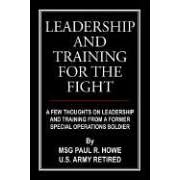
     This article is a little old, but really interesting.  I first caught on to the whole OODA(Observe, Orient, Decide, Act) concept after reading Paul Howe’s book called ‘Leadership and Training for the Fight’.  Since then, I find myself applying those principals of OODA to my every day work, when overseas or home.   

      In a simplified version, of how I use it, this all relates to winning the fight.  You either can beat the enemy with speed or beat the enemy with surprise, or a little bit of both. And in this industry, beating the enemy means, keeping your client alive.  That ‘randomness’ and ‘unpredictability’ is a tool, that can totally help you accomplish this task. Also, the more you can isolate the enemy and keep them in the dark, the better your chances of survival and protecting your client. 

     And the various tricks of ‘observing’ and ‘orienting’ to compress the OODA loop, as described by Paul, was fascinating and really made sense to me.   I highly suggest studying OODA, and we can thank Col. John Boyd for developing such a concept.  We can also thank men like Ken Good and Paul Howe for their incredible interpretations of such concepts.

     On a side note, after reading the book, I had a brand new view point on binoculars and rifle optics.  I subsequently bought a Trijicon ACOG afterwards, and it has been one of the best purchases I have ever made for field work.  Here is a link for Paul’s book, a wiki entry on OODA Loop, and Ken Good’s article below.  I hope you enjoy. -Head Jundi 

Paul Howe book.

http://www.amazon.com/LEADERSHIP-TRAINING-FIGHT-THOUGHTS-OPERATIONS/dp/1420889508/ref=pd_bxgy_b_img_a 

————————————————————————————-

From Wikipedia

The OODA Loop

http://en.wikipedia.org/wiki/OODA_loop

————————————————————————————– 

Got a Second?
Boyd’s Cycle – OODA Cycle
Written by Ken J. Good , Director, Surefire Institute

Introduction
Today?s environment of accelerating scientific discoveries and technological change bring ever-improving hardware to the end user.  In this climate is it easy to overlook and even abandon the core foundation of any weapon system, the interplay and perceptions of the human mind in a combative situation.

A man who understood this better than most was Col. John Boyd, USAF (Ret.) Col. Boyd was tasked with determining why American pilots in apparently inferior aircraft were consistently outmatching their Korean counterparts.  Air to air combat takes place in a 360-degree sphere and represents the pinnacle of the man and machine relationship coupled with the man on man dynamic warriors dream about. (more…)

Tuesday, April 1, 2008

Books: The Lucifer Effect, By Philip Zimbardo

Filed under: Books,Industry Talk,Publications — Tags: , , — Matt @ 10:36 PM

So I guess you are wondering what this might have to do with Feral Jundi?  This book is a fascinating look, at what makes good people go bad.  I was also interested in the author’s solution to protect people from going bad.  But what was most important to me, is how I could possibly use this knowledge, as it applies to the security industry and the war effort.

     I think it has everything to do with our industry, because knowing the signs and knowing the sources of what make people ‘snap’, will only help you to manage your team and your mission.  It will also help you to understand your enemy.

     Check it out, and let me know what you think.  By the way, what image did you see first in the Escher picture below?  -Head Jundi 

————————————————————–

Lucifer Effect

 The Lucifer Effect

By Philip Zimbardo

The Lucifer Effect raises a fundamental question about the nature of human nature: How is it possible for ordinary, average, even good people to become perpetrators of evil? In trying to understand unusual, or aberrant behavior, we often err in focusing exclusively on the inner determinants of genes, personality, and character, as we also tend to ignore what may be the critical catalyst for behavior change in the external Situation or in the System that creates and maintains such situations. I challenge readers to reflect on how well they really know themselves, and how much confidence they have in what they would or would not ever do when put into new behavioral settings.

This book is unique in many ways. It provides for the first time a detailed chronology of the transformations in human character that took place during the experiment I created that randomly assigned healthy, normal intelligent college students to play the roles of prison or guard in a projected 2 week-long study. I was forced to terminate the study after only 6 days because it went out of control, pacifists were becoming sadistic guards, and normal kids were breaking down emotionally. By telling that story in a new way, as my personal, first-person observation in the present tense, it is presented almost as a screen play filled with ever more amazing twists and turns as the situational forces are pitted against individual will to resist and the collective will to rebel against oppressive authority. In a sense, this study and how I am reporting its narrative, is a forerunner of reality TV, as we see ordinary people up close and personal day in and night out, becoming transformed into something truly disturbing. (more…)

Monday, March 31, 2008

Industry Talk: Just How Overpaid are We?

Filed under: Industry Talk,Publications — Tags: , , , , — Matt @ 1:39 PM

First off, I wanted to give a big thumbs up to a really cool magazine called Serviam.  I highly suggest getting a subscription, or just reading through the website every once in awhile.  The articles are great stuff to chew on, for the industry.  

As far as this discussion goes, I think it is important to talk about our value as a whole, and what we are really worth out there.  And because this industry has evolved so quickly, your ammunition for evaluating contracts and future employment, starts with a basic knowledge of what you are worth.   Cheers and happy job hunting out there. -Head Jundi

 —————————————————————————– 

Just How Overpaid are Private Security Contractors?

By Ann Jocelyn

A base pay of $165,000 per year is a lot of money for most people, especially to a soldier. It’s no wonder that some military professionals aspire to become highly paid private security contractors (PSCs), and that others will simply resent them for earning these high wages.

Compared with the basic pay of an active duty E-6 staff sergeant with 10 years of service, the cash compensation of a top-end PSC is a small fortune. Some critics are outraged that a high-end contractor is paid nearly five times as much as that of an E-6. The contracting system, they say, is unfair to the troops and is a rip-off of the taxpayer. For every one contractor, the reasoning goes, the U.S. could pay for five staff sergeants.

That might make sense if the compensation systems were similar. But they aren’t. Serviam spoke with some of the highest-paid PSCs in Iraq to learn exactly what they earn in salary and benefits, and what they return to the government in taxes. We then looked at official U.S. military compensation charts. When comparing net cash and noncash compensation, we found that the E-6 sergeant can take home more pay and benefits than the security contractor. (more…)

« Newer Posts

Powered by WordPress