Feral Jundi

Friday, April 22, 2011

Industry Talk: MPRI Contractor Paul Almryde Killed In Afghanistan

This happened back on April 16 during an attack that killed several NATO and Afghan allies, as well as Paul Almryde. Contractors are a crucial element to the training mission in Afghanistan, and Paul was certainly doing his part. Rest in peace to Paul and the rest of the fallen, and your sacrifice will not be forgotten. –Matt


Barstow contractor killed in Afghanistan
By KAREN JONAS
April 21, 2011
A Barstow man killed last week while working as a military contractor in Afghanistan will be honored on Friday evening with a law enforcement escort as he is brought back to Barstow.
Paul Almryde, 46, was working for military contractor MPRI in Afghanistan as part of the Afghan National Army Corps support battalion on April 16 when he was killed by a suicide bomber, said his wife, Pamela Almryde. According to reports, a Taliban bomber dressed like an Afghan soldier in order to infiltrate a joint Afghan-U.S. base in the eastern province of Laghman. Four Afghan soldiers and five NATO service members — including Paul — were killed in the attack.
Rick Kiernan, a spokesman for MPRI, said the company wanted to express its condolences to the Almryde family and said that Paul was a “dedicated and professional member” of its team.
“At tragic times like these, we are reminded that we can never take for granted the sacrifices of L-3 MPRI employees worldwide,” said Kiernan. “Our thoughts and prayers are with the Almryde family during this difficult time.”
Pamela said her husband was working as a mechanic at the base and was teaching Afghan troops how to repair their vehicles. Paul had served in the military for 21 years — with 12 years of active service in the Army and 9 years in the National Guard — before retiring in 2010 as a Master Sergeant. Paul joined MPRI last May. He was scheduled to come back to Barstow in June and was planning to sign another year-long contract with MPRI, said Pamela.
One of Paul’s neighbors, Jim Osbourn, is helping to organize the memorial on Friday because he wants to honor Paul’s memory as a service member. Osbourn said those wishing to honor his memory should get to Dana Park around 8:00 p.m., although the procession could be delayed because of traffic.
Paul was born and raised in San Diego before moving to Barstow about 15 years ago, said Pamela. The Almrydes would have been married for 10 years in June and were going to renew their vows once he returned.
Paul and Pamela each had two children from previous marriages and one of his sons will soon be stationed at Fort Irwin. Paul also had three grandchildren, whom Pamela said he doted on.
“He loved his grandkids to death and spent as much time with them as possible,” said Pamela.
One of the favorite things the couple would do together was simply sit outside in the summertime and talk, said Pamela.
“I’m very proud of him,” said Pamela. “He was my hero. I even have a license plate frame that says my husband, my hero.”?Contact the writer:?(760) 256-4122 or kjonas@desertdispatch.com
Honoring Paul Almryde
Honor escort

• Law enforcement officials will be escorting Paul Almryde’s remains down Barstow Road to Mead Mortuary.

• The public is invited to honor Paul Almryde’s memory by gathering at Dana Park, 841 Barstow Road, Friday, around 8-9 p.m. (dependent on traffic)?Memorial service

• Tuesday, April 26

• Visitation at 10:00 a.m.

• Services begin at 11:00 a.m.

• First Baptist Church, 1320 Barstow Road
Link to story here.
Thursday, April 21, 2011

Legal News: DoD General Counsel Issues Guidance On Tax Exemptions For Contractors And Contractor Personnel In Iraq And Afghanistan

The Government of the United States of America, its military and civilian personnel, contractors, and contractor personnel shall not be liable to pay any tax or similar charge assessed within Afghanistan…. Acquisition of articles and services in the republic of Afghanistan by or on behalf of the Government of the United States of America in implementing this agreement shall not be subject to any taxes, customs duties or similar charges in Afghanistan. -From the US/Afghan SOFA

Below I have posted both fact sheets that detail exactly what parts of the SOFA agreements we signed with Iraq and Afghanistan that details these exemptions. So this is the battle line that the US government has drawn, and these are the agreements between the US and these countries.  So if you think you or your company is being wrongly taxed or charged by government folks in these countries, you need to let your company know and remind all parties of what the position of the US government is on this matter. If you give these folks an inch, they will take a mile. –Matt

DoD General Counsel Issues Guidance on Tax Exemptions for Contractors and Contractor Personnel in Iraq and Afghanistan
April 20, 2011
The United States is bound by two distinct international agreements which contain specific provisions regarding the tax exemptions afforded to U.S. contractors and U.S. contractor employees in Iraq and Afghanistan. In Afghanistan, the Status of Forces Agreement (SOFA) was entered into force on May 28, 2003. In Iraq, the U.S.-Iraq Security Agreement was entered into force on January 1, 2009. Both agreements provide broad tax exemptions for U.S. government personnel, including contractors and contractor employees doing business on behalf of the U.S. government. The terms of the agreements generally do not provide tax exemptions for persons or legal entities normally resident in Iraq or Afghanistan.
On March 28, 2011, DoD/OGC issued two fact sheets—one for Iraq and one for Afghanistan—addressing the tax exemptions for U.S. federal government contractors and contractor employees conducting business in these countries:
DoD/OGC fact sheet on Tax Exemptions for United States Contractors and United States Contract Personnel-Iraq
DoD/OGC fact sheet on Tax Exemptions for United States Contractors and United States Contract Personnel-Afghanistan

Wednesday, April 20, 2011

Law Enforcement: Know Your Enemy–The Uniforms And Insignias Of The Drug Cartels In Mexico

Filed under: Law Enforcement,Mexico,Video — Tags: , , , , , — Matt @ 10:19 PM

Technology: UFED Physical Pro–Handheld Mobile Phone Forensics Tool

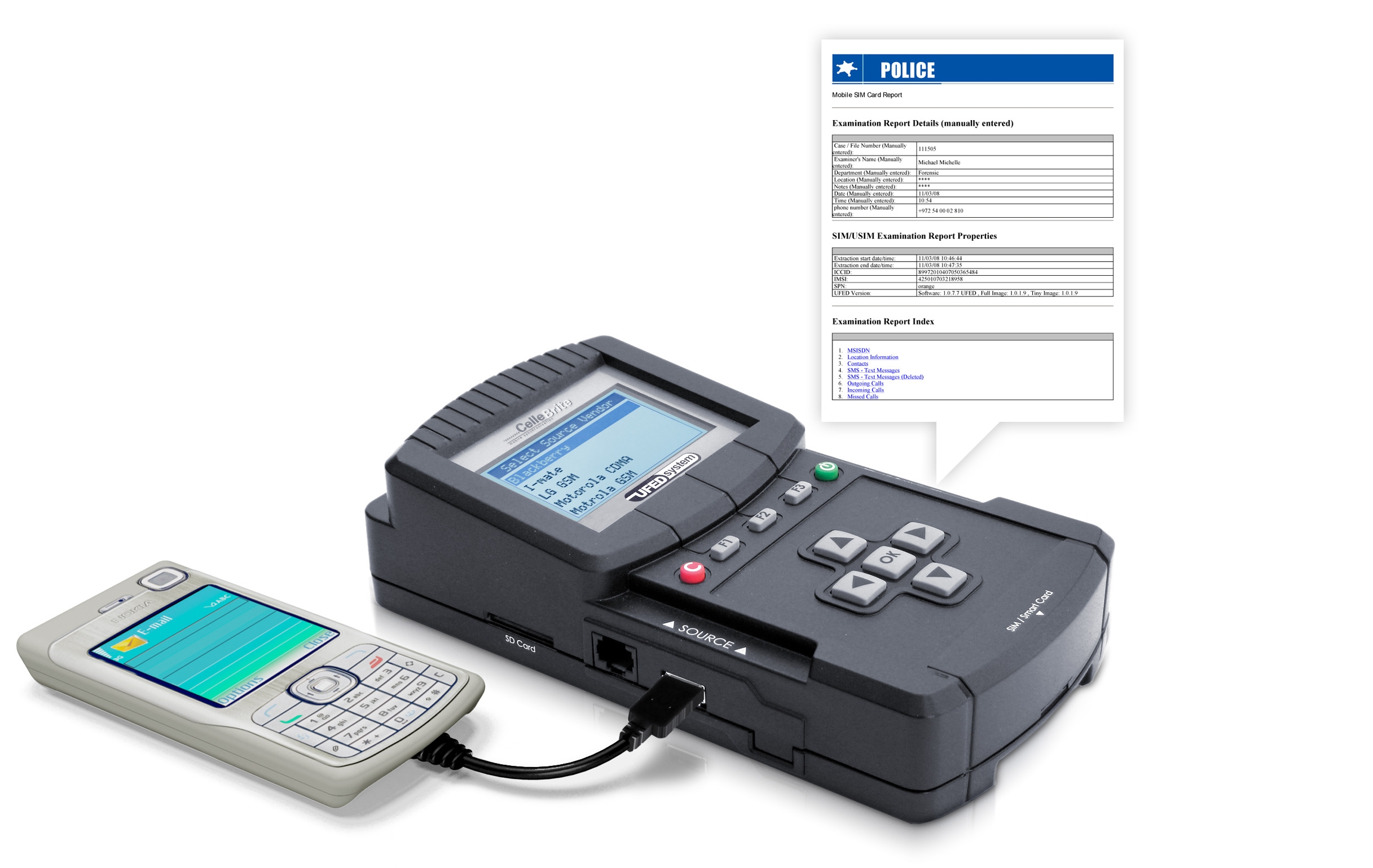
Now this is some cool technology. I could see how this would be very helpful to law enforcement for investigations. But of course, the ACLU has shown some concern about such devices being used and how they could infringe on privacy rights. That is a legal issue, and I am more concerned about the utility of such a device.

This is what I was thinking as soon as saw the thing. The US military/contractors should have these devices at every major FOB where local nationals are working at, and every cellphone that comes through the gates or is held at the gate, should be scanned.  I would even do it without the individuals knowing that it was done.  All is fair in love and war, and if folks are using their cellphones to make communications with the enemy, I think it is within our best interest to find that out.

You could also set up check points throughout a city of interest in a war zone, to randomly collect cellphone data. Because cellphones are being used everywhere in the war zones and developing world, it is dumb not to tap into that resource and use it for some kind of tactical advantage.

Of course this technology is nothing new or radical, and I am sure the FBI and others have been using it for awhile. What is interesting though is the ease of how to collect and organize this information. Next step will be scanners that folks walk through, and the phones are automatically scanned without having to hook them up to anything.  These scanners could be hidden and placed in key places within cities, and anyone with a cellphone/smart phone, will be scanned without knowing it. Then with data mining software, all that information could be scanned for patterns or for red flag numbers, etc. This could even be added to a census program–which we have learned in places like in Iraq that this kind of data is vital for understanding the terrain in which you fight. Lots of interesting uses for this stuff. –Matt


UFED Physical Pro
Recover hidden and deleted data from mobile phones and GPS devices
The Cellebrite UFED Physical Pro is a high-end, all-in-one solution for logical and physical extraction. The UFED Physical Pro expands your current device capabilities to extract deleted mobile device data, user passwords, file system dumps, and physical extraction from GPS devices.
With expanded coverage that now includes more than 3000 phones and a growing list of GPS devices, UFED Physical Pro provides the most complete mobile forensics solution available on the market.
Utilizing UFED’s simple and field-proven user interface, a complete high-speed hex dump of the phone memory is delivered without the need of cumbersome PC drivers. Critical data such as user lock codes, and deleted information such as text messages, call history, pictures, and video are sorted and retrieved by Cellebrite’s Physical Pro engine. The UFED Physical Pro also includes robust search tools for manual hex dump analysis, as well as an expert mode, which allows advanced capabilities for researchers. (more…)

Weapons Stuff: ORNL Rifle Sighting System Uses Sensors To Score Bull’s-eye

Now this is some interesting technology. Anything that can create synchronicity between a rifle’s barrel and it’s sights is a good thing in my book. How it will be used is the question though. If the equipment is durable enough, maybe this might be something cool to have on the weapon at all times. But the way I envision the thing is that it would be a way of testing barrels and sights prior to missions, hunting, competition, or training. The information would also help a shooter to better understand the relationship between rifle, scope, ammo and all the little factors that can tweak a shot.

Here is a thought. If you were to couple this technology with the BORS technology or any of the ranging scopes that are coming out, then we could see the potential for some serious smart rifle action. Here is another idea. I think a competition between a robot sniper and a human sniper would make for a great competition. Both would have five shots at an equal distant target, and shoot close to the same time with the same conditions. Would the robot or human make the more accurate shot? –Matt


A laboratory prototype of Oak Ridge National Laboratory’s Reticle Compensating Rifle Barrel Reference Sensor allows Slobodan Rajic to fine-tune the technology. The system precisely measures the deflection of the barrel relative to the sight and then electronically makes corrections. (ORNL photo by Ron Walli)
ORNL rifle sighting system uses sensors to score bull’s-eye
Crosshairs automatically adjust for conditions in real time
Ron Walli,
April 15, 2011
Military and police marksmen could see their rifle sights catch up with the 21st century with a fiber-optic laser-based sensor system that automatically corrects for even tiny barrel disruptions.
The system, developed by a team led by Oak Ridge National Laboratory’s Slobodan Rajic, precisely measures the deflection of the barrel relative to the sight and then electronically makes the necessary corrections. The lifesaving results are lethal.
“For military snipers, missing the target could allow high-profile terrorists to escape,” Rajic said. “For police marksmen, missing the kidnapper could endanger the lives of hostages and then pose subsequent danger to police officers and the public.” (more…)

« Newer PostsOlder Posts »

Powered by WordPress