Feral Jundi

Thursday, June 7, 2012

Military News: Private Contractors Key To UK Army, Says Philip Hammond

The same thing that applies to the US, is being applied to the UK. Contractors are an essential element to raising an army quickly, or maintaining the one you have. It ensures that the soldiers you do have, are in fact fighting forces and not just cooks or range maintenance folks. You can also build up that support force, or quickly tear it down, and there is no legacy costs like pensions to worry about.

Now the thing that I am curious about is the ‘inherently governmental’ debate happening places like parliament, think tanks and committees. How much will the British allow contractors to actually do when it comes to the gun related contracts in the future?

One thing that is definitely giving a good show as to the effectiveness and capability of armed security contractors is the anti-piracy efforts of the companies right now. Armed guards on boats, along with the history of British contractors in Iraq and Afghanistan, are all experiences that are adding to the debate of what contractors are capable of.  Interesting stuff and we will see how the British military and leaders navigate this aspect of force. –Matt


Private contractors key to Army, says Philip Hammond
7 June 2012
The British army will have to rely more on part-time reserves and private contractors, Defence Secretary Philip Hammond is expected to say later.
In a speech to military experts, he is due to say the future will involve “thinking innovatively about how combat service support is provided”.
Under the Strategic Defence and Security Review the Army will shrink from 102,000 to 82,000 troops by 2020.
Mr Hammond says there will be “difficult” decisions ahead.
BBC security correspondent Frank Gardner said the speech at the annual Land Warfare Conference in London will give some clues as to how this rebalancing will be achieved, ahead of a full announcement later this month.
Mr Hammond is expected to tell an audience at the Royal United Services Institute there will be a need to use “more systematically the skills available in the reserve and from our contractors”.
Our correspondent says: “A total of £1.8bn is to be invested in the reserve forces, with a focus on certain niche areas such as cyber warfare, medical and intelligence.”

(more…)

Tuesday, June 5, 2012

Maritime Security: IMO Guidance Calls For ISO Certification For Companies

Filed under: Maritime Security — Tags: , , , , — Matt @ 1:49 AM

This is a good move. The ISO standard has been the goal of a number of groups and this is one step closer to giving legitimacy to this sector of the industry.

It is also cool to see the statistics mentioned in regards to pirate attacks. An increase in attacks, but a decrease in successful ones. Bravo to all of the security teams out there doing such a fantastic job in beating back these heathens. It really is impressive and armed guards on boats is definitely proving it’s worth.

But the statistics also show that pirates are not giving up and their industry continues to grow and expand. So they definitely have the greed and determination to keep going after their prey. Especially when they are expanding into new hunting grounds, and using mother ships and swarm type attacks. At this rate, there will not be any patch of ocean devoid of these thugs. –Matt


IMO Guidance Calls for Certified Private Maritime Security Companies
This is interim guidance from the International Maritime Organization’s Maritime Safety Committee that applies to privately contracted armed security personnel on vessels transiting off the east coast of Africa.
Jun 05, 2012
New interim guidance adopted by the International Maritime Organization’s Maritime Safety Committee calls for companies supplying armed security personnel to seek certification with national and international standards, once those are established. The IMO committee decided ISO is the organization best suited to develop an international standard.
The committee met May 16-25 in London, and IMO posted details of its guidance May 31. The guidance applies to vessels transiting what IMO called “the high risk area off the east coast of Africa.”
During their meeting, committee members discussed the 544 acts of piracy and armed robbery against ships that were reported to IMO in 2011, which represented an 11 percent increase from 489 reported the previous year. The areas most affected in both years were East Africa and the Far East, in particular the South China Sea, followed by the Indian Ocean, West Africa, South America, and the Caribbean. (East Africa alone was responsible for an increase from 172 incidents in 2010 to 223 in 2011.)

(more…)

Monday, June 4, 2012

Syria: DIY Armored Trucks–The T-HOMS75

Filed under: DIY,Syria — Tags: , , , , , , , , — Matt @ 2:56 AM

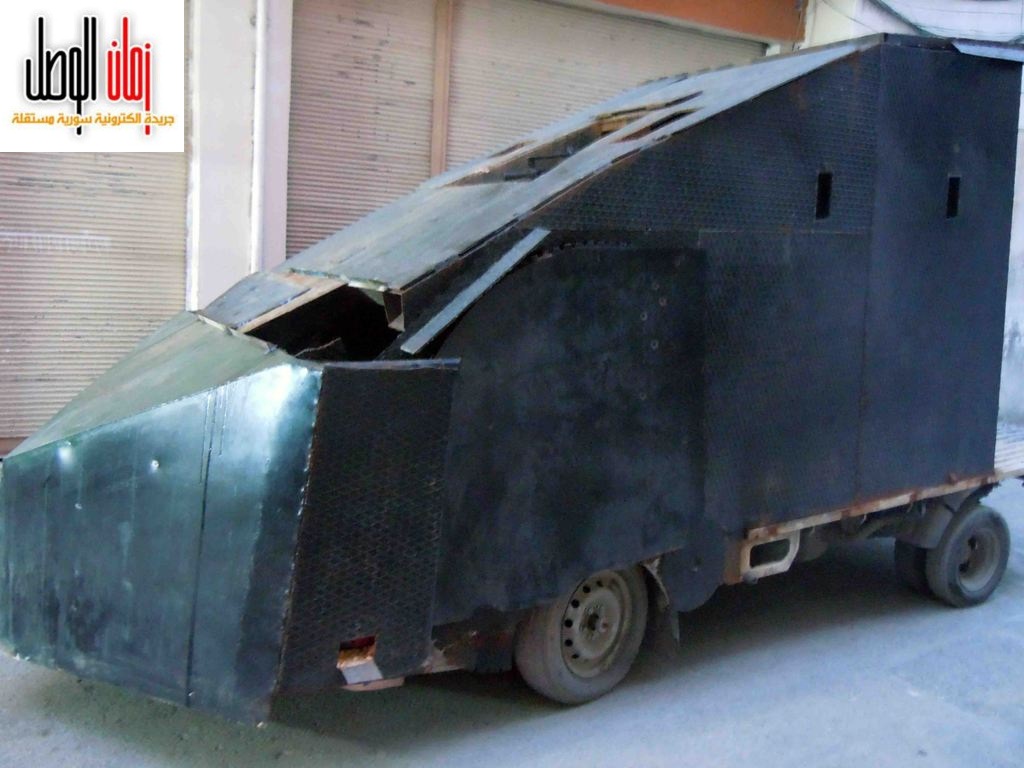
Now this thing is an interesting creation and I will tell you why. It is wedge shaped, which indicates to me that it could be used for barrier busting. Like knocking down sandbags/walls and getting in some quick shots with the mounted DShK. Then they pull away so they can reload and maybe attack from another point.

The wedge shape is also great for deflecting incoming small arms fire, or maybe even some cannon fire from the front. So on the streets of Homs where every inch of territory is being fought over with a vengeance, something like this was probably purpose built to deal with an issue the rebels identified.

Another cool use for such a vehicle is creating mouse holes in walls. So if you are able to punch a hole in a wall, then your assault team can run into those breaches and either make an escape or obtain a tactical advantage in a fight. They can also rescue downed rebels in a fight if they had to.

Who knows, but it definitely looks like they are taking some notes from the Libyans in their war and the Narco Tanks in Mexico. They probably checked out all of the ‘Mad Max’ designs back in the day in Iraq as well.  Interesting DIY Armor and if anyone has anything to add about this vehicle, I would be interested to hear what you got. –Matt


….Something much weird of the anti-aircraft pick up was recently spotted in Homs, Syria. It’s a sort-of improvised Suzuki pickup converted into armored vehicle capable to open its way through barriers and sand bags, equipped with a Doshka machine gun.

Dubbed T-HOMS75 by the Zaman Al Wasl reporter that took the first pictures of it, the vehicle is operated by a crew three people (driver, gunner and assistant): the gunner stands behind the drivers cabin with the gun placed on top of it.

It is capable of a maximum speed of 80 km/h (due to the added weight) and gives protection against light and medium machine guns, allowing to move in places guarded by snipers.

From the Aviationist.

Monday, May 28, 2012

Veteran News: Memorial Day– The Hero Dead Still Play Their Part…

The hero dead cannot expire:
The dead still play their part.
-Charles Sangster

For this year’s Memorial Day, I wanted to find a quote and theme that best described my feelings about the sacrifice and service of our dead military and contractor heroes of wars past and present.

The dead speak to us every day, and they speak loudest on days of remembrance. They tell us not to forget what they gave to this country. They tell us not to forget the cost of war, and to be damned sure that future wars we fight are worthy of the blood and sacrifice of heroes.

But they also want us to live our lives. A life that they would be proud of if they were to visit us today. They would want us to keep our heads up and go forth into the world to live a life fulfilled. To raise our families, lead our communities, prosper and be happy, and to live honorable lives.

So remember the hero dead today, and every day. But also remember that the hero dead still play their part in our lives and in this country, and we should by inspired and guided by what their deaths say and by what their deaths mean. –Matt


Friday, May 25, 2012

Quotes: Secretary William L Marcy On The Paris Declaration And Privateering, 1856

Lately I have been delving into privateering history, and Secretary of State William L Marcy comes up now and again. Even John Arquilla was quoting stuff about Marcy in some of his work, so I thought it would be cool to do some digging.

I was able to find an old article written about Marcy’s mission to the Congress of Paris, and the debates he was having with the other members of that congress about the terms of the Paris Declaration Respecting Maritime Law. This of course is the treaty that banned privateering.

With that said, Secretary Marcy is the reason why the US is ‘not’ a signatory of this treaty.  His reasons were pretty simple as the quote below says.  Privateering is a tool of warfare that smaller sovereigns can use, that lack the resources for creating navies that can compete with the larger countries with more powerful navies. It was the great equalizer of the time, and the US was not about to give up that tool of warfare.

Privateering is also an ‘offense industry’ that creates an industry that attacks weakness with strength (Sun Tzu). That ‘weakness’ is a poorly defended and dispersed commerce (and logistics/source of wealth) of an enemy, and the ‘strength’ is an industry that only grows with each prize that it captures. (today’s piracy is a prime example)

The strength does not come from one vessel, but of thousands of vessels, all hunting and canvassing the seas, looking for their prey. And all of these vessels are competing with each other over enemy prizes. The successful privateers grow their fleets and expand upon their winning strategies, while the competitors of these successful privateers watch and learn and try to mimic what they are doing to be equally successful.

This system of free market warfare also works well with The New Rules of War that John Arquilla and David Ronfeldt put together.(watch this video about the concept) That privateers are the ‘small and many’, that go up against the enemy’s ‘large and few’.  Privateers also fit well within the concept of ‘swarming’, because privateers do not set out in large battle groups or flotillas–they attack from all and any directions in small groups, and at the time and choosing of each individual privateer. There is no large navy, for a large navy to attack….

Although under the swarming concept, this industry kind of shuns large companies to do this.  A swarm has to be cost effective, if it is to be done by a single privateer company. Most would prefer to go after low hanging fruit or easy prizes. But if the money was there, swarming could easily be cost effective. Today’s pirates are experimenting with swarming and the market will determine if this is a profitable venture.

On the other hand, an industry of thousands of privateers versus the commerce of an enemy totally presents itself as a swarm. No one controls it’s actions, it attacks when and where it wants. There is no admiral directing the attacks of all of these vessels, and that is what makes it a unique attack group. The only controls in this type of industry, are a simple Letter of Marque.

Most of all, the concept of ‘finding’ works really well with privateers, because each private vessel is purely focused on ‘finding’ prizes. Their livelihood depends upon it, and those captains that are best at finding prizes, wins. Investors hire them specifically because of their success rates, and they depend upon these captains for profit. An example would be commercial fishermen, and how important a good captain is for finding fish and to covering the costs of investment–both internal and external.

All of these attributes combined, is what makes privateering an asset for nations. Secretary Marcy knew this as well, and our leaders knew this when they decided not to be a signatory to the Paris Declaration.

Finally, I mentioned before that private industry was important during times of war, because this nation uses an All Volunteer Military system. The problem with this system is that during the post war era, a citizenry demands a peace dividend, and their politicians give it to them. The military is then reduced in size and cost, and everyone is happy–until another ‘9/11’ happens.  And then we must go to war with the military we have, and not the one we wished we had.

Or during that war, it becomes unpopular for whatever reason–like it drags on and on, or there is an uptick in deaths, or the economy is doing well.  Finding volunteers during those times is tough. Or when a nation’s war plans becomes a victim of politics, with changing leadership or alliances crumbling because of issues in their home countries, and manpower issues arise during those time periods.

Man power requirements are always changing during a war, and war planners and politicians need tools to meet the needs of those changing man power requirements. Using privateers and private industry during times of war is a tool that gives our leaders the means to deal with the ups and downs, beginnings and ends of war or multiple wars. Private industry is what makes an All Volunteer Military work in this kind of environment, pure and simple. I think Secretary Marcy and others realized this back then about privateering, and today’s leaders realize how important private industry is for our current and future wars. –Matt

*For an excellent history about the Paris Declaration and why the US did not sign it, check out this downloadable book.  It is called “The Abolition of Privateering and the Declaration of Paris”, written in 1887 by Francis Raymond Stark.
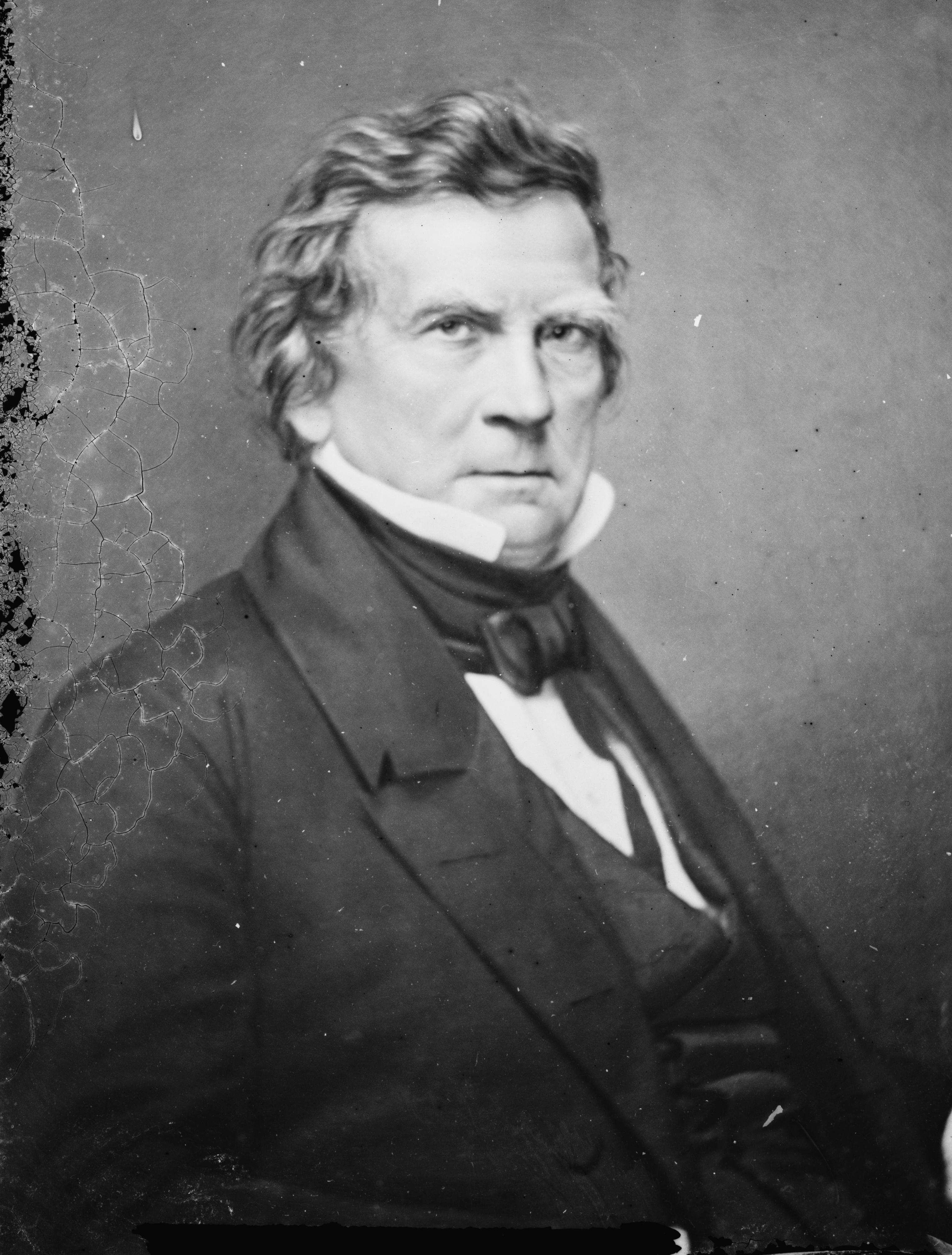


They tell us, “reserving the right to make what havoc our overgrown navies may choose to inflict upon your tempting commerce, we demand that you exempt our commerce from the only means of retaliation you possess, the system of privateering.”
We reply, “The terms are unfair. Equalize them by declaring your public and our private armed vessels under the same prohibitory rule, and we are with you. Otherwise, we are constrained to deny that privateering is or ought to be abolished.”


quote of Secretary William L. Marcy, about the Congress of Paris and terms of treaty, August 12, 1856.
 

« Newer PostsOlder Posts »

Powered by WordPress