Feral Jundi

Saturday, May 22, 2010

Industry Talk: Asgaard German Security Group Secures A Contract In Somalia?

   This just came across my virtual desk and I thought it was interesting.  First of all, the story is completely in German and I had to do some hunting around for a translation.  If any of my German readers would like to confirm the content on the original post, that would be cool.  But I think we get the picture with this translation.

   Now for the point of this post.  It would be great to get some confirmation on this from the EU or the UN or even the VOA which is pretty quick to confirm the yes or no on stuff like this.  Until I hear some official confirmation out there, I will hold any commentary. (we get a lot of companies claiming contracts in Somalia, and most are just talk) Interesting stuff if true. If anyone from Asgaard GSG would like to confirm this and provide a little more detail, I would gladly put up a edit. –Matt

Edit: 5/23/2010 – I had a fantastic response by the readership as you can see below, and here is the latest.  Asgaard GSG has made a public statement on this article and you can read that below in the comments.

——————————————————————-

German mercenaries for Civil War in Somalia

By Franz Feyder

May 22, 2010

More than 100 former Bundeswehr soldiers will soon intervene in the civil war in Somalia, according to information from NDR Info and tagesschau.de. A German company has signed a contract with a Somali politician. Experts warn of a “bloodbath”.

Until now, firms like Blackwater, Armor Group or Aegis are synonyms for modern mercenaries. German companies do not really play any role in the global market of privatized war. But now the German “Asgaard German Security Group” wants to compete against the big ones: at the end of last year the company, based in Telgte near Münster, made a contract with a Somali politician who does not recognize the internationally accepted transitional government. More than 100 men will be sent by Asgaard to the Horn of Africa, to bring Galadid Abdinur Ahmed Darman to power.

Protection under “Vollbewaffnung”

“The contract includes extensive and exclusive tasks and areas of competence: from strategic consulting and planning for security to operational implementation and execution of all measures necessary to ensure safety and restore peace,” it said in a Asgaard Press Release of last year’s end. CEO Thomas Kaltegärtner, a former sergeant major of the army, said to NDR Info and tagesschau.de that it is about militarily Personal Security Detail, property security and convey protection in the high-risk country Somalia. “In the event of cases, that is if an attack on the patrol, the convoy is taking place, this team responds immediatly. It has been taught.”

(more…)

Friday, May 14, 2010

Industry Talk: Taliban Protection Payoffs Denied By Watan Risk Management

     Popal argues it would be impossible to pay off the patchwork of insurgent groups attacking the supply routes, since there’s no single commander.

     Watan Risk Management also has the highest casualty rate among private security firms, he notes, with an average of 50 deaths per month between May and October 2009.

*****

   You know, Mr. Popal has a point.  If his company is paying off the Taliban, then why were they losing so many people every month? This is not me picking a side or anything.  I am just saying that if in fact Watan Risk Management is using bribes to protect convoys, then they should get their money back because they are getting a raw deal.

    I would also be curious to hear how many of those deaths were do to just the hazards of driving hours and hours on poor roads with horrible driving conditions, on top of attacks by the enemy? You know the saying ‘lies, damn lies, and statistics….’. It is still a sacrifice, but in this discussion it is important to differentiate because the Taliban has nothing to do with those deaths.

   The other point to make is that maybe they would have lost twice that many folks if they didn’t pay off those they could deal with?  Who knows, but I figured I would post Watan’s side of the story. Rest in peace to the fallen contractors of this company who paid the ultimate sacrifice while delivering this essential cargo for the war effort. –Matt

—————————————————————–

Ahmad Rateb Popal

Ahmad Rateb Popal. (CBC)

Taliban protection payoffs denied by contractor

April 27, 2010

Allegations that a private security firm has been bribing Taliban and other insurgents to ensure safe passage for NATO convoys in Afghanistan are being denied by a key player in the business.

Allegations that a private security firm has been bribing Taliban and other insurgents to ensure safe passage for NATO convoys in Afghanistan are being denied by a key player in the business.

Kabul-based Watan Risk Management was among the private companies fingered in recent media reports alleging that the firms are paying off insurgents to protect supply routes, essentially funnelling international funds to the very groups troops are fighting against.

(more…)

Tuesday, May 11, 2010

Industry Talk: Erik Prince Slams Big Government In Michigan Speech

     Prince returned to his hometown of Holland to give a speech criticizing government spending and regulation that drew a standing ovation from more than 700 people. The event, part of the town’s annual Tulip Time Festival, had to be moved to Hope College’s basketball arena because of the high demand for tickets. 

*****

     This is interesting because you just don’t hear of Erik Prince doing too many of these types of events. This might be an indicator that he is wanting to get more public and more vocal, either to push some politics, correct the record or sell books. It’s probably a little of everything, and controversial figures like him sell big time at speaking events.  Who knows, but one thing is for sure–the crowd liked him, and they wanted more. Now if he started a blog, complete with a facebook/twitter page, well then he could really get vocal. (hint, hint) lol –Matt

——————————————————————-

Blackwater founder slams big gov’t in Mich. speech

By KATHY BARKS HOFFMAN

April 6, 2010

HOLLAND, Mich. — Blackwater Worldwide founder Erik Prince said Wednesday his values of hard work and personal responsibility “have gotten me a few detractors along the way, and I’m OK with that.”

Prince returned to his hometown of Holland to give a speech criticizing government spending and regulation that drew a standing ovation from more than 700 people. The event, part of the town’s annual Tulip Time Festival, had to be moved to Hope College’s basketball arena because of the high demand for tickets.

Holland, about 30 miles west of Grand Rapids, is in Michigan’s most reliably Republican county. Home to many residents of Dutch descent, the area is known for its strong Dutch Reformed faith and conservative values.

Although 60 people outside held signs protesting Blackwater’s actions in Iraq, many inside said Prince’s speech inspired them. They said they were glad to hear his side of unflattering news reports about the North Carolina-based company, now called Xe Services.

(more…)

Thursday, April 29, 2010

Industry Talk: Best Value Versus Lowest Price Technically Acceptable

Brooks further noted that IPOA believes it is unwise to require cost to be considered the ultimate driver in federal procurement, for doing so simply creates a “race to the bottom” where other qualifications are not given due consideration. “We believe that the proposed amendment will result in more contract defaults, poor performance and an overall decrease in the quality of goods and services provided to the services.”

*****

Interesting debate. Doug took the side of the Commission on Wartime Contracting, and POGO is doing their own thing. My thoughts on it all is who wants the lowest bidder protecting them in a war zone? I mean if you were to look at what happened with AGNA in Kabul, or what I call the Kabul Fiasco, that is a prime example of how lowest bidder contracting does not work. In that ‘race to the bottom’, AGNA sure did win that contract, but they also created an impossible environment for their guard force to operate in.( I will spare you the party photos)

I also put in this post, what POGO thought about best value, and why they support the LPTAO(Lowest-Price Technically Acceptable Offer). They think that if the government would have specified what they thought was technically acceptable in the contract, that the Kabul Fiasco could have been avoided in the first place. I think they make an excellent point as well, but yet again, I refer to the common saying ‘you get what you pay for’. I would ask Danielle over at POGO if she would like to be protected by the lowest bidder in a war zone? Would you want the best protecting you, or would you want what was technically acceptable? Do you want the best doctor for the money, or do you want a doctor who is cheap and barely got through medical school-but can still practice medicine?

Plus, when you put the responsibility of deciding what is technically acceptable in the hands of individuals who are being pressured by their management or politics, to reduce cost, what is the limit to what is technically acceptable in their view? Of course you don’t want to overspend for a task, but when there is an environment/culture in government to only seek the cheapest price for a task and not consider other factors, I think that could lead to some serious problems.

Another example of how LPTAO sucks, is the TWISS contracts. Someone in the chain of contracting command, determined what is technically acceptable in regards to the guard force protecting troops under TWISS. What that process has produced is Ugandans or Kenyans standing guard at the gates of FOBs, who are getting paid peanuts and receive minimum training or vetting. All because the government has deemed that the companies supplying these troops are authorized to do so. If you talk to contractors who have worked this contract, they will tell you how incredibly screwed up it is.(the management will tell you it is a glowing success, go figure. lol) But it is all technically acceptable to the powers that be to allow the companies to run the TWISS stuff that way, and the companies keep ‘racing to the bottom’ to win that contract. (I get more emails from guys and gals who are just pissed off about how poor of a contract TWISS is–more than the Kabul embassy contract)

Overall, we should contract these services with a number of factors in mind. Past performance should count, as does cost. Experience in protecting people, and having the technical ability to do so is another. We should pick the best value companies for dangerous war zone duty, much like a patient would pick a doctor for their life saving diagnosis and care. I do think lowest bidder works for some contracts, like leaf raking or sweeping up a garage–stuff where lives are not on the line. But for protecting people in highly complex and dangerous war zones, where lives and government reputation is on the line, you probably want a system of contracting in place in which the government gets the best forces they can get for the money. That’s if they care about the protection of their reputation and people out there?

The government should also focus on getting plenty of competent contracting officers who can managing these contracts, to ensure that the government continues to get a good deal. Unfortunately, the government has been applying lowest bidder mindset to their contracting officer corps, in the form of not paying enough for that job, and not doing the things necessary to build up and strengthen that essential tool of government contracting. –Matt

—————————————————————–

IPOA Opposes IMPROVE Act Amendment to End Best Value Competitions

Stability Operations Trade Association Advocates For Use of “Best Value” in Defense Procurement

WASHINGTON-On April 27, 2010, IPOA, the Association of the Stability Operations Industry, sent a letter to the Chairman and Ranking Members of the House Armed Services Committee urging them to oppose a proposed amendment to H.R. 5013 – Implementing Management for Performance and Related Reforms to Obtain Value in Every Acquisition Act of 2010 (IMPROVE Act of 2010). The association asked the congressional leaders to reject an amendment entitled “Requirement that Cost or Price to the Federal Government Be Given at Least Equal Importance as Technical or Other Criteria in Evaluating Competitive Proposals for Defense Contracts.” IPOA fully supports the IMPROVE Act’s goal of more efficiently procuring services to support the Department of Defense. However, the amendment would effectively hamstring the ability of contracting officers to use discretion in awarding contracts and sets the stage for compulsory acceptance of the cheapest offer, minimizing other factors such as experience, quality or past performance.

“Lowest-price security not good enough for war-zone embassies”

IPOA cited an October 1, 2009 report from the Commission on Wartime Contracting entitled “Lowest-price security not good enough for war-zone embassies,” in which the Commission noted the dangers of focusing on price as the determinative factor when selecting contractors for the Department of State. The Commission noted that statutory requirements to select the lowest price can do more harm than good. In fact, the Commission recommended that the provision be eliminated and that the Department of State be given the flexibility to use a best value award process. The House amendment currently under consideration would move the Department of Defense closer to a statutory “low price” award scheme and would go against the clear recommendation of the Commission.

“Forcing the government to contract essential services on the cheap is not a recipe for success,” said Doug Brooks, IPOA President, “if we’ve learned anything over the past nine years it is that cutting corners on oversight or quality in contracting can have dire consequences.” Brooks noted that IPOA supports the concept of “best value” in federal procurements and believes the amendment’s “one size fits all” approach is ill advised.

Brooks further noted that IPOA believes it is unwise to require cost to be considered the ultimate driver in federal procurement, for doing so simply creates a “race to the bottom” where other qualifications are not given due consideration. “We believe that the proposed amendment will result in more contract defaults, poor performance and an overall decrease in the quality of goods and services provided to the services.”

IPOA was founded in 2001 to reflect a clear recognition that the private sector can play a larger, more cost-effective role in fundamentally improving peace and stability operations worldwide. With more than 60 members, IPOA is the leading voice of the stability operations industry.

Story here.

——————————————————————

CWC Findings on Embassy Guards Fiasco Amount to “Blame Shifting”

Oct 06, 2009

On October 1st, the Commission on War Time Contracting in Iraq and Afghanistan (CWC) issued a Special Report. Entitled “Lowest-priced security not good enough for war-zone embassies,” the report places most of the blame for the recent fiasco involving the work of ArmorGroup North America at the U.S. embassy in Kabul, Afghanistan, on the use of a negotiated procurement source selection technique known as “lowest-price technically acceptable offer” (LPTAO).

Monday, April 19, 2010

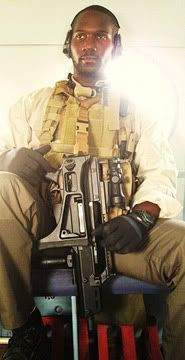
Industry Talk: U.N. Security Officer Louis Maxwell ‘Executed By Afghan Police’

   I posted a deal about the brave actions of Louis when this originally happened and hoped that the UN would recognize his bravery and sacrifice with the Dag Hammarskjold Medal.  Now that this story came out, this adds even more tragedy to the mix.  Imagine surviving all of that fighting, and then getting executed by the so called ‘police’?  Perhaps these were not police at all, and were just the enemy dressed like the police? This doesn’t sound like friendly fire to me.  Who knows and I certainly hope the UN continues the investigation on this. –Matt

—————————————————————–

 Louis Maxwell

Louis Maxwell. 

UN bodyguard ‘executed by Afghan police’

A United Nations bodyguard who saved 17 colleagues by holding back Taliban fighters who stormed a guesthouse was minutes later executed by Afghan police, according to a video which has been seen by officials.

 By Ben Farmer in Kabul17 Apr 2010

Louis Maxwell, a UN security officer from the United States, was among five international UN workers who died in the early morning October 28 attack in Kabul.

Mr Maxwell climbed onto a roof of the privately-run Bakhtar guesthouse and held the suicide attackers at bay with an assault rifle so colleagues could escape.

(more…)

« Newer PostsOlder Posts »

Powered by WordPress