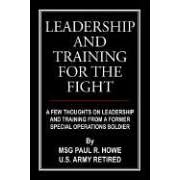
Today’s post is about the concept of shared reality as discussed by Pete Blaber in his book ‘The Mission, the Men and Me’. And because this is about best practices management, I wanted to tie it into Toyota’s ‘Genchi Genbutsu’ management principal 12 (Japanese for go and see for yourself to thoroughly understand the situation). The goal with this piece is to emphasize the importance of listening to the guys on the ground or the Mavens and why a company should tap into this input gold.
Everyone in the contracting business has experienced at one point or another, the disconnect between the head shed and the reality on the ground of where they are posted at. A funny one is uniforms, where you have to wear some ridiculous outfit that is way to hot for the climate, and you become a heat casualty if you wear it–but boy does it look sharp in the catalog.
Or worse yet, you have experienced what it means when a manager has no idea what you are seeing and experiencing on post or on a mission, and implements an order from the office that just did not make sense that you must follow. And if you have experienced this, and someone got killed or hurt because of such a thing, I am truly sorry your team experienced that.
The biggest problem I have seen with contracts is that the head shed back in the states or lets say in Baghdad, has not a clue about what their managers are doing out in the field. Worse yet, they get input from the guys on the ground that are working under that manager, and the input from the workers falls on deaf ears. You hear things like, if you don’t like it, leave, and those workers have the choice of putting up with a poorly managed contract, or they jump contract to somewhere else.
So what is the problem that companies keep repeating out there? There is no shared reality within the company, and they do not act on the input in an appropriate way to solve problems and constantly evolve/improve. They do not view complaints or input from the field as a good thing, or they just don’t care or refuse to seek it out, and they have not a care about improvement or taking care of their employees and client.
In the spirit of building snowmobiles, let me add some ideas that companies could use to build a management philosophy, and why companies need to listen and obtain a shared reality. I will not build it for you, but I will bring up the most current ideas of the best run and most highly respected companies and military units in the world. I will also bring up random ideas in the spirit of this process, just to add a horn to the snowmobile, and I think Boyd would approve.
SEALs and Army Fusion in Ramadi
The Navy SEALs and Army in Ramadi, as discussed in Dick Couch’s book ‘The Sheriff of Ramadi’, used the concept of sharing reality to integrate the two very different units to assault Ramadi. The SEALs checked their egos at the door, and really opened up to the Army so they could integrate well into the mission. They shared each other’s reality to get the job done, and really took advantage of each other’s strengths for the mission of taking back Ramadi. The SEAL commander made a statement in the book regarding fusion. In SEAL operations, they were always trying to fuse Information with Operations, in Ramadi, they were trying to fuse the SEALs with the Army. The result of this sharing of information and resources–a total transparency of intel between the two, was amazingly successful. I highly recommend this book, and shared reality is a major theme.
Shared Reality
Pete Blaber wrote a book called The Mission, My Men, and Me, and he was also mentioned in another book by Sean Naylor called ‘Not a Good Day to Die: The Untold Story of Operation Anaconda’.In the comments section of a blog I was perusing, that discussed Sean’s book, Pete himself commented on one of the most important lessons he took away from that operation. Here it is:
Guys
Thanks for the superb summary of the battle, I’m reading your insights and perspectives on the eve of my book being published on 2, Dec. Your points on hubris, and listening to the guys on the ground are central to the section of the book devoted to Anaconda. My overarching lesson/take-away from the battle is this–It’s not reality unless it’s shared. Sharing information creates a shared reality, not only does it make the whole wiser than the individual parts, it also serves as and effective system of checks and balances to correct misinterpretations by individuals who don’t have all the pieces of the puzzle. AFO was a boundaryless organization, we had no boundary’s to sharing information–both outward and inward, it was above all else, the reason why we were able to accomplish so much with so few.
Pete Blaber
The Toyota Way and Principle 12
With Toyota, this is a no brainer. This is one of the best companies in the world, and they are doing something right. The book, The Toyota Way talks about the 14 management principals that have made them great. I also posted the wikipedia for these principles in the publications section of Feral Jundi. The principle I wanted to focus on is principle 12. As a primer though, here is Toyota’s philosophy that is constantly instilled into the DNA of the management and work force of this outstanding company.
Toyota, Our Philosophy(from their website)
At Toyota, our first concern is our customers and the quality of product we deliver. That’s why we say total customer satisfaction drives everything we do. Naturally, the best approach to keeping our customers satisfied is to provide them with the highest quality products and service.
At Toyota facilities around the globe, “kaizen” is a word mentioned frequently. The word means “continuous improvement” and is a key factor in Toyota quality. Kaizen has been incorporated into the Toyota Production System driving our engineering and manufacturing teams to constantly improve our lift trucks. It also drives our service personnel.
And here is the 12th Principle from Wikipedia. It is self explanatory and take note of #4.
Principle 12 from the Toyota Way
* Go and see for yourself to thoroughly understand the situation (Genchi Genbutsu).
Toyota managers are expected to “go-and-see” operations. Without experiencing the situation firsthand, managers will not have an understanding of how it can be improved. Furthermore, managers use Tadashi Yamashima’s (President, Toyota Technical Center (TCC)) ten management principles as a guideline:
1. Always keep the final target in mind.
2. Clearly assign tasks to yourself and others.
3. Think and speak on verified, proven information and data.
4. Take full advantage of the wisdom and experiences of others to send, gather or discuss information.
5. Share information with others in a timely fashion.
6. Always report, inform and consult in a timely manner.
7. Analyze and understand shortcomings in your capabilities in a measurable way.
8. Relentlessly strive to conduct kaizen activities.
9. Think “outside the box,” or beyond common sense and standard rules.
10. Always be mindful of protecting your safety and health.
Safeway, Mystery Shoppers, and Trust But Verify
A little talked aspect of how corporations try to get some shared reality(not everyone acts normal around the CEO or Review Team), is mystery shoppers. It sounds funny, but mystery shoppers are an essential tool for one company called Safeway, a grocery chain. They hire mystery shoppers to shop at their Safeway’s, and report on the services of the various stores. The management and workforce are all evaluated by these trained and vetted Mystery Shoppers, and no one knows when it happens or who they are. But if a MS comes in and does not see things being done properly or they feel that they did not get good service, the company tasked with gathering this intelligence will send a report to Safeway corporate office, and they will confront those issues.
This is a very interesting concept, and the way I could see it being done in the security contracting industry is companies could hire a investigative company to actually plant employees who can report on how everything is working in the field. The main theme here, is to see if everyone is doing it right, when no one is looking. That should be the goal of any company when they hire a manager–that individual should be the type that does it right, when no one is looking. Safeway using a MS service, is able to determine that through a ‘trust, but verify’ type system.
What Would Google Do?
This is an interesting one, because it requires a type of open-ness that most companies are not used to. Especially managers, but it is important to look at in today’s internet age. The book ‘What Would Google Do’, by Jeff Jarvis talks about just that. If Google was to build cars, how would they do it? If they were to run an airline company, how would they do that? Jeff has put together the principles of what makes the company Google great in today’s Web 2.0 world, and asks the question of how Google would run your company differently. Google really depends a lot on customer feed back and making everything they have accessible, cheap, and easy to build off of. They always put something into Beta, and then they seek out all and any input to make it better. The result is a service or online tool that pleases a lot of people.
For our industry, listening to the guys on the ground about how to do something better, or setting up a social networking site around a company(like what Obama did with his social networking/campaign site), that actually taps into the ideas and enthusiasm of the group, is something that has a lot of merit. Or another idea is to just constantly share information with your employees, and constantly be open to all ideas that come back–both good and bad. It is all about being a learning organization, and the more ideas the better. It requires transparency though, and that means opening up to your work force about what is what and why the company does it this way or that. And your best ideas usually come from your Mavens.
Mavens and Blogs
When the book called The Tipping Point, by Malcolm Gladwell came out, I was enthralled with it. What an awesome book about business and ideas, and how stuff works in a company. Malcolm listed three vital components of a company–a salesman, a connector, and a maven. All of them are important to the success of a company, and everything is self explanatory. A Salesman is the type of guy that could sell snow to a eskimo. You need these guys to sell products and services, so you can constantly get business. The Connector is a guy that knows everyone, and I mean everyone. They are the type that have a mega rolodex in their brain, and are very social. These are the guys that will know a guy that will get you a cheap part or service, and can make things happen when it is time to implement a plan.
But to me, the most important guy out of all of these guys are the Mavens. These are the guys that are extremely knowledgeable about a certain subject and are almost obsessed with it. They are certainly passionate about that subject, and people look up to them for answers and ideas. Mavens are the guys that a company needs to impress and embrace, or suffer the onslaught of criticism by that Maven. Malcolm described a Maven as the guy that would call the 1-800 number printed on a pack of bubble gum, to put their two cents in about that gum. That is why companies put numbers on a pack of gum, to attract the Mavens and get their input.
And when a Maven has a blog that is read by many, then you as a company must seek these guys out and figure out what makes them tick. Because Mavens talk with each other, and they care about the details and the little things about your company. If you are doing something right, someone in that Maven network will talk about it, so it pays to pay attention.
One example of this, is Jake Allen of Combat Operator. He wrote a scathing review of Blackwater and Eric Prince on his blog, and it is worth a read. But most importantly, Jake is a Maven. He has created a blog about the security contracting industry, and he is there thinking about it and writing about it all the time. He pays for the hosting and the development of the site, and it is his passion displayed for everyone to read.
Jake also has a readership, which is a common occurrence for Mavens, and this is something that companies should take note. Matter of fact, if I was Eric Prince, I would be doing my best to answer some of the questions and issues that Jake has raised, and utilize the power of this Maven before he is able to influence other Mavens and readers.
There are other Maven’s out there, like Eeben Barlow’s blog, Free Range International, Michael Yon, David Isenberg, Doug Brook’s IPOA, Danger Zone’s Blog, Soldier Systems Blog, Small War’s Journal Blog or even this blog. At the right, I have listed all sorts of Mavens and their blogs. I found them all and collected them up on my blog, so I and my readers can access them quickly. Hell, I even made some of them into widgets or put them on a RSS feed, so I can get their information as it is posted.
A funny thing happens when you start doing it right, Mavens actually say something nice or complimentary about your company. They actually mention a strength of an idea, service or product, and their readership listens. Then that readership talks it up with their networks, and they send out links to that Maven’s blog, and it is viral. They know Mavens care and are passionate, and these networks of Mavens take notice when they have something to say. And Mavens like myself and Jake use tools to spread ideas, like Facebook or Twitter or a Podcast, and you start to see that not only are we passionate about an industry, but we want to get the message out about our passion. When we are wrong, our readership also corrects us, and that makes the strength of the ideas even stronger. Mavens are always seeking that information gold and dishing out that wealth to their readership. It is a powerful thing, if a Maven knows what they are doing.
What is also interesting is the use of blogs by companies and the military. Soldiers and employees are encouraged to interact in the comments section of the blogs, and those guys get to interact with the leaders of the company. I was reading about a General that had a blog, that is used to connect with his soldiers and public. Perhaps Eric Prince could start a blog, and share more of his thoughts with his company and the public. Mavens would love to interact on his blog, and I bring up the example of Eeben Barlow’s blog. Eeben has been very open about his former company Executive Outcomes, and all that information is gold to a Maven. As a result, I am always asking questions or commenting on stuff Eeben talks about, and that only builds my intelligence about the subject of Private Military Companies.
Summary and Kaizen
Shared reality, shared reality, shared reality. Listen to the guys out in the field, listen to the Maven bloggers, listen to the lessons learned from Pete Blaber/the SEALs/Toyota/Google/Safeway and constantly improve your company by obtaining input from those that care enough to say something. Then share your information and ideas with them so these Mavens and networks can actually come up with new ideas that are better or that enhance your current ideas. That is vital for learning organizations. This is what Toyota calls Kaizen or “continuous improvement”, and that is the stuff that will give your company the edge over the other guy. –Matt