Feral Jundi

Sunday, April 4, 2010

Afghanistan: Afghan Marksmanship Is A Fable, Bring Back The Jezailchis

     One day, after a few hours of fighting in which the Taliban had not yet hit any Marines, a corporal from Second Platoon stood upright, exposing himself above the waist and looking over a wall as bullets flew high overhead. He didn’t flinch. “What’s everybody ducking for?” he said. He cupped his hand to his mouth and shouted an expletive-laden taunt at the Taliban gunmen shooting from concealment on the opposite side of a field. The editors would never allow the corporal’s words to be printed here. But they amounted to this: You guys can’t shoot.

*****

    Thanks to Doug for bringing this to my attention. Man, did the Italian Carabinieri just show up the DynCorp police instructors or what? lol Training folks requires patience and a profound understanding of the fundamentals.  Good on the Italians for correcting the issue.  But it also highlights the importance of standardizing this contract, so you don’t have companies or even the military doing whatever they want.

    I cut that one little piece of reportage out of this first article posted below, just to get the ball rolling for this post.  Marksmanship is something contractors are teaching to Afghans, Iraqis, Ugandans, Nepalese, you name it, and there are so many issues that come up when trying to teach this life saving and essential skill to the troops.  For this post, I will highlight the Afghan issues and present the six points that Mr. Chiver’s mentioned in his excellent reportage on this topic. I am not saying these apply to all forces being trained, but for Afghanistan, this is what has been identified.  So with that said, let’s get started.

   In a prior post, I mentioned the concept of the Jezailchis Scouts (JS).  Or basically create a scout/sniper force in Afghanistan that would pride itself as being the premier Afghan tracking and killing/capture force. Something along the lines as the Selous Scouts.  A force that all Afghans would look up to and highly respect.  This force would be the go to guys for hunting humans up in the mountains, and they would have great utility (pseudo operations, sniper operations, scouting, snatch and grab, etc.).  Marksmanship and the ability to track and survive on their own, would be the hallmarks of this crew.  It would also draw from that fabled history of the Afghan being a good marksman, hence the Jezailchi reference in the name of the group.

   But as the reader will find out, Afghans on both sides of the conflict, suck at marksmanship.  Mr. Chivers boiled it down to the six areas that are contributing factors to poor marksmanship on the side of the Taliban (but could easily apply to Afghan Army or Police forces)

   Here they are.

   1. Limited knowledge of marksmanship fundamentals.

   2. A frequent reliance on automatic fire from assault rifles.

   3. The poor condition of many of those rifles.

   4. Old and mismatched ammunition that is also in poor condition.

   5. Widespread eye problems and uncorrected vision.

  6. Difficulties faced by a scattered force in organizing quality training.

   The second Chiver’s article also mentioned what happens when a enemy force can’t shoot–they adapt.  In this case, AK 47’s were used to cause reactions in patrols.  Meaning, if an ambushing force fires the weapons and the patrol of Marines runs to the closest protection that happens to be pre-rigged with IED’s, then that ambushing force could command detonate and kill the Marines that way.  So the enemy knows it sucks when it comes to shooting, so they just use the weapon as a catalyst to get our forces into traps or to delay our forces.  Nothing new, and this is a tactic used over and over again in the history of warfare.

   But going back to the marksmanship thing, I personally think that this is a weakness that would should be exploiting.  We exploit it by creating some good ol fashion kick ass Afghan shooters, coupled with Coalition snipers and marksmanship mentors. We also have the coalition bring in weapon systems that can reach out and touch someone, and has optics. I continue to read reports that this last part is happening, and that is good.  We should be picking these guys off from across the canyons or at distances that the Taliban cannot engage at.

   That brings up the other point of the article.  The two weapons systems that the Taliban are able to actually hit people with, are the PKMs and sniper rifles (with trained snipers using them).  The PKMs makes sense, because a machine gunner can adjust fire easily, and concentrate fire better and at distance.  It is the only weapon system that suits the capabilities and limitations of the kind of fighters using it. (please refer to the six points up top)

   Now for the Afghan Army and Police, there are a few things we could do to bring them up to speed quickly.  Giving them eyeglasses would be a start. lol  Also, some accountability must be shown for the quality and functionality of all weapons and ammo issued.

   Some ideas off the top of my head would be to modify the AK or the issued M-16 to only shoot semi-auto.  It would force these guys to shoot one shot at a time, as opposed to the spray and pray technique.  The other thing that could be done, is to put reflex sites on these weapons–stuff that is AK tough and does not require batteries. That way, you have a weapon that is Fisher Price simple for the Afghans to use, and they won’t be able to use it like a fire hose. If the weapon is better suited to the user, then the other aspect of teaching marksmanship fundamentals will go a lot easier. There should also be an effort to cull the best of the best from these groups, and get them in marksmanship focused group like the JS or whatever special forces that has been created.

   Finally, marksmanship could be promoted in Afghan society once again.  Competitions could be held, cash or goats could be issued as prizes, and competent Afghan shooters could be identified and approached for recruitment into the JS or Army. Hunters could be rewarded for meat collected, or hide or whatever, and they could be approached as well.  Hunters throughout the world are all the same, and I am sure there are plenty in Afghanistan who are very good at it and enjoy the sport.  You just have to develop an outlet to attract these guys.  Even in the Army and Police, I am sure there are those who could really shine with marksmanship if they had an outlet for such a thing. Especially if marksmanship billets paid more–you would definitely increase the interest in such a thing. Stuff to think about, and thanks to Mr. Chivers for some excellent information on the matter. –Matt

Edit: 04/11/2020 Here is the next article Mr. Chivers wrote about Afghan Army and Police marksmanship. Awesome.

——————————————————————
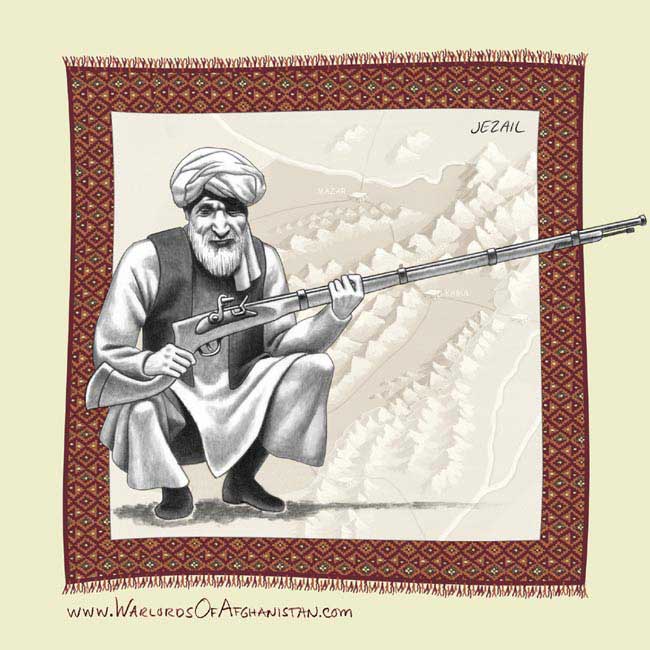
Jezail

The Gang That Couldn’t Shoot Straight

Six billion dollars later, the Afghan National Police can’t begin to do their jobs right—never mind relieve American forces.

By T. Christian Miller, Mark Hosenball, and Ron Moreau

Mar 29, 2010

(Only a portion of the article is posted, and follow the link to read the entire thing)

At Kabul’s police training center, a team of 35 Italian carabinieri recently arrived to supplement DynCorp’s efforts. Before the Italians showed up at the end of January for a one-year tour, the recruits were posting miserable scores on the firing range. But the Italians soon discovered that poor marksmanship wasn’t the only reason: the sights of the AK-47 and M-16 rifles the recruits were using were badly out of line. “We zeroed all their weapons,” says Lt. Rolando Tommasini. “It’s a very important thing, but no one had done this in the past. I don’t know why.”

The Italians also had a different way of teaching the recruits to shoot. DynCorp’s instructors started their firearms training with 20-round clips at 50 meters; the recruits couldn’t be sure at first if they were even hitting the target. Instead the carabinieri started them off with just three bullets each and a target only seven meters away. The recruits would shoot, check the target, and be issued three more rounds. When they began gaining confidence, the distance was gradually increased to 15, then 30, and then 50 meters. On a recent day on the firing range only one of 73 recruits failed the shooting test. The Italians say that’s a huge improvement…..

Story here.

—————————————————————–

Afghan Marksmen — Forget the Fables

By C.J. CHIVERS

March 26, 2010

The recent Marine operations in and near Marja brought into sharp relief a fact that contradicts much of what people think they know about the Afghan war. It is this: Forget the fables. The current ranks of Afghan fighters are crowded with poor marksmen.

This simple statement is at odds with an oft-repeated legend of modern conflict, in which Afghan men are described, in clichés and accounts from yesteryear, as natural gunmen and accomplished shots. Everyone who has even faintly followed the history of war in Central Asia has heard the tales of Afghan men whose familiarity with firearms is such a part of their life experience that they can pick up most any weapon and immediately put it to effective work. The most exaggerated accounts are cartoonish, including tales of Afghan riflemen whose bullets can strike a lone sapling (I’ve even heard “blade of grass”) a hilltop away.Without getting into an argument with the ghost of Rudyard Kipling, who was one of the early voices popularizing the wonders of Afghan riflery, an update is in order. This is because the sum of these descriptions does not match what is commonly observed in firefights today. These days, the opposite is more often the case. Poor marksmanship, even abysmally poor marksmanship, is a consistent trait among Afghan men. The description applies to Taliban and Afghan government units alike.

Over the years that Tyler Hicks and I have worked in Afghanistan’s remote and hostile corners, we have been alongside Afghan, American and European infantrymen in many firefights and ambushes. These fights have involved a wide set of tactical circumstances, ranges, elevations, and light and weather conditions. Some skirmishes were brief and simple. Others were long and complex, involving as many as a few hundred fighters on both sides. One result has been consistent. We have almost always observed that a large proportion of Afghan fire, both incoming and outgoing, is undisciplined and errant, often wildly so. Afghans, like most anyone else with a modicum of exposure to infantry weapons, might be able to figure out how to make any firearm fire. But hitting what they are aiming at, assuming they are aiming at all? That’s another matter.

(more…)

Wednesday, March 31, 2010

Iraq: Aegis Defense Contractor Robbie Napier Killed, Others Wounded And Killed In Separate Incidents

   I had no idea that this happened several weeks back, and there is nothing on the Aegis company website or Army Corps of Engineers website about this death, or even the other attacks. Supposedly another contractor was killed by a sniper, and others severely wounded, but there is nothing in the news about it.  If a reader could please pass on the news link to the death related to that sniper, I will definitely make an edit to this post.

   The other deal with this, is that I found out about this because of a story a blogger put together, who also happens to be a contractor and artist.  Perhaps he can come over and fill in some of the blanks.  Good on him for at least writing the story up on this, because if it wasn’t for him, I would have never have known. I also checked the icasualties site, and others, and I could not find anything at all about these deaths. Yet again, if the Army Corps of Engineers or Aegis Defense posted a press release about this, I could have blogged about this awhile back–but there was nothing. (someone please correct me if I am wrong on this, but I found nothing in my searches)

   With that in mind, if you are reading this and you are seeing no attention at all about a security contractor death in your company, or a death you heard about somewhere else, please let me know and I will put it up on the blog.  I have a multitude of media folks reading FJ, and I will definitely get the word out.  These are our fallen brothers, and their deaths mean something.  But if know one knows that they were killed, other than their family, then no one will ever have an idea about that sacrifice.

   Iraq is also at a very interesting point in the war.  We are at the end there, but make no mistake about it, things are still dangerous and just because the media is not reporting it, doesn’t mean it is not happening.  With the draw down, it requires a lot of road work.  We are moving all this stuff out of theater, and contractors are going to be the guys doing it all–much like we were the ones that helped to bring it all in.  And as we see Iraq take more of the security duties, and Coalition forces take less, the possibility for attacks only increase, because the insurgency feels it has a better chance of getting in a punch or two as we are leaving. Watch yourselves out there. –Matt

——————————————————————

Wakefield bomb blast victim had just delivered baby

20 March 2010

By Stuart Robinson

A SECURITY contractor was killed in an explosion in Iraq just three months after delivering his baby daughter in the kitchen of his home.

Ex-Marine and father-of-two Robbie Napier, 36, from Wakefield, died after the explosion this month.

On Friday, his grieving father told the YEP that just last Christmas he had returned home and delivered his baby daughter at his family home in Stanley.

An inquest in Wakefield into his death heard that Mr Napier was a front seat passenger in the front of a three-vehicle convoy on March 10.

Coroner’s officer Anthony Lancaster told the hearing: “Mr Napier sustained fatal injuries in an explosion of a detonated explosive device.”

The court heard that following the explosion in Baghdad Mr Napier was taken to a nearby base but was pronounced dead a short time later.

(more…)

Tuesday, March 30, 2010

Industry Talk: Can The Government Force Contractors To Unionize?

   It’s a basic question, and I have not a clue about how this would pertain to government contracts in the war.  I am sure there is some clause for overseas contingency operations that do not allow labor unions with wartime contracts.  I could be wrong, and this is an area that is way out of my lane. (any legal eagles want to step in, or maybe even the folks at IPOA)

   Plus, with how globalized contracting has become with DoD and DoS contracts, I just don’t see how you could force some Sri Lankan working at the DEFAC for KBR to pay the dues for some union.  There are just so many pieces to this, and I really have never explored this area.

   Now I have heard of numerous discussions amongst contractors while working out there, revolving around organizing. Most of the times, it was all talk born from poor labor practices of companies.  There have even been some attempts at creating unions for this industry, but nothing with any teeth or longevity. I could be wrong, and there might be some solid stuff out there that I am not aware of.  I know for CONUS, there are security related unions.  But for OCONUS, I have yet to see it.

   For fun though, what would happen if we were forced to be unionize?  Would that be a good thing, or a bad thing? –Matt

—————————————————————–

Can the Government Force Contractors to Unionize?

By Jim Garrettson

March 29, 2010

Executive order 13502 [1]from February 2009 garnered relatively little attention when it was issued.   It reads, “in order to promote the efficient administration and completion of Federal construction projects,” executive agencies are allowed to require contractors working on federal construction projects to implement “Project Labor Agreements.”

This order applies to any construction, renovation or rehabilitation project that costs over $25 million, and encompasses all agencies but the GAO.  The order also rescinded Bush’s Executive Order 13202 [2]from February, 2001, which prohibits the government from requiring contractors to abide by these agreements, or discriminating against contractors for “refusing to become or remain signatories or otherwise to adhere to agreements with one or more labor organizations, on the same or other related construction project(s).”

Project Labor Agreements (PLAs) [3] require all employees working on a specific project to abide by the same collective bargaining agreement.  This enables the hiring of non-unionized contractors, but typically requires them to pay into multi-employer union pension plans, putting non-union contractors at a financial disadvantage because they must pay for the union plan and for their existing company plan, according to the Associated Builders and Contractors [4].  Another problem for contractors is that many union pension funds are underwater, according to this recent article in the Washington Times [5].  Employers bound to collectively bargained agreements are forced to cover costs for underfunded union pensions when other contractors drop out.

(more…)

Friday, March 12, 2010

Industry Talk: How To Strengthen The Afghan National Police, By DynCorp CEO William Ballhaus

     All warfare is based on deception. Hence, when we are able to attack, we must seem unable; when using our forces, we must appear inactive; when we are near, we must make the enemy believe we are far away; when far away, we must make him believe we are near. –Sun Tzu

*****

   This battle is getting interesting now.  You see, DynCorp realizes that if they can apply more pressure to public opinion about this by engaging with the media, then maybe Congress might step in and halt this action do to the negative attention on all of this.

    I also noticed that a few media groups are really pushing congress and the public on the issue of disbarring Xe from the current list do to the latest stuff in Afghanistan. Strategically speaking, DynCorp benefits from this latest media attack on Xe, but you won’t hear DynCorp talking about that.

   Now what could possibly be happening though is some low grade corporate espionage and/or smear campaigns.  What I mean by that, is that companies can benefit from the downfall of their competition, and they will do what they can to help that process along. To maintain a moral and righteous stance, they would do what they can to feed that process on the sly.

     A prime example of this, is when a contractor is fired from one company, and then goes on to work for a competitor of that company.  That individual now knows a lot about the inner workings of his former company, and probably knows some dirt as well.  The temptation for that individual to feed their current company corporate office with information that could potentially hurt their former company, is great. Then a few anonymous tips to some Juicebox Commandos and bam, you have now just struck a blow against your competitor. This is yet again, another reason to treat your contractors right and not play games with them.  The non-disclosure agreement is not a ‘100 percent insurance policy’ solution against that type of thing.

   I also would not doubt that there are corporate moles in place at a few of the companies.  You see this in other industries, and I could totally see that happening with ours.  The competition for these contracts is extreme, and the temptation for companies to do this is great.  Plus, most of the companies are filled with guys who specialize in that kind of thing with their prior military, police, private investigator or ‘other’ career.  The amount of money on the line with these contracts is huge and everyone is seeking an edge in the market.

   And to clarify so I don’t get some corporate lawyer knocking on my door, I am not at all saying that DynCorp or anyone in this industry is participating in this kind of activity. I just bring this stuff up, because the potential is always there. Especially when you see it happening in other high dollar, high stakes industries. –Matt

——————————————————————

How to Strengthen the Afghan National Police

March 11, 2010

To the Editor:

Your March 6 editorial “ ‘If You Bring In the Cops’ ”) rightly makes the case that Afghanistan’s future lies in the ability to successfully connect the Afghan people to their government. To that end, the question of how to strengthen the Afghan National Police is correctly front and center.

As the responsibility for police training transitions to sole Pentagon control, the consequences of the choice of contract to support this effort deserve examination. The proposed Army contracting vehicle, which was originally established for technology procurement, will have the net effect of restricting the potential choice to two, or possibly only one, provider for future training.

As the former commander of the Afghan National Security Forces training mission recently testified, this crucial mission will require experienced government contractors. It is critical that concerns about the current procurement approach, lack of adequate competition and resulting choice of contractor do not undermine confidence in the training.

(more…)

Aviation: Drone Archer Weapons– The Hexacopter

« Newer PostsOlder Posts »

Powered by WordPress