Feral Jundi

Friday, June 18, 2010

Afghanistan: The War Between State Capitalism And Free Markets

     But executives with international mining firms said in interviews that while they believed that Afghanistan’s mineral deposits held great potential, their businesses were not planning to move into the country until the war was over and the country more stable.

     “There are huge deposits there,” said David Beatty, chief executive of Rio-Novo Gold, a mining company based in Toronto. “But as chief executive, would I send a team to Kandahar? And then call a guy’s wife after he gets shot? No.”

*****

     I was reading an excellent book the other day called “The End of the Free Market: Who Wins the War Between States and Corporations” by Ian Bremmer, and it was quite the read.  Basically, if you track the actions of countries like China in places like Iraq, Africa or Afghanistan, you start to get the idea that something is going on here. That state owned companies have the advantage over private industry in these war ravaged and resource rich countries. That reality is what worries me, and in the larger battle over resources in this world, we need to make some adjustments.

     The problem is that private industry just does not want to take the risk of entering these places, because there is just too much liability.  Besides, a private company does not have the full weight and support of a country behind it, but a Chinese owned company does. That is a huge advantage.

    I have talked about clashes before between free markets and state capitalism in the past, and a prime example was the battle between China and Google.  Another example was between Chinese companies and all of the privately owned oil companies going after contracts in Iraq. In both examples, China is able to win contracts or do whatever they want to bend the markets to their advantage, all because they have the full strength of a country behind such endeavors.  They can absorb risk, do whatever they want to their people, pay whatever they want, etc., and this hybrid machine called state capitalism is definitely a factor to deal with in the market place.

     So how do companies compete against such a thing?  That is a question that I am not qualified to answer. The book provides some answers, and I highly suggest folks to check it out. All I can provide in this conversation are some ideas to alleviate concerns about risk in these countries.  Private security is what private industry (along with free market supporting governments like the US) uses to protect their investments, and that is what I specialize in.  In this war between state capitalism and free markets, security contractors are right there on the front lines.

     One thing that can happen to help in our fight against state capitalism, is for capitalist countries to empower private security to do their job. If you make it impossible or difficult for us to be effective, then of course the risk will go up for those investors.  This is a fine line to walk, but it is necessary to address if you want to benefit from that free markets that capitalism needs in order to flourish.

     Now with Afghanistan, we have a deal where Chinese companies are aggressively pursuing these mineral claims and the rest of the world wants nothing to do with the things.  They fear the risk due to the war and politics of the region, and rightly so. With that said, all and effort must be made by the coalition to make that market more attractive to private industry and to allow private industry to do what it needs to do in order to alleviate that risk.  Because right now, we are losing that war between state capitalism and free markets in the places where the West has done all of the heavy lifting and dying. –Matt

——————————————————————-

Afghanistan Moves Quickly to Tap Newfound Mineral Reserves

By ALISSA J. RUBIN and MUJIB MASHAL

June 17, 2010

KABUL, Afghanistan — The Ministry of Mines announced Thursday that it would take the first steps toward opening the country’s reserves to international investors at a meeting next week in London even as Afghans expressed a mixture of hope and doubt about the government’s commitment to develop the country’s newly documented mineral wealth.

The focus of the meeting will be the Hajigak area of Bamian Province, which has major iron ore deposits, the Mines Minister, Wahidullah Shahrani, said at a news conference here.

It was Mr. Shahrani’s first public appearance since news that the country had at least $1 trillion in untapped mineral resources became public after an article appeared Monday in The New York Times that detailed findings of the Pentagon and United States Geological Survey. Afghan officials described the $1 trillion estimate conservative and said their estimates suggested the reserves could be worth as much as $3 trillion.

“This good news has the potential of adding a lot of value to the economy of Afghanistan and it will serve the development of Afghanistan,” Mr. Shahrani said.

The previously unknown deposits include huge veins of iron, copper, cobalt, gold and critical industrial metals like lithium. With so many minerals that are essential to modern industry, Afghanistan could be transformed into one of the most important mining centers in the world, according to American officials.

Two hundred mining investors from around the world have been invited to next week’s meeting in London where they will offer suggestions for how to develop the iron ore deposits at Hajigak, said Craig Andrews, the principal mining specialist for Afghanistan for the World Bank.
(more…)

Jundism: War Zone Corruption Allegations Up Sharply

     In Iraq, investigators have opened 67 fraud cases this year, compared with 69 for all of 2009, according to the Special Inspector General for Iraq Reconstruction (SIGIR). In Afghanistan, it’s 42 cases this year vs. four last year.

     Stuart Bowen, who heads SIGIR, says more tipsters are coming forward. “Some of these people have come back to the States, so they’re out of the threat zone,” he says. “Perhaps what they saw is gnawing at their conscience.” 

*****

     To me, this is great news.  It indicates to me that there is finally a connection between the guy on the ground and the folks tasked with investigating this stuff. That means guys and gals are talking and sending in tips because ‘they have the courage to do what is right‘ and the IG is acting on it. So bravo to you folks out there that are sticking it to these shady people and companies that think they can get away with this stuff.

     It also indicates that there are finally more investigators out there to actually investigate these tips.(contractors have been submitting stuff for awhile now) Although the government and tax payers would have been better served if they would have focused on this in the beginning of the war. Arguably, things would have been less screwed up if they had this manpower in the first place and it is a shame it has gone on this long like it has. The lesson to me, is you must have the necessary manpower and sound leadership in place to expand and contract with the dollars/stuff/people going in and out of war zones. Flexible and scaleable oversight is crucial. This kind of oversight is necessary not only for ensuring the tax payer gets a good value for their money, but that the actions of contractors or military folks does not negatively impact the war time strategy with their actions.

     That last part I cannot stress enough.  With today’s 24/7 media, the internet, blogs, cameras in smart phones, social media, etc., it is almost impossible to operate out of the public’s view. That means when a company screws up or does something it should not have done, the whole world ends up finding out about it.  And then whatever program and strategy that company was a part of in the war, is now threatened by that company who chose the wrong path. That is unacceptable in my view.

     Plus, I just love seeing shady companies/managers/individuals who screw over their fellow contractors or the government, get the heat. So keep sending in those tips to the IG, because what you have to say matters. It is an easy way to keep a company honest and on their toes. And maybe, just maybe, companies will actually start listening to their people and taking care of these problems or wrongdoing before they make their way to Youtube or the desk of the IG.

     Now one tip that I would like to present to the IG, if any of those guys are listening, is that you should also make an effort to connect with the ‘non-english’ writing, or computer illiterate contractors.  An Iraqi or Afghani contractor should have the means of connecting with you, because those folks see all sorts of wrong doings within their companies. The hordes of TCN’s from all over the world who are working on the bases, are in the same boat as well, and there should be an effort to reach out to them.  Perhaps a multi-language tip submit program involving anonymous call ins could be implemented there, because speaking a grievance would probably be better than them writing it.  Plus they could do it anonymously from the convenience of their phone. Interpreters could then translate the message and investigators can go from there.

     Also, there needs to be some pressure on the companies involved with TWISS.  I am getting lots of emails from expats and Ugandans about how screwed up that program is. And because this is an LPTA (lowest price, technically acceptable) program, the companies have all been racing to the bottom to out bid the other guy.  As a result, you have the lowest paid expats in the industry supervising poorly vetted Ugandans or whatever TCN group, and that dynamic does not promote a well running machine.  If anything, expats could care less about doing a good job, and those individuals only look at the job as a stepping stone to go onto something else. Most contractors involved with TWISS that I have talked with couldn’t wait to get out of that contract.

     LPTA does not work, it is a race to the bottom, and eventually LPTA is going to hurt the wartime strategy. The vetting of TCN guard forces like Ugandans is poor as well, and I place the blame on companies who are more concerned with cutting costs to outbid the other guy. They will say things like ‘that was the job of the training company we use in Uganda, and we had no part in that’ or ‘well company X in Uganda said they were good to go’.  Pffft. Meanwhile they man posts in Iraq with folks who are ill or cannot shoot a weapon or whatever, all because the vetting process is ‘technically acceptable’ and ‘lowest cost’. And why would US companies spend the money on this if they didn’t have to?

     It is a ‘race to the bottom’, and the government thinks this is a good idea. Wait until a poorly supervised or poorly vetted Ugandan kills some civilian or soldier, or fails at performing the duties of their post? That is not to say that there are not squared away expats or Ugandans in this program. But it is the program itself and the contracting vehicle that supports it, lends itself to such a screwed up set of circumstances. If the IG wanted a program to investigate, TWISS and the pathetic results of LPTA would be a good one to focus on. –Matt

Edit: 06/21/2010 -Doug Wethington from DCIS just responded in the comments below, and I wanted to put his information in an edit. Here is the important part:

I can also tell you we activity seek “non-English” sources of information for the reasons you site. We know these folks have valuable information and we try diligently to get the word out that we are interested in hearing what they have to say. I welcome any suggestions that will assist us with those efforts. We also welcome email tips, in whatever language, to:   icctf@iraq.centcom.mil

Forgot to add, the only phone number we currently have where a recording could be left and tranlation accomplished is the Defense hotline at 800-424-9098. I will take your suggestion and see if we can get a dedicated line with a recorder to receive complaints in country. Thanks for the advise.v/r

Douglas Wethington, Regional Director of Investigations, DCIS

——————————————————————

War zone corruption allegations up sharply 

By Aamer Madhani

June 17, 2010

WASHINGTON — The U.S. government, which is pressing Iraqi and Afghan leaders to get tough on internal corruption, is doing the same in its ranks.

Cases of suspected fraud and other wrongdoing by U.S. troops and contractors overseeing reconstruction and relief projects in Iraq and Afghanistan are up dramatically.

James Burch, the Defense Department’s deputy inspector general for investigations, says his agency is investigating 223 cases — 18% more than a year ago.

Investigators have charged an Army officer with pocketing cash meant to pay Iraqi civilian militiamen, contractors offering an Army officer $1 million for the inside track on a road project in Afghanistan, and three contractors for an alleged conspiracy to steal hundreds of thousands of dollars worth of fuel from a U.S. base in Baghdad.

Army Maj. John Cockerham was sentenced in December to 17½ years in prison for accepting $9 million in bribes for contracts to sell water and other supplies to the U.S. military.

(more…)

Monday, June 14, 2010

Industry Talk: DoS Wants To Form A Mini-army For Iraq Security

     Well duh! It all makes sense now.  CNAS comes out with a report on contractors, fully supporting our use and the future use of contractors in our wars, and now DoS wants to form a ‘mini-army’?(well…. they’ve always had a mini-contractor army)

     And the ‘monopoly of force’ argument gets another challenge by none other than…… the US Department of State? Max Weber is rolling in his grave as we speak. lol (I had to stick that one in there…)

     I am also reminded of the scenes of Air America rescuing South Vietnamese and American civilians off of the roof top during the last days of the Vietnam War. That was a contractor air force that did that, and not a military one.  The idea here is that contractors are the filler during the dangerous stages of a draw down or build up of a war.  We can fill those gaps of operational need, and as fast as they come up.  Private industry is flexible enough to do this, and account for the surprises or worse yet, poor planning of the war.

     Even with natural disasters like the BP spill in the gulf, you must have a partnership between private and public forces in order to meet the operational requirements of the disaster.  When the feds run out of a specific resource, or let’s say a disaster has done something completely unexpected, private industry can instantly address the problem. Or in some cases, the federal government can jump in and take over where private industry is faltering.  The key to me is to find some kind of equilibrium within that war or disaster, where we reach the sweet spot of private and public partnership. –Matt

Edit: 6/14/2010- I would like to correct one of the things I mentioned in this post that one of my readers brought to my attention as partially wrong.  During the draw down stage of the Vietnam war, this was largely a military effort. So I want to emphasize that the military did most of the heavy lifting, and Air America ‘assisted’ in that process. Or in other words, it was a team effort, with the military taking the lead. Here is a run down of Operation Frequent Wind, as just one example of that process.

   Also, check this out.  The author of this article changed the title of the thing.  The content is the same.  I will bet that he got some heat for putting together this original title below. The new one says “State Dept Wants Combat Gear For Security In Iraq”.  Just a tad bit less flowery or sensationalistic than the original. lol

————————————————–

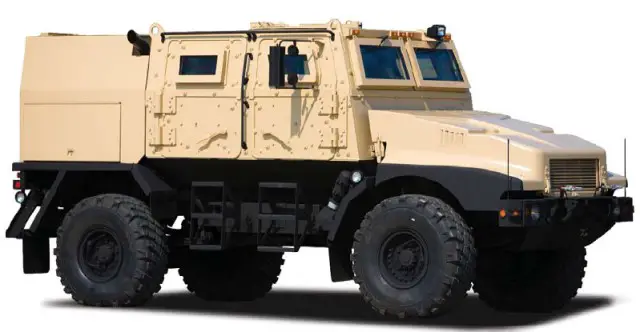
BAE Caiman

This BAE Caiman is what the DoS is requesting for their security force. They want 50. They also want 24 Blackhawk Helicopters.

State wants to form a mini-army for Iraq security

By RICHARD LARDNER

June 14, 2010

WASHINGTON — The State Department is quietly forming a small army to protect diplomatic personnel in Iraq after U.S. military forces leave the country at the end of 2011, taking their firepower with them.

Department officials are asking the Pentagon to provide heavy military gear, including Black Hawk helicopters, and say they will also need substantial support from private contractors.

The shopping list demonstrates the department’s reluctance to count on Iraq’s army and police forces for security despite the billions of dollars the U.S. invested to equip and train them. And it shows that President Barack Obama is having a hard time keeping his pledge to reduce U.S. reliance on contractors, a practice that flourished under the Bush administration.

In an early April request to the Pentagon, Patrick Kennedy, the State Department’s under secretary for management, is seeking 24 Black Hawks, 50 bomb-resistant vehicles, heavy cargo trucks, fuel trailers, and high-tech surveillance systems. Kennedy asks that the equipment, worth hundreds of millions of dollars, be transferred at “no cost” from military stocks.

Contractors will be needed to maintain the gear and provide other support to diplomatic staff, according to the State Department, a potential financial boon for companies such as the Houston-based KBR Inc. that still have a sizable presence in Iraq.

(more…)

Friday, June 11, 2010

Call To Action: Help iCasualties.org Update Their Statistics On Contractors

     Ok, this pisses me off.  I totally respect what Michael White has done over the years as far as counting the deaths in this war. But to depend on a hobbyist to keep this record as to whom has died is not right, and his list is not complete.  This should be a function of the US government and every death should be counted in my opinion.

     I say every death, because the icasualties.org list is missing a ton of contractor deaths, and especially in Afghanistan.  It counts US deaths, and Coalition deaths, but it is lacking in contractor deaths.  Especially this year.  I have listed several deaths that were sourced in the media on this blog, and there has been no mention at icasualties about it. This supports the idea that depending on just one lone hobbyist to count these deaths does not work.

     We are basically counting on the poor guy to keep up, and for him to fund his own little show. Meanwhile the entire world links to his website for their stories and studies, and holds his website as the top source for casualties.  Even governments link to iCasualties.org, and it pisses me off that this is what we have for accountability.  Contractor deaths count for something, as do all deaths in this war, and there must be a better effort to do this.

     My suggestion is for the US government to take it upon themselves and start a casualty count website of their own. It should be an organization that strives to be current, complete, and staffed with the appropriate amount of people and funds to keep it running properly.  This crew’s job is to count every single death coming out of the war.  I say count the civilian deaths too and there should be no question what so ever as to how much blood has been spilled.  But for the sake of this conversation, at the very least, contractor deaths should be counted.

     I also believe that this contractor death count should include expats, third country nationals, and local nationals.  Local nationals are never counted, yet they died in that convoy operation supporting our war effort and the least we can do is recognize their sacrifice. Why do we ignore the sacrifices of an Afghan or Iraqi contractor?

     The other thing that gets me is that I know why we are not counted.  Politically speaking, the less numbers of deaths on ‘the list’, the better.

     As for the compensation factor for those deaths, if no one knows about the death, then a company can say that it never existed, and thus not pay any compensation.  Now of course contractors are smart enough to know, that if the company does not have a life insurance policy for them, or that they know that DBA is not afforded to them (for local nationals, etc.), then obviously the family of that dead contractor will receive nothing. That is the contractors choice when they sign the contract. I would like to think that we could compensate the families of these men in some way, but that is the way things are at this point.  Private industry in those countries is not forced to provide this kind of compensation or insurance, and many industries in the global economy operate with this kind of dynamic.

     But at the least, a contractor’s death(expat, third country national, local national) should be counted and we should not be depending on some hobbyist who might be able to put up a contractor’s death on his website, if he catches it or decides to put the effort into it. I commend Mike for doing as much as he has, but if there was ever anything that should be a function of government, this is it.

     Another idea is for the government to issue a grant to this guy.  Help him do the job that government should be doing anyways.  Hell, contract him out and put him on the payroll to do what he is already doing.  Or if the IPOA or similar association wanted to do something cool, they could kick some money into Mike’s fund, just so he gets the hint to count ‘contractors’.  Also, if folks wanted to individually give iCasualties.org a hint to count our dead, just send Mike an email with a link to the media source that lists the death. What I will try to do in the future, is list Mike’s email under each death I find, and I will ask the readership to send the link of contractors deaths to him to make sure these deaths are counted.  I am sure if he gets a couple emails from several guys that he will add it.  If you find stuff that has not been posted here, feel free to send it to him first. –Matt

Emails for Michael White and icasuatlies.org here:

michaelw@icasualties.org

michaelw@speedfactory.net

or try this one.

icasualties@bellsouth.net

—————————————————————–


As a hobby, he counts the war dead

By Moni Basu, CNN

Stone Mountain, Georgia (CNN) — Fall leaves blanket Michael White’s deck at his suburban Atlanta, Georgia, home. In the cluttered attic study, the software engineer slouches over his Hewlett-Packard laptop.

A full-length floor lamp stands on top of his desk — the overhead light went out a while back. Next to him is his 1960s Stratocaster, a reminder of the rock-star career that never blossomed.

Jillian, his Vivaldi-loving, violin-playing 10-year-old, has gone off to school. Wife Ashley is at work. The house is quiet except for the occasional mew from Izzy, the atypically friendly Tonkinese cat.

And yet, from the humdrum of this ordinary subdivision home comes an arresting daily statement.

For six years, White has faithfully produced a number that is critical to shaping the legacy of the wars in Iraq and Afghanistan: the death toll.

Every day, White, 51, updates a Web site he launched in 2003, icasualties.org, to keep count of the dead: American troops, coalition troops, contractors and Iraqi civilians. He eventually began documenting deaths in Afghanistan as well.

He knew the wars would carry on, but he did not anticipate casualties continuing at this pace. October proved to be the deadliest for U.S. troops in Afghanistan since the beginning of that conflict in 2001.

(more…)

Publications: ISW–Consolidating Private Security Companies In Southern Afghanistan, By Kimberly Kagan And Carl Forsberg

   One of the problems I have with this paper is that a government should embrace the power of private enterprise and the free markets, and find ways of using these security companies to only help in their war time strategy.  This paper operates on the assumption that the state has to have a monopoly on force in the first place, and I don’t think this is correct.  It seems that CNAS has recognized that we shouldn’t assume this either, and I think the ISW should reconsider this point of the paper. The state should not be afraid to use private security, and instead should be thankful that a company would even serve in this capacity for the state.

     Now how they serve the state is dependent upon the contract/war strategy and how much effort the government puts into ensuring they get a good deal.  You have to care if you want a good service, and caring means monitoring, regulating, and enforcing, or what I like to refer to as a ‘trust, but verify’ attitude. It is a lesson that the US must learn(or any country for that matter), and it is a lesson that the Afghan government must learn, if in fact they want to take advantage of the strengths of private industry(wealth building, innovation, employment, etc.) and be a player on the world stage.

     Check out the paper and let me know what you think. –Matt

——————————————————————

Consolidating Private Security Companies in Southern Afghanistan

May 28, 2010

By Kimberly Kagan and Carl Forsberg

This backgrounder outlines the complex relationship between private security companies and ISAF in southern Afghanistan.

Introduction

Dozens of Private Security Companies (PSCs) operate in Kandahar city and province, frequently doubling as the militias of local powerbrokers. These armed groups also operate on a contractual basis to provide security for the International Security Assistance Force (ISAF) and private, Afghan companies. Because PSCs are under the control of powerful individuals, rather than the Afghan National Security Forces, they compete with state security forces and interfere with a government monopoly on the use of force. There is growing pressure from ISAF and within the Afghan government to reform and regulate these companies. Major General Nick Carter, the commander of Regional Command-South (RC-S), recently briefed that ISAF was developing a strategy to regulate PSCs as part of the Kandahar Operations unfolding in summer 2010.1

If not properly structured, however, the regulation of these PSCs in Kandahar may reinforce the existing power structures, strengthen the hand of local powerbrokers such as Ahmed Wali Karzai, and further weaken the ANSF. An initiative underway to consolidate the security companies in southern Afghanistan is likely to exacerbate the problems caused by PSCs, rather than reducing their influence.

Download the publication here.

Link to webpage here.

« Newer PostsOlder Posts »

Powered by WordPress