Feral Jundi

Friday, September 26, 2008

News: Somali Pirates Seize Ukraine Ship Carrying Tanks

Filed under: Maritime Security,News,Somalia — Tags: , , , , , , , — Matt @ 10:31 PM

     I was contemplating on wether or not to classify this as Funny Stuff or Piracy or News.  These knuckleheads captured a ship with T-72’s and small arms on board, and now they have US and Russian naval ships after them.  The pirates even have a ‘pirate spokesman’ to negotiate– that is just too funny.  

     But really, how embarassing is this, to have a couple guys with AK 47’s hijack a ship filled with this kind of military equipment?  Maybe they should have taken a Dishka off one of those tanks, and put it on the bow or something? LOL  –Head Jundi

—————————————————————— 


Somali Pirates Seize Ukraine Ship Carrying Tanks


By JEFFREY GETTLEMAN

Published: September 26, 2008


NAIROBI, Kenya — For a moment, the pirates might have thought that they had really struck gold — Somalia-style.

The gun-toting, seafaring thieves, who routinely pounce on cargo ships bobbing along on the Indian Ocean, suddenly found themselves in command of a vessel crammed with $30 million worth of grenade launchers, piles of ammunition, even battle tanks.

But this time, they might have gotten far more than they bargained for. Unlike so many other hijackings off the coast of Somalia that have gone virtually unnoticed — and unpunished — the attack Thursday evening on the Faina, a Ukrainian vessel bringing military equipment to Kenya, has provoked the wrath of two of the most powerful militaries on the planet.

The United States Navy was in hot pursuit of the ship on Friday. And the Russians were not far behind.

“This is really getting out of control,” said Mohammed Osman, a Somali government official in Kenya. “You see how many countries are involved now? These pirates aren’t going to get away with this.”

Somalia’s 1,880-mile coastline is crawling with pirates, a serious problem given that so much of the country is dependent on emergency food aid, which comes mostly by ship. Thieves seem to strike with increasing impunity, grabbing everything from sailing yachts to oil tankers. They then usually demand millions of dollars in ransom for the ships and their crews.

And people usually pay — which Somali and Western officials say is fueling the problem. This year is one of the worst on record, with more than 50 ships attacked, 25 hijacked and at least 14 currently being held by pirates. The waters off Somalia are now considered the most dangerous in the world.

As for the Faina, it may have looked liked the kind of slow-moving, easy prey that pirates have hit time and time again. But its booty was not the kind that can be easily pawned off at port.

Each tank weighs more than 80,000 pounds. The pirates would need special training, not to mention special equipment, to offload them — assuming, of course, that they could make it to port safely with the Navy on their tail.

The pirates are often former fishermen who have turned to the more lucrative work of plying the seas with binoculars and rocket-propelled grenades. They travel in light speedboats, deployed from a mother ship far out at sea, and they have attacked ships as far as 300 miles from shore. Pirates even tried to attack an American naval supply ship earlier this week. The navy ship fired warning shots at them. The pirates sped away.

“These pirates are getting bolder ever day,” said Andrew Mwangura, the program coordinator of the Seafarers’ Assistance Program in Kenya, whose organization tracks pirate attacks.

Somali officials say the pirates are growing in numbers, with more than 1,000 gunmen at their disposal, and they have evolved into a sophisticated organized crime ring with their headquarters along the rocky shores of northern Somalia. There is even a pirate spokesman (who could not be reached for comment on Friday.)

One official close to the Somali government described the pirates as an oceanic “mafia” and said they had netted millions of dollars, which they use to buy fancy cars and big houses.

“Paying the ransoms is just making this worse,” said the official, who was not authorized to speak publicly.

Mr. Mohammed, the Somali official in Kenya, said “this is not a Somali problem. This is an international problem. Shipping across this entire region is imperiled by this.”

European countries and the United States have tried to crack down on piracy, with different navies patrolling the waters and escorting United Nations-chartered ships bringing much needed food to Somalia. Twice this year, French commandos have stormed hijacked ships and freed French yachts.

On Friday, Kenyan and Western officials said that an American warship was steaming toward the hijacked ship to intercept it, and the Russian Navy announced that it too was sending a warship, named the Dauntless. It could lead to a showdown with the pirates, and with that many hostages aboard a floating ammunition dump, things could get complicated.

The Kenyan government, one of America’s closest allies in Africa, had purchased around $30 million of arms from Ukraine.

“This is a big loss for us,” said Alfred Mutua, a spokesman for the Kenyan government.

The ship, which is registered in Belize, was supposed to pull into Kenya’s Mombasa port on Monday morning. But on Thursday around 5 p.m., when the Faina was about 200 miles off shore, it was surrounded by three speedboats, according to the Interfax news service. Communication was suddenly cut off. It was a typical pirate tactic.

According to the Ukrainian foreign ministry’s Website, there were 21 people aboard, including 17 Ukrainians, three Russians and a Latvian. An official at the Mombasa port said the ship, was carrying 2,320 tons of “project cargo,” a term that is usually used to describe heavy machinery.

But according to diplomats and the Russian Interfax news agency, the cargo was 33 T-72 refurbished tanks, “quite a significant amount of ammunition” and grenade launchers. The supplier was a state-owned Ukrainian company. Ukrainian and Kenyan officials emphasized that the arms deal was perfectly legal.

Somalia’s pirates usually dock their ships in isolated coves, ferrying people and cargo back and forth in dinghies, which are not exactly ideal for transporting 80,000-pound, solid-steel tanks.

“ If there are tanks on board,” said one Western diplomat in Kenya, “I don’t think there’s a chance in hell they can get them unloaded.”

More worrisome, he said, was the prospect of the small arms, like the grenade launchers, getting funneled to insurgents battling the Somali transitional government.

In the past week, insurgents linked to Somalia’s ousted Islamist movement have waged withering attacks on government forces in the capital, Mogadishu. Dozens of civilians have been cut down in the crossfire, and thousands are fleeing the bullet-pocked city once again.

Somalia has been enmeshed in chaos for 17 years, since the central government collapsed and clan warlords carved the country into fiefdoms. The fighting, however, has intensified since December 2006, when Ethiopian troops invaded the country and overthrew a grassroots Islamist movement that controlled much of Somalia.

Ethiopian and American officials said the Islamists were sheltering Al Qaeda terrorists, and the American military helped the Ethiopians hunt down Islamist leaders.

The United Nations World Food Program has said that the conflict and recent drought have pushed millions of Somalis to the edge of famine. More than 3 million people, nearly half the population, need emergency food to survive. Pirates have threatened the pipeline of food into the country because of the constant hijackings on the high seas.

Michael Schwirtz contributed reporting from Moscow, and a Somali journalist from Mogadishu, Somalia.
 

Story Here

Sunday, September 21, 2008

Tactical Thought Process: ‘A Message to Garcia’ and Accomplishing the Mission

Filed under: History,Tactical Thought Process — Tags: , , , , , — Matt @ 11:10 AM

     I want to thank Scott for sending me this.  I was never aware of this story, even though I was in the Marines and an NCO.  So this was a treat to get this in the mail the other day and read it.  In summary, it is a celebration of the man with the resolve to accomplish the mission–the soldier or grunt with the ‘can do’ attitude. 

     The other thing I want to mention is that good healthy dissent within a group is important in order for organizations to evolve and learn and be successful.  So I do not agree with companies using this type of story as a means to shut up their employees or something like that.  

     If anything, this story is about giving your people a mission and the freedom to accomplish that mission anyway they can.  Rowan was not told the how, he was just told to do, and he did.  

     This story is a celebration of accomplishing the mission, and doing what it takes to get it done.  It is also a celebration of the soldier or grunt who presses forward through thick and thin, using ingenuity and resolve to finish the job.  And like what was mentioned before in Boykin’s book called ‘Never Surrender’–resolve is a highly desired trait in a special forces soldier. Good stuff. –Head Jundi

——————————————————————


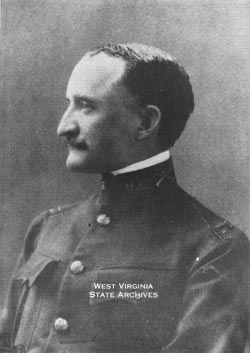
Rowan

The American officer that Hubbard referred to was Andrew Summers Rowan, a West Point graduate of 1881. 

1899

A Message to Garcia

By Elbert Hubbard


In all this Cuban business there is one man stands out on the horizon of my memory like Mars at perihelion. When war broke out between Spain & the United States, it was very necessary to communicate quickly with the leader of the Insurgents. Garcia was somewhere in the mountain vastness of Cuba- no one knew where. No mail nor telegraph message could reach him. The President must secure his cooperation, and quickly.

What to do!

(more…)

Friday, September 19, 2008

Technology: Task Force ODIN Goes to Afghanistan

Filed under: Afghanistan,Technology — Tags: , , , , — Matt @ 1:10 PM

     This is great news.  Task Force ODIN was amazingly successful in Iraq (2400 bombers killed, 141 captured), and I hope to see good things with Task Force ODIN-A in Afghanistan. –Head Jundi

——————————————————————

Task Force ODIN


Danger Room Article in Wired about Task Force ODIN 


Wikipedia for Task Force ODIN

——————————————————————-

U.S. to Expand Drone Use, Other Surveillance in Afghanistan

By YOCHI J. DREAZEN

SEPTEMBER 18, 2008


WASHINGTON — The U.S. Army is preparing to deploy a network of drones and other surveillance aircraft to Afghanistan in an expanding effort to defeat the resurgent Taliban and reverse a downward spiral in the country.

The effort, known as Task Force ODIN-A, is set to begin early next year and will coincide with the planned deployments of thousands of American troop reinforcements to Afghanistan, senior U.S. military officials said.

The officials said drones — remotely piloted aircraft — and manned surveillance aircraft will be deployed to identify insurgent targets inside Afghanistan, including on the Afghan side of the border with Pakistan. The military will use the information to launch airstrikes and ground attacks on militants.

The Army has used drones and piloted planes, including a modified version of the C-12 similar to this one, for reconnaissance in Iraq.

(more…)

Sunday, September 14, 2008

News: Defense Contracts Foretell Military Buildup in Afghanistan

Filed under: Afghanistan,News — Tags: , , — Matt @ 11:56 AM

     So I will quote from this article, because I think it is important to note.

      This month, the military advertised for an “Islamic religious specialist” to support “counterinsurgency and information operations” in the Bagram prison. 

     The contracting community does have a place in today’s COIN operations, and we are filling that need as we speak.  But like I have mentioned before, we need to have the appropriate safeguards to insure that we do not sabotage today’s COIN operations.  I have talked about a few of these safeguards in prior articles.  

     As the presence of more contractors pop up in Afghanistan, and we begin to take on more and more duties, it is important that we figure out ways to only enhance the mission there with our actions.  Not that we are there with the purpose of hindering that mission or intend on screwing up, because we are not. But because we are organized differently, speak a different commmand language, have poor communications, and no universal qualifications system recognized by all, then we are only setting ourselves up for future disasters.   

     What is most important though, is the client and our boss (US government and Coalition Forces) needs to take the lead on how they want to properly use us.  Might I suggest along these lines, a Liaison Office for Contractors that would be a mechanism of the Advisory Corps that John Nagl has been talking about.  This LO would be more hands on with all and any civilian military companies that have anything to do with the local populations in theater.  We must give these individuals authority over these companies, as a form of checks and balances out there.  The kind of regulatory powers of the office should include insuring qualifications of security forces and management are current and to standard, that this LO would be a part of unifying the command between contractors and military, and this LO could have the radio in order to communicate.   

     The other thing about LO’s is that they could operate much like advisors operate with local national forces.  To me, the same advisors could accompany the private military forces out there that are armed and involved with the local populations.  LO’s could be assigned with convoy operations as well.   

     I would also like to reiterate that I feel the civilian operations over in Iraq and Afghanistan have given much in this war.  Most companies do an excellent job, and certainly fulfill their contracts.  But what is missing is that all of these companies are not connected with the main war effort.  And I am not talking about the actual fighting, but just communications in general.  The companies out there should not be operating on their own, and for the sake of the war effort and efficiency, there must be an effort to get everyone in this war on the same sheet of music.  

     We must also create a culture within the military and within the private military that wants to see ways of unifying the two groups and working with each other in new ways.  Communications between the two groups with safeguards and Advisory Corps integration, and most importantly–joining together to enhance the bigger picture of being the ultimate ‘learning organization’ will go a long way towards enhancing the war effort.  The civilian component of this war is massive and it is a reality of this war. A lot is on the line out there, and by doing nothing about this relationship between private military and military does not make sense and is dangerous. –Head Jundi


—————————————————————— 


Defense Contracts Foretell Military Buildup in Afghanistan


By Walter Pincus

Washington Post Staff Writer

Sunday, September 14, 2008; A23


     The Defense Department is seeking private contractors to carry out a variety of tasks — such as clearing land mines, building detention facilities and providing fuel — to assist U.S. forces in Afghanistan, which are set to grow following President Bush’s announcement last week that he will expand military operations there.

     This month, the Pentagon issued a proposal seeking civilian contractors to help clear land mines in Afghanistan, including the outer areas of Bagram air base, where new construction is underway. A $25 million contract to build about 14 miles of roads inside the Bagram complex will be awarded later this month. The roads are to “ease traffic flow” and “provide diversions for construction traffic” on the expanding base, according to the published solicitation. 

     Last week, the Defense Department put out a contract proposal seeking firms that could supply airborne surveillance in Afghanistan with the capability of Constant Hawk, a system now deployed in Iraq. From a single-engine aircraft, Constant Hawk’s sensors record and archive data from an area over time in order to capture events such as exploding roadside bombs. Civilian analysts are also being sought to review the recorded incidents and identify perpetrators.

     “The military is stretched very thin, and to keep low the deployments numbers, there is a tendency to go to contractors who have played a huge part in Iraq,” said Rep. David E. Price (D-N.C.), who as a member of the House Appropriations Committee has sponsored legislation limiting contracts in the intelligence field.

     Bush announced on Tuesday that over the new few months, he will send nearly 5,000 additional troops to Afghanistan, which he characterized as an increasingly important front in the battle against extremism. Recent Pentagon contracts provide a picture of what the expanded U.S. presence may be called upon to accomplish in that country.

     Some contractors are needed because the military lacks particular equipment or personnel. On Monday, U.S. Central Command said it would be advertising for a contractor who could provide 22 medium- and heavy-lift helicopters to transport passengers and cargo in Afghanistan and Iraq. In his Wednesday appearance before the House Armed Services Committee, Adm. Michael Mullen, chairman of the Joint Chiefs of Staff, said in discussing Afghanistan, “Helicopters is the biggest shortfall we have, and it is very clearly supportive of the [intelligence, surveillance and reconnaissance] effort in addition to the attack effort, as well.”

     Another Army contract, posted this month, calls for a firm to process, clean, repair and provide secure storage for 4,600 incoming vehicles ticketed for the Afghan National Police. The current contractor is storing 1,200 vehicles. But a flood of new ones, expected over the next year, will arrive at a rate of 300 or more a month, including 3,600 light tactical vehicles, 600 Humvees and 100 Humvee ambulances, according to the notice.

     Some larger contracts give an indication of how long the U.S. military might intend to remain in Afghanistan. For example, on Aug. 1, the Army Corps of Engineers announced that Prime Projects International, a firm based in Dubai, United Arab Emirates, had won a $50 million contract to design and build a prison complex at Bagram to hold 1,000 high- and low-risk detainees. The complex is not expected to be completed before October 2009. 

     Bagram has become a central location for holding detainees picked up in Afghanistan and Pakistan. Similar to its activities in Iraq, the U.S. military has begun hiring intelligence contractors, many with military experience, to screen those captured to determine whether they should be held as enemy combatants. This month, the military advertised for an “Islamic religious specialist” to support “counterinsurgency and information operations” in the Bagram prison.

     That person’s job would be to “deliver Islamic religious services for enemy combatants detained” with the facility and also “act as a linguist/interpreter in emergency situations,” according to the statement of work attached to the contract solicitation.


Link to Story Here


Tuesday, September 9, 2008

Funny Stuff: KFC Secret Recipe Gets A Security Upgrade

Filed under: Funny Stuff,News — Tags: , , , — Matt @ 5:14 PM

Shhhhh…..Finger licking good. –Head Jundi 


 The eleven herbs and spices on display.


KFC shoring up security for secret recipe 


By BRUCE SCHREINER, Associated Press Writer

Tue Sep 9, 3:41 AM ET

LOUISVILLE, Ky. 


– Pssst. The secret’s out at KFC. Well, sort of.


Colonel Harland Sanders’ handwritten recipe of 11 herbs and spices was to be removed Tuesday from safekeeping at KFC’s corporate offices for the first time in decades. The temporary relocation is allowing KFC to revamp security around a yellowing sheet of paper that contains one of the country’s most famous corporate secrets.

The brand’s top executive admitted his nerves were aflutter despite the tight security he lined up for the operation.

“I don’t want to be the president who loses the recipe,” KFC President Roger Eaton said. “Imagine how terrifying that would be.”

So important is the 68-year-old concoction that coats the chain’s Original Recipe chicken that only two company executives at any time have access to it. The company refuses to release their name or title, and it uses multiple suppliers who produce and blend the ingredients but know only a part of the entire contents.

Louisville-based KFC, part of the fast-food company Yum Brands Inc., hired off-duty police officers and private security guards to whisk the document away to an undisclosed location in an armored car. The recipe will be slid into a briefcase and handcuffed to security expert Bo Dietl for the ride.

“There’s no way anybody could get this recipe,” said Dietl, a former New York City police detective. His security firm is also handling the security improvements for the recipe at headquarters, but he wouldn’t say what changes they’re making.

For more than 20 years, the recipe has been tucked away in a filing cabinet equipped with two combination locks in company headquarters. To reach the cabinet, the keepers of the recipe would first open up a vault and unlock three locks on a door that stood in front of the cabinet.

Vials of the herbs and spices are also stored in the secret filing cabinet.

“The smell is overwhelming when you open it,” said one of two keepers of the recipe in an interview at company headquarters.

The biggest prize, though, is a single sheet of notebook paper, yellowed by age, that lays out the entire formula — including exact amounts for each ingredient — written in pencil and signed by Sanders.

Others have tried to replicate the recipe, and occasionally someone claims to have found a copy of Sanders’ creation. The executive said none have come close, adding the actual recipe would include some surprises.

Sanders developed the formula in 1940 at his tiny restaurant in southeastern Kentucky and used it to launch the KFC chain in the early 1950s.

Sanders died in 1980, but his likeness is still central to KFC’s marketing.

“The recipe to him, in later years, was everything he stood for,” said Shirley Topmiller, his personal secretary for about 12 years.

Larry Miller, a restaurant analyst with RBC Capital Markets, said the recipe’s value is “almost an immeasurable thing. It’s part of that important brand image that helps differentiate the KFC product.”

KFC had a total of 14,892 locations worldwide at the end of 2007. The chain has had strong sales overseas, especially in its fast-growing China market, but has struggled in the U.S. amid a more health-conscious public. KFC posted U.S. sales of $5.3 billion at company-owned and franchised stores in 2007. 


Link Here

« Newer PostsOlder Posts »

Powered by WordPress