Saturday, October 31, 2009
Friday, October 30, 2009
Industry Talk: Senator Claire McCaskill–‘Contracting is a Necessity’
“Contracting is a necessity,” she said. “It doesn’t have to be an evil necessity.”-Democratic Sen. Claire McCaskill, former Missouri state auditor and contractor watchdog
*****
Ok, here is number three folks. A veritable trifecta of shockingly pro contractor statements!! (lightning will soon strike my laptop and burn my fingers–ahhhhhhh)
To hear Senator Claire McCaskill say that little gem up top, is like hearing that Code Pink was sub-contracted by Triple Canopy for convoy operations in Afghanistan. lol It is refreshing to hear that folks are starting to finally figure out why this industry matters.
Now to be somewhat critical of the article. The historical context of contractors needs to go back further, if in fact the author is going to even bring up history in this article. Contractors have had way more of an impact on this Nation’s history, than just today’s wars or our contributions in the Balkans conflict. I have continued to bring up that history time and time again, all with the point of providing that context in today’s discussion about this industry. It is wrong not to include that context, and it shows a certain degree of either naivety, laziness or worse yet, journalistic bias.
That’s ok, because us New Media warriors will certainly fill that void. –Matt
—————————————————————–
New rules due on defense outsources
By: Jen DiMascioOctober 26, 2009 04:54 AM EST
In an Oct. 3, 2007, speech in Iowa City, Iowa, several weeks after Blackwater security guards allegedly shot 17 civilians in an incident in Baghdad, then-presidential candidate Barack Obama made it clear what he thought of the use of contractors to perform essential jobs in Iraq: “We cannot win a fight for hearts and minds when we outsource critical missions to unaccountable contractors.”This week the White House Office of Management and Budget is expected to release a new round of guidelines for contracting that may shed light on when the Pentagon thinks it’s appropriate to go outside the government for contractors and what sort of work the government considers “inherently governmental.”But none of the new OMB guidelines are likely to change the fact that contractors in Iraq and Afghanistan are as much of a fact of life for the Obama administration as they were under President George W. Bush.During the campaign, Obama pledged to reduce the number of battlefield contractors in Iraq — which two years ago numbered 160,000 — and he’s on the way toward meeting that goal. In Iraq, the number of contractors is down to nearly 120,000, but that’s been offset by an increase in the number of contractors in Afghanistan as the war effort grows there. As of June, the last time figures were released, 243,735 contractors were serving across the U.S. military zone known as Central Command. (more…)
Thursday, October 29, 2009
Funny Stuff: Steven Seagal in the Reality TV Show ‘Lawman’!!!
Quotes: NATO Secretary General Rasmussen’s Thoughts on Private Security Companies
Double wow. So we have the UN, and NATO both having their top leaders supporting the concept of using Private Security Companies? Somewhere, a pig is flying over a frozen hell. These things happen in three’s you know. lol –Matt
——————————————————————
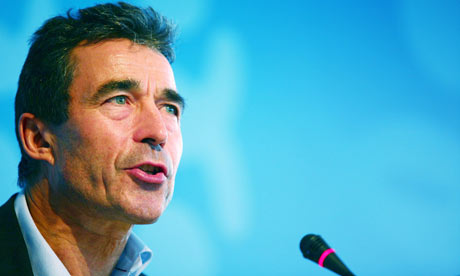
”New Challenges – Better Capabilities”
22 Oct. 2009
Speech by NATO Secretary General Anders Fogh Rasmussen at the Bratislava Security Conference
RASTISLAV KACER (President, Slovak Atlantic Commission): We have a little more than 15 minutes, almost 20 minutes time for discussion. Let me take a few questions for you from the audience and let me cluster those by maybe two or three so you would be able to answer, is it fine with it, and then I’ll turn also to our participants in the universities and I’ll take also questions from Banská Bystrica.
But first, questions from the floor. I see one hand over there, and one hand over here. Please. If you could wait for the microphone so we can… and don’t forget to introduce yourself.
Q: Thank you. My name is Dominika (inaudible) and I’m a Ph.D. candidate at the Faculty of Political Sciences and International Relations at Banská Bystrica.
Mr. Secretary General, I would like to ask you, you are speaking about the new security environment, changing security environment, as well as capabilities that NATO is trying to somehow push forth. Speaking about the new security environment, there is the problem of privatization, so-called privatization of security and the emergence of new non-state actors, be it the bottom up or top down process.
I would be interested more in the top-down process, which will include the problem of private military companies. As we know some of the core member states of NATO, namely the United States, are using them in the conflict, namely the conflict in Iraq. What would be the position of NATO as such to use the private military companies or other security contactors on behalf of NATO in its operation as a means to boost its capabilities or to fill in for some possible capability caps?
And more broadly put, how is NATO ready to cope with the problem of the privatization of security and the privatization of military conflicts as such. Thank you very much.
RASTISLAV KACER: Thank you very much for very interesting questions. Second question goes to Mr. Smolar from Poland, and the third question will go to Banská Bystrica.
EUGENIUSZ SMOLAR (Senior Fellow, Center for International Relations): Mr. Secretary, thank you very much for sharing with us your thoughts and I look through the project you’ve presented, and one thing which I haven’t seen is a modernization of NATO itself. And it’s very hard to imagine that you can deliver all those good things unless NATO, as a structure, transforms itself. Three hundred committees, commissions, you know, the ambassadors’ relations with U.S., Secretary General, national government, this is a very complex web of interests, and ingrained interests, I might add.
How do you see NATO in a few years time, because it has to streamline its operation and its structures itself. Thank you.
RASTISLAV KACER: Okay and the last question for this round goes to Banská Bystrica, then I would kindly ask you for the answers, Mr. Secretary General. Banská Bystrica, you are online.
Q: Good morning, and (inaudible…) and International Relations within Banská Bystrica. We all know there comes a very long tradition of threats such as cyber attacks or energy security threats or even climate change-related dangers are high on the NATO agenda. However, do you think NATO is the best forum for dealing with such problems? What is its additional value to countering these threats in comparison to other international organizations? Thank you.
RASTISLAV KACER: Thank you all for three very good questions. Now Secretary General, now you can spend additional two hours on those. (Laughs).
ANDERS FOGH RASMUSSEN (Secretary General of NATO): I could, but I won’t. I will answer briefly.
First about what you called privatization of security and more specifically the use of what you called private military companies. Well, basically I do believe that NATO operations should be conducted by what we might call official military units led by our responsible governments, so this will be my clear point of departure.
Having said that, I will not exclude the possibility that private security companies as such can be used for specific security tasks, protection of facilities, protection of people in certain areas. So I would not completely exclude the possibility of using private companies, but of course, we have to strike the right balance and basically our military operations should be conducted by our military……
Link to the rest of the Q and A here.
Afghanistan: U.N. Considering all Possibilities, Including Hiring Private Security Contractors to Protect Staff
The convention does not want to eliminate the use of private companies at all…. -Shaista Shameem (UNWG)
Over a decade ago, Kofi Annan concluded that the world wasn’t ready for privatized peacekeeping. It’s still not. But that shouldn’t mean that we are oblivious to the very important role that many private military and security companies are playing at what I would call the second rank level, freeing up national troops to play key frontline roles. We see these kinds of companies, for example, providing security analysis and training, local private security companies are often key in providing site security and in some cases, convoy support services, and humanitarians operating under a UN security umbrella come into contact with these kinds of companies in a wide variety of theaters and playing a wide variety of functions. -James Cockayne (Researcher and commentator at the International Peace Institute, New York)
Wow. This is significant. The UN is finally coming to a realistic conclusion, and that is security forces should not be limited to donor nations. This is pretty much a slap in the face to every human rights organization or anti-contractor group out there that has chastised the private military or private security industry. Even UNWG is probably getting a hundred emails right now about what the Secretary General has just stated.
Either way, I salute the UN for at least coming to their senses and considering using this industry. One word of advice though. The success or failure of using contractors, will depend on how much you are willing to spend, how well the contract is written up, and how well the UN monitors the action. Please do not be a ‘marshmallow eater‘ and take the easy way out on this stuff. The lives of your staff are in your hands. –Matt
——————————————————————
Secretary-General to Hold High-Level Staff Meeting on Threats to UN Security
By Margaret Besheer
United Nations
29 October 2009
U.N. Secretary-General Ban Ki-moon will convene a meeting of the organization’s top officials on Friday to discuss the serious security challenges facing the organization in Afghanistan and other parts of the world. Mr. Ban appealed to the members of the Security Council for their support during an emergency session Thursday – a day after an attack on a U.N. guesthouse in Kabul killed five staffers.The U.N. Secretary-General said Friday’s meeting will focus on the growing threat to the United Nations in places across the world where it operates.”Increasingly, the U.N. is being targeted,” said Ban Ki-moon. “In this case, precisely because of our support for the Afghan elections. Not counting peacekeepers, 27 U.N. civilian personnel have lost their lives to violence so far this year – more than half of them in Afghanistan and Pakistan.”