Feral Jundi

Sunday, November 1, 2009

Training: The Scott-Donelan Tracking School

This is awesome. I think this kind of training would highly beneficial.
The ability to pick up on a man track in your AO, read that track and have some kind of idea of what is going on with that individual, would certainly help in the defense. I remember one tactic I used to use on one of my sites I worked on, was to smooth out the sand in several potential traffic areas, and continue to monitor those areas in my patrols.  If animals or humans were walking on that sand, I would be able to pick up on it, and go after the tracks.
This is just a basic idea of what I am talking about.  Tracking humans, much like tracking animals, takes training and experience.  Most of all, it takes a hunter’s mindset.  So are you a hunter?  If not, maybe it is time to do a little ‘live tissue’ training out in your woods, or to attend a school like this one to apply some Kaizen to your hunting skill set. Also, for some more study on man tracking, you can check out the Selous Scouts, the Greys Scouts, or the Koevoet. Don’t forget any Native American/Scouting books that talk about tracking humans. I am sure the readership has their special collection of man tracking books, training, and units, and please feel free to share in the comments section. –Matt

Company website here.

The Scott-Donelan Tracking School is committed to providing the highest level of professional tracking services to our clients.  We have successfully provided training to the military, various levels of law enforcement, and search & recovery for over 40 years.  Most recently, given the increasing interest in tracking skills, we have begun to share our techniques and training with the general public.  Whether you require a robust and thorough program of instruction or simply the basics of tracking, TSDTS has the time-tested ability, proven competence and unparalleled professionalism to address your training needs.

Additionally, The Scott-Donelan Tracking School offers a full variety of consulting services.  These services include tracking related expertise, perimeter/base or business security measures and intelligence fusion.  Our services richly combine our tracking experience and knowledge with our in-depth understanding of current requirements.  We sincerely believe that “Every Problem has a Solution” and we stand ready to leverage our skills to assist you.

Quotes: Marcus Luttrell on the Ability to Fight Alone

Filed under: Afghanistan,Quotes — Tags: , , , , — Matt @ 11:31 AM

   Doug sent me this quote, and I thought it was awesome.  We have reinforced this idea within our troops and within our law enforcement, that they must work as a team to accomplish goals and missions.  And I agree, that is essential and a no brainer.  But what happens when you are alone, or your team was decimated? Situations like what Chris Turner was in, who had to think on their own in order to defend self and others at the UN guest house in Afghanistan.  Guys like Marcus Luttrell who had to survive on their own, and against the mountain men of Afghanistan after his team was wiped out. Most importantly, men or women who are all ‘heroes in waiting’, all silently standing by, waiting for fate to decide when they shall meet other super empowered individuals who wish to do harm.

   Let’s take it back even further in history.  Jeremiah Johnson, William Cody, Frederick Burnham and the rest of the rugged individuals who made up the West, operated on their own in non-permissive environments and kicked ass.  These are the same guys called upon by the US Army to hunt and kill indian combatants and influence the Scouting movement, both in the militaries of the world, and the Boy Scouting movement so popular throughout the world.

    The point is, super empowered individuals, armed with the intellect and mental toughness needed to prosecute their war, are shockingly effective.  In my view, the only way to defeat these types of warriors on the field of battle, is with another super empowered individual armed with the same mindset.

   So thanks to Doug and the rest of the readership who have helped to push along these ideas.  I need your help to build this snowmobile, and the end result is that the Feral Jundi readership will be armed with the ideas that will help them win the fight.  Think of FJ as a mental armory, and in this armory, we are trying to build some of the most lethal and radical ideas around. –Matt

—————————————————————–


     “The last hour had tought me a few major lessons, the main one being I must gain the ability to fight alone, in direct contrast to everything I had ever been taught.   SEALs as you know fight in teams, only in teams, each man relying entirely on the others to do exactly the right thing.  Thats how we do it, fighting as one in a team of four or maybe ten or even twenty, but always as one unit. One mind, one strategy.  We are, instinctively, always backing up, always covering, always moving to plug the gap or pave the way.  Thats what makes us great.

     But up here being hunted down, all alone—this was entirely another game.  And first I had to learn to move like an Afghan mountain man, stealthily, staying out of sight, making no sound, causing no disturbance.  Of course, we had learned all that back in California, but not on the heightened scale which was required up here, against a native enemy even more stealthy, quiet and unseen than we were.”

     I resolved that when I next had to strike out against my enemy, it would be with our customary deadly force, always ensuring I held the element of surprise.  Those are the tactics that invariably win conflicts for the truely ruthless underdog like the mujahidden, al Qaeda and from now on, me.” –Lone Survivor, by Marcus Luttrell, p. 275.

Saturday, October 31, 2009

Industry Talk: Hero Contractor Recalls Deadly U.N. Assault

Filed under: Afghanistan,Industry Talk — Tags: , , , , — Matt @ 3:21 PM

Visit msnbc.com for Breaking News, World News, and News about the Economy

Film: The Objective

Filed under: Afghanistan,Film — Tags: , , — Matt @ 8:33 AM

Thursday, October 29, 2009

Quotes: NATO Secretary General Rasmussen’s Thoughts on Private Security Companies

Filed under: Afghanistan,Quotes — Tags: , , , — Matt @ 9:20 PM

   Double wow.  So we have the UN, and NATO both having their top leaders supporting the concept of using Private Security Companies? Somewhere, a pig is flying over a frozen hell.  These things happen in three’s you know. lol –Matt

——————————————————————
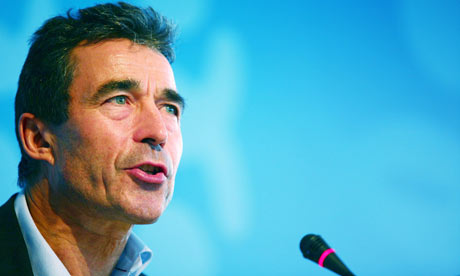
NATO Secretary General

”New Challenges – Better Capabilities”

22 Oct. 2009

Speech by NATO Secretary General Anders Fogh Rasmussen at the Bratislava Security Conference

RASTISLAV KACER (President, Slovak Atlantic Commission): We have a little more than 15 minutes, almost 20 minutes time for discussion. Let me take a few questions for you from the audience and let me cluster those by maybe two or three so you would be able to answer, is it fine with it, and then I’ll turn also to our participants in the universities and I’ll take also questions from Banská Bystrica.

But first, questions from the floor. I see one hand over there, and one hand over here. Please. If you could wait for the microphone so we can… and don’t forget to introduce yourself.

Q: Thank you. My name is Dominika (inaudible) and I’m a Ph.D. candidate at the Faculty of Political Sciences and International Relations at Banská Bystrica.

Mr. Secretary General, I would like to ask you, you are speaking about the new security environment, changing security environment, as well as capabilities that NATO is trying to somehow push forth. Speaking about the new security environment, there is the problem of privatization, so-called privatization of security and the emergence of new non-state actors, be it the bottom up or top down process.

I would be interested more in the top-down process, which will include the problem of private military companies. As we know some of the core member states of NATO, namely the United States, are using them in the conflict, namely the conflict in Iraq. What would be the position of NATO as such to use the private military companies or other security contactors on behalf of NATO in its operation as a means to boost its capabilities or to fill in for some possible capability caps?

And more broadly put, how is NATO ready to cope with the problem of the privatization of security and the privatization of military conflicts as such. Thank you very much.

RASTISLAV KACER: Thank you very much for very interesting questions. Second question goes to Mr. Smolar from Poland, and the third question will go to Banská Bystrica.

EUGENIUSZ SMOLAR (Senior Fellow, Center for International Relations): Mr. Secretary, thank you very much for sharing with us your thoughts and I look through the project you’ve presented, and one thing which I haven’t seen is a modernization of NATO itself. And it’s very hard to imagine that you can deliver all those good things unless NATO, as a structure, transforms itself. Three hundred committees, commissions, you know, the ambassadors’ relations with U.S., Secretary General, national government, this is a very complex web of interests, and ingrained interests, I might add.

How do you see NATO in a few years time, because it has to streamline its operation and its structures itself. Thank you.

RASTISLAV KACER: Okay and the last question for this round goes to Banská Bystrica, then I would kindly ask you for the answers, Mr. Secretary General. Banská Bystrica, you are online.

Q: Good morning, and (inaudible…) and International Relations within Banská Bystrica. We all know there comes a very long tradition of threats such as cyber attacks or energy security threats or even climate change-related dangers are high on the NATO agenda. However, do you think NATO is the best forum for dealing with such problems? What is its additional value to countering these threats in comparison to other international organizations? Thank you.

RASTISLAV KACER: Thank you all for three very good questions. Now Secretary General, now you can spend additional two hours on those. (Laughs).

ANDERS FOGH RASMUSSEN (Secretary General of NATO): I could, but I won’t. I will answer briefly.

First about what you called privatization of security and more specifically the use of what you called private military companies. Well, basically I do believe that NATO operations should be conducted by what we might call official military units led by our responsible governments, so this will be my clear point of departure.

Having said that, I will not exclude the possibility that private security companies as such can be used for specific security tasks, protection of facilities, protection of people in certain areas. So I would not completely exclude the possibility of using private companies, but of course, we have to strike the right balance and basically our military operations should be conducted by our military……

Link to the rest of the Q and A here.

« Newer PostsOlder Posts »

Powered by WordPress