Feral Jundi

Monday, April 12, 2010

Haiti: Security Update–Bad, To Worse

     Amnesty International documented cases of sexual violence in camps. Four of the victims interviewed were children. An 8-year-old girl called Celine (not her real name) was alone in the tent at night when she was raped. Her mother had left the camp to work and had no one to look after her daughter during her absence. A 15-year-old girl, called Fabienne (not her real name) was raped when she left the camp to urinate, as there were no latrines within the camp. Carline (not her real name), 21, was raped by 3 men when she went to urinate in a remote area of the camp, as the latrines were too dirty to be used. Pascaline (not her real name), 21, was raped and beaten in her tent, neighbors failed to intervene because they believed she was with her partner. 

*****

   What can I say?  These folks that continue to promote this idea that security is not important, or that contracting security is disaster capitalism will have the crimes and violence in Haiti all over their pen holding hands.  Shame on you. All I have to say is that you cowards have to look at yourself in the mirror every day and realize that people are suffering because of this ‘non-action’ you keep promoting.

    But it gets worse.  Now we are sending cops from one humanitarian disaster (Rwanda) to another disaster (Haiti), and somehow this gets a free pass?

    The first article below is about sending Rwandan cops to Haiti. Whose hair brained idea was this and how are these clowns going to actually increase security in Haiti?  As the first article below has clearly stated, Rwanda is the last country to get get security forces from or claim some kind of humanitarian award for excellence.

     The second article is about the $ 13.55 billion that world wide donors have raised to rebuild Haiti. Billions….  That’s nice and all, but if there is that much money floating around, why are Haitians having any issues at all regarding security?  In my view, that money should be used to first provide security in Haiti, so that the building process can actually take place. Food, water and shelter is great, but if you get murdered/raped/robbed, then what good is that other stuff?  Maslow’s Hierarchy of Needs comes to mind.

     To depend on piss poor UN troops, Rwandan security, or a depleted and ravaged Haitian police is not working.  I say contract a police force to come in and assist, and in the mean time build the prison up and build police capability.  But for security right now when it is most needed, there should be no hesitation.  Get it done, or watch crimes, murders, and rapes continue to be committed. That would be a good use of a small portion of that large sum of money. That isn’t disaster capitalism, that’s just human decency and compassion.  To stand by and watch is unacceptable.

   The third article goes into detail on how the Haitian police are struggling to bring order to the chaos.  They are simply overwhelmed. Thousands of prisoners have escaped, gang violence has increased, rapes have increased, and the police is dealing with a destroyed city and people.  So why is it that we are not sending in the cavalry?  Oh that’s right, the Rwandans are the cavalry.  Pfffft.

   Now get this.  In the fourth article, it discusses how the locals have had to organize their own security forces to deal with this stuff.  If that is not an indicator that police are in trouble, I don’t know what is. So is street justice better than contracting security who would be supporting Haitian security forces?

   The last quote and article is from Amnesty International.  They are screaming for more police in their recommendations, and their report is pretty clear.  Crimes are up, as is sexual assaults, and of course they want something done about it.  What is not in the report, is AI’s position on Rwandan cops trying to secure the mess in Haiti. The other thing that is missing is that AI made no mention of contracting security forces to step in to stop these stuff. It’s strange and somewhat disgusting to me that the humanitarian option in Haiti that continues to be promoted by all of these so called ‘humanitarian groups’, is to not do ‘everything’ within our power to stop this. -Matt

——————————————————————-

US-UN Peace-keepers” bring Rwandan Police to Haiti

March 11, 2010

by Ann Garrison

In case anyone needed further evidence that President Paul Kagame’s Rwanda is the Pentagon’s proxy, 140 Rwandan police are about to undertake special training before heading to Haiti, as reported in the Rwanda New Times, because, according to Rwandan Police Chief Edmund Kayiranga, “Rwanda wants to be involved in promoting peace in other countries” and, if need be, they would send more peacekeepers to other countries.

(more…)

Friday, April 9, 2010

Government Work: Army To Hire 3,000 Security Guards, CONUS

Filed under: Government Work,Industry Talk,Jobs — Tags: , , , , , , — Matt @ 12:31 AM

   I actually think this is good news for the guards at these facilities, just as long as the pay doesn’t change. You can dress it up any way you want, but as long as you pay peanuts, you will get monkeys for these positions.  What’s worse, is that if the government does hire someone who sucks, it is incredibly difficult to fire them. Trust me on that one, because I saw it time and time again when working for the feds.

   On the plus side, these guys can hopefully participate in federal benefits (TSP, healthcare, education, etc.).  That’s unless the feds hire them on as temporary employees or some other federal classification that allows the government to not hook them up.

   As to the reasons for switching over, who knows.  Congress somehow thinks that waving the federal wand over a project will somehow make it magically run better.  I beg to differ, and I have seen some screwed up agencies and departments in the federal government.  Poor management, poor communications between agencies and departments, and apathy amongst employees who think that the government will never fire them no matter what they do, seem to be the down sides with this.

    The big one is management, and what applies to private industry, applies to the feds as well. And with government, managers tend to protect themselves with loopholes and government rules to do whatever the hell they want.  Employees can use EEO to do some crazy stuff as well.  As best I can describe, if you wanted to do zero work, you could figure out a multitude of loopholes in the system that would help you accomplish that.  The feds are soooo inefficient, it’s not even funny. But hey, whatever floats congress’ boat.

    What comes to mind is the TSA and how they are viewed by the public. Once you join the ‘govy’, you are now ‘the man’ that everyone loves to hate on. lol If you want to apply for this stuff, just follow the links below for USAJobs and type in ‘security guard’ for your part of the country. –Matt

—————————————————————

Army to hire 3,000 security guards

Apr 7, 2010

By IMCOM Public Affairs

SAN ANTONIO, Texas (April 7, 2010) — The Army is converting about 2,500 installation access control point security guard positions from contractor to federal employee status at nearly 50 stateside locations.Overall, Installation Management Command will be announcing 3,076 openings for guards that will be needed at every garrison, except those aligned under Base Realignment and Closure or those transitioning to joint bases where another service is the lead agency.Why is the conversion being made? Congressional mandates and the expected loss of a waiver established after 9/11 that allowed the Department of Defense to contract security guard services at military installations in the States, said Craig Shreiner, branch chief of physical security for IMCOM. (more…)

Tuesday, April 6, 2010

Maritime Security: Marque Star Signs On Former Dell V.P. Steve Belt As CTO, And Buys A Boat

     “We stand ready to meet any challenge. Marque Star is seeing tremendous industry response and is accepting deposits for any additional new contracts. We can meet the demand as we are rapidly growing our flotilla of capable ships to deliver customized value to our clients,” says Agbeli Ameko, SVP of International Business Development.

*****

   Interesting news with Marque Star, and they have definitely popped up onto the radar screen lately. At this pace, I will have to do a company spotlight on these guys. lol

   Now will all this activity transfer into an actual increase in market share and business for the companies involved? Who knows, but when I see folks making all of these types of high end business moves, someone is reading the ‘Tea Leaves’ and getting ready.

   They also bought a pretty beefy boat called the Archangel Michael, and for their sake I hope this doesn’t turn into a MacArthur venture for them. We will keep our eye on this one. –Matt

——————————————–

Marque Star Signs on Steve Belt as CTO

April 05, 2010

WASHINGTON–(BUSINESS WIRE)–The Former Dell Inc. Vice President, Steve Belt, has joined the private maritime security company Marque Star as CTO. Belt brings advanced technologies which will better equip Marque Star in its Pursuit to Take on Piracy and Secure the World’s Oceans for its Clients. Steve Belt will be responsible for the worldwide deployment of Marque Star’s industry-leading Command and Control and Governance Systems.

As VP, Business Client Product Development he was responsible for 550 employees across four international sites, including Austin, Taipei, Shanghai, and Limerick Ireland, and worldwide Client Platform Hardware and Software development for Dell. He also was responsible for the Office of the CTO and Advanced Engineering organizations which develop and enable the technology used in Dell’s client products. “Marque Star’s vision of using advanced technology to protect their clients from all forms of maritime security threats, coupled with my background in the technology industry, was a perfect match. I am excited about the opportunity to join Marque Star and help bring the latest in high-tech to the challenges of maritime security,” says Steve Belt, CTO Marque Star.

(more…)

Monday, April 5, 2010

Aviation: Planned Sale Of Xe’s Aviation Worldwide Services Likely To Mean Loss Of Jobs In N.C.

   This sucks for the families who will be impacted negatively by this sale in North Carolina. Hopefully they can get something else going. –Matt

—————————————————————–

Planned sale of Xe company likely to mean loss of jobs in N.C.

By Jeff Hampton

April 4, 2010

Currituck and Camden counties, already struggling with high unemployment, could lose 240 more jobs after the sale of an aviation company operated by a private military company.

AAR Corp. announced last week plans to buy Aviation Worldwide Services for $200 million from Xe Services LLC, the company formerly known as Blackwater Worldwide.

AWS operates a fleet of 58 customized aircraft, including fixed-wing airplanes and helicopters. Of the 540 employees working for AWS, 240 are based at the Moyock complex known as the U.S. Training Center, AAR spokesman Chris Mason said.

Eventually, employees and aircraft based in Moyock would be relocated, Mason said. According to tax records, Presidential Airways, a subsidiary of AWS, keeps just one aircraft at the training complex and one at the Elizabeth City airport.

(more…)

Sunday, April 4, 2010

Afghanistan: Afghan Marksmanship Is A Fable, Bring Back The Jezailchis

     One day, after a few hours of fighting in which the Taliban had not yet hit any Marines, a corporal from Second Platoon stood upright, exposing himself above the waist and looking over a wall as bullets flew high overhead. He didn’t flinch. “What’s everybody ducking for?” he said. He cupped his hand to his mouth and shouted an expletive-laden taunt at the Taliban gunmen shooting from concealment on the opposite side of a field. The editors would never allow the corporal’s words to be printed here. But they amounted to this: You guys can’t shoot.

*****

    Thanks to Doug for bringing this to my attention. Man, did the Italian Carabinieri just show up the DynCorp police instructors or what? lol Training folks requires patience and a profound understanding of the fundamentals.  Good on the Italians for correcting the issue.  But it also highlights the importance of standardizing this contract, so you don’t have companies or even the military doing whatever they want.

    I cut that one little piece of reportage out of this first article posted below, just to get the ball rolling for this post.  Marksmanship is something contractors are teaching to Afghans, Iraqis, Ugandans, Nepalese, you name it, and there are so many issues that come up when trying to teach this life saving and essential skill to the troops.  For this post, I will highlight the Afghan issues and present the six points that Mr. Chiver’s mentioned in his excellent reportage on this topic. I am not saying these apply to all forces being trained, but for Afghanistan, this is what has been identified.  So with that said, let’s get started.

   In a prior post, I mentioned the concept of the Jezailchis Scouts (JS).  Or basically create a scout/sniper force in Afghanistan that would pride itself as being the premier Afghan tracking and killing/capture force. Something along the lines as the Selous Scouts.  A force that all Afghans would look up to and highly respect.  This force would be the go to guys for hunting humans up in the mountains, and they would have great utility (pseudo operations, sniper operations, scouting, snatch and grab, etc.).  Marksmanship and the ability to track and survive on their own, would be the hallmarks of this crew.  It would also draw from that fabled history of the Afghan being a good marksman, hence the Jezailchi reference in the name of the group.

   But as the reader will find out, Afghans on both sides of the conflict, suck at marksmanship.  Mr. Chivers boiled it down to the six areas that are contributing factors to poor marksmanship on the side of the Taliban (but could easily apply to Afghan Army or Police forces)

   Here they are.

   1. Limited knowledge of marksmanship fundamentals.

   2. A frequent reliance on automatic fire from assault rifles.

   3. The poor condition of many of those rifles.

   4. Old and mismatched ammunition that is also in poor condition.

   5. Widespread eye problems and uncorrected vision.

  6. Difficulties faced by a scattered force in organizing quality training.

   The second Chiver’s article also mentioned what happens when a enemy force can’t shoot–they adapt.  In this case, AK 47’s were used to cause reactions in patrols.  Meaning, if an ambushing force fires the weapons and the patrol of Marines runs to the closest protection that happens to be pre-rigged with IED’s, then that ambushing force could command detonate and kill the Marines that way.  So the enemy knows it sucks when it comes to shooting, so they just use the weapon as a catalyst to get our forces into traps or to delay our forces.  Nothing new, and this is a tactic used over and over again in the history of warfare.

   But going back to the marksmanship thing, I personally think that this is a weakness that would should be exploiting.  We exploit it by creating some good ol fashion kick ass Afghan shooters, coupled with Coalition snipers and marksmanship mentors. We also have the coalition bring in weapon systems that can reach out and touch someone, and has optics. I continue to read reports that this last part is happening, and that is good.  We should be picking these guys off from across the canyons or at distances that the Taliban cannot engage at.

   That brings up the other point of the article.  The two weapons systems that the Taliban are able to actually hit people with, are the PKMs and sniper rifles (with trained snipers using them).  The PKMs makes sense, because a machine gunner can adjust fire easily, and concentrate fire better and at distance.  It is the only weapon system that suits the capabilities and limitations of the kind of fighters using it. (please refer to the six points up top)

   Now for the Afghan Army and Police, there are a few things we could do to bring them up to speed quickly.  Giving them eyeglasses would be a start. lol  Also, some accountability must be shown for the quality and functionality of all weapons and ammo issued.

   Some ideas off the top of my head would be to modify the AK or the issued M-16 to only shoot semi-auto.  It would force these guys to shoot one shot at a time, as opposed to the spray and pray technique.  The other thing that could be done, is to put reflex sites on these weapons–stuff that is AK tough and does not require batteries. That way, you have a weapon that is Fisher Price simple for the Afghans to use, and they won’t be able to use it like a fire hose. If the weapon is better suited to the user, then the other aspect of teaching marksmanship fundamentals will go a lot easier. There should also be an effort to cull the best of the best from these groups, and get them in marksmanship focused group like the JS or whatever special forces that has been created.

   Finally, marksmanship could be promoted in Afghan society once again.  Competitions could be held, cash or goats could be issued as prizes, and competent Afghan shooters could be identified and approached for recruitment into the JS or Army. Hunters could be rewarded for meat collected, or hide or whatever, and they could be approached as well.  Hunters throughout the world are all the same, and I am sure there are plenty in Afghanistan who are very good at it and enjoy the sport.  You just have to develop an outlet to attract these guys.  Even in the Army and Police, I am sure there are those who could really shine with marksmanship if they had an outlet for such a thing. Especially if marksmanship billets paid more–you would definitely increase the interest in such a thing. Stuff to think about, and thanks to Mr. Chivers for some excellent information on the matter. –Matt

Edit: 04/11/2020 Here is the next article Mr. Chivers wrote about Afghan Army and Police marksmanship. Awesome.

——————————————————————
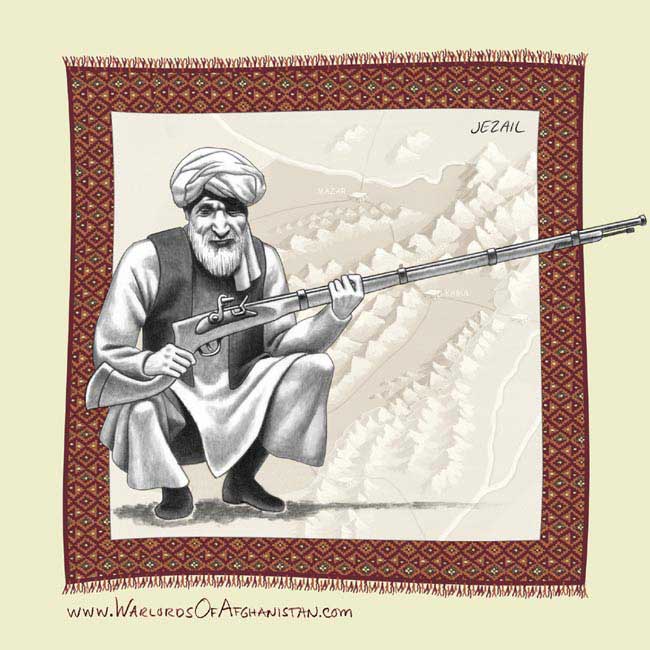
Jezail

The Gang That Couldn’t Shoot Straight

Six billion dollars later, the Afghan National Police can’t begin to do their jobs right—never mind relieve American forces.

By T. Christian Miller, Mark Hosenball, and Ron Moreau

Mar 29, 2010

(Only a portion of the article is posted, and follow the link to read the entire thing)

At Kabul’s police training center, a team of 35 Italian carabinieri recently arrived to supplement DynCorp’s efforts. Before the Italians showed up at the end of January for a one-year tour, the recruits were posting miserable scores on the firing range. But the Italians soon discovered that poor marksmanship wasn’t the only reason: the sights of the AK-47 and M-16 rifles the recruits were using were badly out of line. “We zeroed all their weapons,” says Lt. Rolando Tommasini. “It’s a very important thing, but no one had done this in the past. I don’t know why.”

The Italians also had a different way of teaching the recruits to shoot. DynCorp’s instructors started their firearms training with 20-round clips at 50 meters; the recruits couldn’t be sure at first if they were even hitting the target. Instead the carabinieri started them off with just three bullets each and a target only seven meters away. The recruits would shoot, check the target, and be issued three more rounds. When they began gaining confidence, the distance was gradually increased to 15, then 30, and then 50 meters. On a recent day on the firing range only one of 73 recruits failed the shooting test. The Italians say that’s a huge improvement…..

Story here.

—————————————————————–

Afghan Marksmen — Forget the Fables

By C.J. CHIVERS

March 26, 2010

The recent Marine operations in and near Marja brought into sharp relief a fact that contradicts much of what people think they know about the Afghan war. It is this: Forget the fables. The current ranks of Afghan fighters are crowded with poor marksmen.

This simple statement is at odds with an oft-repeated legend of modern conflict, in which Afghan men are described, in clichés and accounts from yesteryear, as natural gunmen and accomplished shots. Everyone who has even faintly followed the history of war in Central Asia has heard the tales of Afghan men whose familiarity with firearms is such a part of their life experience that they can pick up most any weapon and immediately put it to effective work. The most exaggerated accounts are cartoonish, including tales of Afghan riflemen whose bullets can strike a lone sapling (I’ve even heard “blade of grass”) a hilltop away.Without getting into an argument with the ghost of Rudyard Kipling, who was one of the early voices popularizing the wonders of Afghan riflery, an update is in order. This is because the sum of these descriptions does not match what is commonly observed in firefights today. These days, the opposite is more often the case. Poor marksmanship, even abysmally poor marksmanship, is a consistent trait among Afghan men. The description applies to Taliban and Afghan government units alike.

Over the years that Tyler Hicks and I have worked in Afghanistan’s remote and hostile corners, we have been alongside Afghan, American and European infantrymen in many firefights and ambushes. These fights have involved a wide set of tactical circumstances, ranges, elevations, and light and weather conditions. Some skirmishes were brief and simple. Others were long and complex, involving as many as a few hundred fighters on both sides. One result has been consistent. We have almost always observed that a large proportion of Afghan fire, both incoming and outgoing, is undisciplined and errant, often wildly so. Afghans, like most anyone else with a modicum of exposure to infantry weapons, might be able to figure out how to make any firearm fire. But hitting what they are aiming at, assuming they are aiming at all? That’s another matter.

(more…)

« Newer PostsOlder Posts »

Powered by WordPress