Feral Jundi

Monday, April 28, 2008

Industry Talk: Contractors are Here to Stay

Filed under: Industry Talk — Tags: , , — Matt @ 3:53 PM

      Articles like this, just make me smile.  It’s nice to know that you are needed. -Head Jundi

 ———————————————————

Contractors are here to stay

By Florence Olsen
Published on April 14, 2008
When presidential candidate Sen. Hillary Clinton (D-N.Y.) declared in 2007 that she would eliminate 500,000 federal contractors if elected president, some policy experts said she couldn’t do it. One of those experts was Steven Schooner, senior associate dean of academic affairs and associate professor of law at George Washington University. 

Whether the federal government relies too much on contractors is an interesting — but irrelevant — philosophical, public policy and moral question, Schooner said in an interview.

“The reason it is irrelevant is we have engaged now for more than a generation in a bipartisan legislative and executive effort to create the appearance of a small government,” Schooner said. “We all know that government hasn’t gotten smaller.” (more…)

Thursday, April 17, 2008

Industry Talk: ShockRide Mineblast Attenuating Driver Seat

Filed under: Gear Review,Industry Talk — Tags: , , — Matt @ 3:54 PM

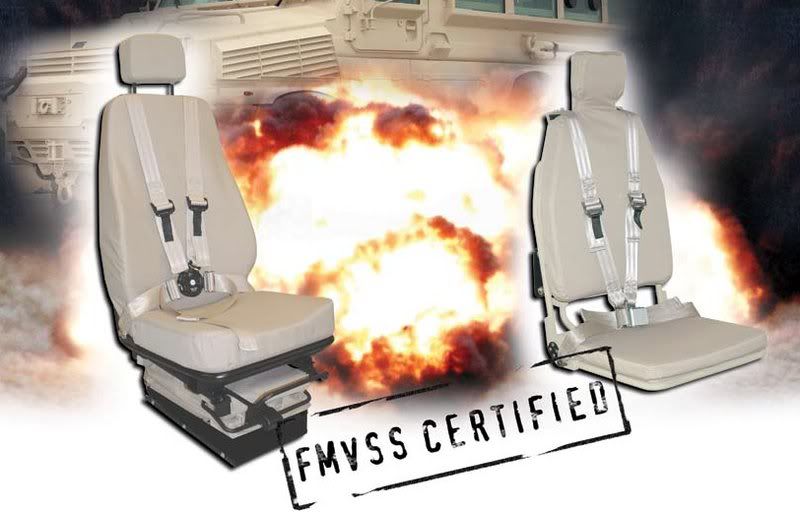
This is an old article, but one worth reviewing again.  The reason why I say that, is because a lot of old armored vehicles, that PMC’s are using, do not have these kinds of seats.  There are so many forces at play, when a blast goes off under these vehicles, and sometimes there is too much emphasis placed on just the armor.  You also need seats, that can absorb the shock wave from those blasts, that reverberate through the vehicle.  The kinds of vehicles, that should get upgrades, are the South African made vehicles that are currently in use.  Those would include the  Mamba,  the Casspir, and the Puma vehicles.  -Head Jundi

seat

Operational vehicles to be protected by ShockRide blast protection seats
ArmorWorks (published 10/09/2007)
 
Mine resistant vehicles from BAE to be equipped with blast attenuating seats from ArmorWorks (more…)

Wednesday, April 9, 2008

Industry Talk: Thoughts on the OODA Loop, Paul Howe and Ken Good

     This article is a little old, but really interesting.  I first caught on to the whole OODA(Observe, Orient, Decide, Act) concept after reading Paul Howe’s book called ‘Leadership and Training for the Fight’.  Since then, I find myself applying those principals of OODA to my every day work, when overseas or home.   

      In a simplified version, of how I use it, this all relates to winning the fight.  You either can beat the enemy with speed or beat the enemy with surprise, or a little bit of both. And in this industry, beating the enemy means, keeping your client alive.  That ‘randomness’ and ‘unpredictability’ is a tool, that can totally help you accomplish this task. Also, the more you can isolate the enemy and keep them in the dark, the better your chances of survival and protecting your client. 

     And the various tricks of ‘observing’ and ‘orienting’ to compress the OODA loop, as described by Paul, was fascinating and really made sense to me.   I highly suggest studying OODA, and we can thank Col. John Boyd for developing such a concept.  We can also thank men like Ken Good and Paul Howe for their incredible interpretations of such concepts.

     On a side note, after reading the book, I had a brand new view point on binoculars and rifle optics.  I subsequently bought a Trijicon ACOG afterwards, and it has been one of the best purchases I have ever made for field work.  Here is a link for Paul’s book, a wiki entry on OODA Loop, and Ken Good’s article below.  I hope you enjoy. -Head Jundi 
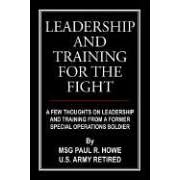
Paul Howe book.

http://www.amazon.com/LEADERSHIP-TRAINING-FIGHT-THOUGHTS-OPERATIONS/dp/1420889508/ref=pd_bxgy_b_img_a 

————————————————————————————-

From Wikipedia

The OODA Loop

http://en.wikipedia.org/wiki/OODA_loop

————————————————————————————– 

Got a Second?
Boyd’s Cycle – OODA Cycle
Written by Ken J. Good , Director, Surefire Institute

Introduction
Today?s environment of accelerating scientific discoveries and technological change bring ever-improving hardware to the end user.  In this climate is it easy to overlook and even abandon the core foundation of any weapon system, the interplay and perceptions of the human mind in a combative situation.

A man who understood this better than most was Col. John Boyd, USAF (Ret.) Col. Boyd was tasked with determining why American pilots in apparently inferior aircraft were consistently outmatching their Korean counterparts.  Air to air combat takes place in a 360-degree sphere and represents the pinnacle of the man and machine relationship coupled with the man on man dynamic warriors dream about. (more…)
News: Nationwide Cellphone Alert System in the Works

Filed under: Industry Talk,News — Tags: , , , — Matt @ 12:41 PM

   This is very interesting to me, because I believe it will only enhance our capability as a nation,  when responding to incidents like disasters and terrorism.  The only down side, is that cell towers have to survive that incident as well, in order for this system to be effective.  When I was working in New Orleans during Hurricane Katrina, we did run into that problem.  But text messaging was still more effective than making calls, because all you needed was a small window of  signal time, to get your message out. 

    I also think that a text message alert(TMA) system, would have saved lives, during that Virginia Tech shooting.  A nationwide TMA system, would be helpful to first responders as well.  Even thought they have their own internal dispatching and information system, it would be helpful for them to get nationwide alerts as well, so they can at least be on the same sheet of music as the public.

     Back in 2004 and 2005, I worked as a Inter-agency Dispatcher for the federal government, and I learned just how important information dissemination was, when it comes to emergencies like fires and hurricanes.  It is really important to get the word out to those that can save people in those situations, and we call this process ‘initial attack’.  The faster we can get the ball rolling, the faster people can be helped. 

     But if you can reach the victims and potential victims themselves, then you can at least help directly and give them a leg up in those situations.  Sometimes the Police Officer, Security Guard, or First Responder cannot get there in time to save the day.  That is what is great about a TMA system, that can give the potential victim or victims a fair shot at helping themselves with precious life saving knowledge.  It will be interesting to watch this one.  -Head Jundi

————————————————————————– 

Nationwide cellphone alert system in the works

By Paul Davidson, USA TODAY

Federal regulators as early as Wednesday are expected to take a major step toward development of a nationwide emergency alert system that would send text messages to cellphones and other mobile devices wherever a crisis occurs.
Lack of a simple way to deliver vital warnings to residents has hindered emergency response in disasters such as Hurricane Katrina, recent college-campus shootings, and a spate of devastating tornadoes in the Southeast in February.

The Federal Communications Commission is slated to establish technical standards and other requirements that for the first time would make such communication possible, two FCC officials say. The officials requested anonymity because commissioners have not yet voted on the plan. (more…)

Monday, April 7, 2008

Industry Talk: Private Security Takes to the Sea

This is a great little primer, as to the state of the Private Naval Company/Private Security Company industry.  Recent kidnapping and hostage events off the coast of Somalia, have brought this issue out in the open again, and it begs this question.  Where is the PNC/PSC industry heading, and who are the players?  -Head Jundi 

—————————————————

Yacht 

ISN Security Watch

7 April 2008

Private security takes to the sea

With violent maritime piracy and the risk of waterborne terrorism on the
rise, states and non-state actors turn to private security, Patrick Cullen
writes for ISN Security Watch.

By Patrick Cullen in New York for ISN Security Watch (04/04/08)

Piracy, once generally perceived to have been eliminated as a security
threat, has re-emerged as a significant problem for state and non-state
actors alike. Though the number of pirate attacks had waned during the last
few years, new International Maritime Bureau statistics have shown that
piracy is again on the upswing worldwide. This upsurge in piracy – and the
market created for countering this threat – can be conceptualized along
three distinct lines.

Mapping the maritime private security market (more…)

« Newer PostsOlder Posts »

Powered by WordPress