Feral Jundi

Tuesday, October 25, 2011

Industry Talk: Global Integrated Security Awarded $480,000,000 RSSS Contract With USACE

This is a huge contract and congrats to GIS.  They have already done some work on the RSSS stuff with USACE and I posted that bit of news below this first piece. If anyone has anything else to add to this story, feel free to comment below. I am not that familiar with this contract and all that it entails, but this is great news for those looking for more security contracting work in Afghanistan. –Matt


Global Integrated Security (USA), Inc., Reston, Va., was awarded a $480,000,000 firm-fixed-price contract. The award will provide for the reconstruction security support services throughout Afghanistan in support of the U.S. Army Corps of Engineers. Work will be performed in Afghanistan, with an estimated completion date of Oct. 19, 2015. Five bids were solicited, with five bids received. The U.S. Army Corps of Engineers, Winchester, Va., is the contracting activity (W912ER-12-D-0001).
Link to release here.
—————————————————————-
Global Strategies Group Awarded $11.8M in Task Order Modifications for U.S. Army Corps of Engineers in Afghanistan
26 March, 2010
Global Strategies Group (GLOBAL), a leading provider of integrated security and defence technology, was awarded two task order modifications, worth $11.8M, as part of a Reconstruction Security Support Services (RSSS) contract to provide security services in support of  the U.S. Army Corps of Engineers (USACE) in Afghanistan.

(more…)

Wednesday, October 12, 2011

Industry Talk: Swiss Government Proposes Ban On Mercenary Firms, Except For The Swiss Guard?

Filed under: Industry Talk,Switzerland — Tags: , , , , — Matt @ 11:16 AM

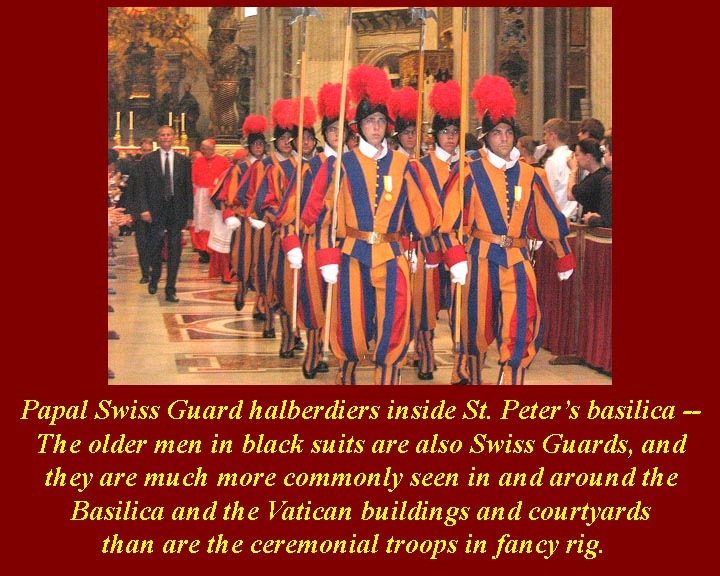
The irony here is that the Swiss are famous for fielding one of the best and longest standing mercenary armies in the history of the business. Matter of fact, remnants of that force is still operating today, and they are called the Swiss Guard. Did I mention that this group is protecting the Pope at the Vatican? lol Although the Swiss Guard is now referred to as just a branch of the Swiss military, it still has historical significance. So I take it the Swiss will be pulling this force from duty at the Vatican after they implement their ban on mercenaries?

The other thing that must be mentioned is that Swiss flagged vessels will need security if they plan on continuing to do business out there. The kind of laws they should be focused on are the ones that will get armed security on boats, and give them the legal authority to do what they need to do to protect Swiss vessels. It’s either that, or Swiss ship owners will get a flag of convenience and go somewhere else in order to get security on their boats. –Matt


Swiss government proposes ban on mercenary firms, tighter rules for private security companies
Wednesday, October 12, 2011
Switzerland wants to banish mercenary firms and tighten the rules for private security companies based in the country in a bid to safeguard its tradition of neutrality, the government said Wednesday.
A draft bill submitted to parliament would ban Swiss-based companies from direct participation in armed conflicts abroad, and from recruiting or training mercenaries in Switzerland.
The proposal, which lawmakers have until the end of January to consider, also requires private security companies to report their activities to Swiss authorities, and to abide by an international code of conduct.

(more…)

Industry Talk: Getting Ready For The Big Switch In Iraq

Filed under: Industry Talk,Iraq — Tags: , , , — Matt @ 10:35 AM

Officials familiar with the plans concede, however, that the police advisory program may not last beyond three years. A lack of recruits willing to earn between $100,000 and $150,000 annually for their expertise also means the program is beginning with about 120 advisers, down from the original goal of 190, said the officials, who were not authorized to speak publicly on the issue.
Much of State’s budget request is to pay security contractors to transport and protect the police advisers as they travel to about 30 sites across the country for meetings.

Now that quote up top was the one that I zeroed in on in this article. I have a hard time imagining that these guys are not able to find enough former police officers to staff this program. If they need 70 more advisers, then put the word out. lol It’s that simple and with an effective campaign, you should be able to get enough guys. Especially with today’s economy and lack of jobs.

I also think it is interesting that the Iraqis are now up to the level where they can train their own police.  That was a big goal of all of our efforts, and that is great. Now it sounds like the Iraqi’s are hungry for the advance level of police work, and this might really pay off in the long run. With more competent police, then crime can be more effectively dealt with, and they might even be able to find more terrorists. We will see, and the big one here is funding. If the DoS can secure the funds for this police program, then this thing could continue on for at least 3 to 5 years. –Matt


Getting ready for the big switch in Iraq
October 12, 2011
By Ed O’Keefe
If you get to spend any time with Iraqi political leaders of any sort, as The Federal Eye did during a brief stint in Iraq this summer, they’ll likely discuss their deep-rooted eagerness to work with “Americans with civilian suits, not military uniforms.”
That day is fast approaching.
Iraqi leaders still haven’t decided whether they want to extend a three-year security agreement beyond the end of the year, and if they don’t make a formal request by Dec. 31, all U.S. troops and equipment will pack up and leave. In their wake, the State Department plans to deploy about 17,000 American diplomats and security personnel across Iraq, comprising its largest diplomatic presence in the world — and the largest contingent of federal employees and contractors outside the United States.
But the expensive and daunting military-to-civilian transition in Iraq is expected to face close scrutiny from cost-conscious members of Congress eager to avoid further waste and abuse in wartime contracting. Officials with the departments of defense and state on Wednesday are slated to provide an update on the ongoing transition and spending plans at a House subcommittee hearing on national security and foreign operations.

(more…)

Thursday, October 6, 2011

Quotes: DoS Says There Will Be 5,000 Security Personnel For Iraq In 2012

Filed under: Industry Talk,Iraq,Quotes — Tags: , , , — Matt @ 2:25 PM

What is interesting about this is that DoS has been getting some pressure from folks in Congress as to how many security contractors will be on the ground in Iraq in the near future. So this number is coming directly from DoS as a projection for 2012. That number is 5,000 security contractors, which is the equivalent to a brigade in the military. Although that number does not include the logistics folks and other contractor types in country, but at least this gives some perspective as to the size of just the security element.

Now of course this is not new if anyone has been following along. June of last year, State said they would need between 6,000 and 7,000 security contractors for Iraq.  And I guess if you were to add the requirements of the OSC, 5,000 would be modified to be closer to the 6,000 figure. But who knows, and those numbers are not out there yet.

This is also significant, because our industry is giving State the ability to safely operate and perform their duties in Iraq. The troops are going to be gone, and instead of the Marines being ‘last out’, it will be contractors. lol (the Marine in me is not laughing though…lol)

Now the other question that needs to be asked that really hasn’t been addressed from what I can see is the ‘lost functionality’ problem as the military leaves. I imagine that the Iraqis and maybe some small military contingents will be be filling in these gaps, but I am still curious how they are to be filled. Here is a quote from my post on the subject:

Recovering killed and wounded personnel
Recovering damaged vehicles
Recovering downed aircraft
Clearing travel routes
Operations-center monitoring of private security contractors (PSCs)
PSC inspection and accountability services
Convoy security
Explosive-ordnance disposal
Counter-rocket, artillery, and mortar notification
Counter-battery neutralization response
Communications support
Tactical-operations center dispatch of armed response teams
Policing Baghdad’s International Zone
Maintaining electronic counter-measures, threat intelligence, and technology capabilities

As the attack in Kabul demonstrates, there will be times where State’s security forces will actually have to participate in combat. With the troops gone in Iraq, and all of the services and combat power they used to provide going with them, has there been any arrangements to fill those gaps?

Now I am going to assume that all of these issues have been addressed, just because this list of issues was originally brought up by State to congress as to why they needed all of the MRAP’s and military hardware they requested. State has also had plenty of time to plan, and DoD and congress has had plenty of time to figure out what they plan on giving them for that mission.  But who knows, and I really hope it goes well for them. Especially as budget issues come up, and programs and missions are cut. –Matt

Iraq: U.S. Diplomatic Mission and Security Personnel for 2012
Taken Question
Office of the Spokesperson
Washington, DC
October 5, 2011
Question: Approximately how many security contractors will be required in Iraq to protect the U.S. diplomatic mission next year?
Answer: In light of the high threat environment in Iraq over the past several years, we expect that in 2012 there will be approximately 5,000 such security personnel to help protect our diplomatic presence in various locations around the country and ensure our capability to interact successfully with the Iraqi Government and people to build an enduring partnership of benefit to both countries and the region. We expect this number of security personnel to noticeably decrease in the following years as security conditions continue to improve, as they have done steadily since 2007.

(more…)

Tuesday, October 4, 2011

Industry Talk: So What Is Going On With The ICoC?

Filed under: Industry Talk — Tags: , , , , , , — Matt @ 4:30 PM

Ever since the news of all of these companies signing on to this International Code of Conduct, there hasn’t been much else reported. So I figured I would do a little research and see where they are at.

Low and behold, there is actually some interesting movement going on with the group. First, they have a website.  Excellent move and it sounds like they are getting organized. Below, I listed all of the members of the steering committee, and these are the folks that will decide how this thing is to work.

I thought it was interesting that they found representatives from all over. Here is a quote:

Michael Clarke, G4S
Mark DeWitt, Triple Canopy
Estelle Meyer, Saracen International
Sylvia White, Aegis

Yep, that list says it all. G4S is the largest security company in the world. Triple Canopy is a large US based company. Aegis is another huge company with offices all over. But Saracen International….Now that is interesting. I guess they are the largest company representing Africa?

The other news with the ICoC is that there are now 211 members!  Up top, I even started a page dedicated to ICoC members, and as more folks sign on, I will update. The list is in a Scribd format, and I think that makes very easy to scroll through and use.

But the real story here that I wanted to talk about, was the discussion in their latest minutes about the grievance process. My number one concern with groups like SAMI, ISOA, and now this ICoC group….as always….is what will they do about members who violate the standards? What is the crime, and what is the punishment?

It is one thing to get everyone to sign on to these codes of conduct, but if you have no disciplinary policy with teeth to back them up, then what’s the point? lol Seriously. Why make laws, if you plan not to enforcement or punish folks for doing bad things?

Now I am not saying that the ICoC is not going to punish members that screw up, but according to these minutes, it sounds like they are going to put the onus of punishment on the companies themselves first. Which is fine, but what if the company does not want to clean house, or maybe they just want to drag it out until everyone forgets about the grievance.

Of course companies should all strive to take care of business so that they are in accordance to the ICoC, as well as doing all they can to take care of their people and clients.  But if they have no fear of punishment, because the ICoC is not aggressive or is unwilling to get tough with members that pay dues, then you can kind of see the potential problems here. Which really boils down the question to this. Is the ICoC just words, or do those words actually mean something?

As you read through the minutes, the ICoC committee also mentioned the good offices concept and creating an incentive of some type for companies to actually do something about this stuff.  I had to look up good offices in the dictionary, and here is a quote:

Third-party influence that facilitates one party’s dealings with another.

So basically they will act as a mediator between the aggrieved and that company?  Interesting, and yet again, what interest would this office have to fight for the aggrieved?  Isn’t it a conflict of interest if a mediator is getting payment by one group in the form of dues/membership fees, and then claiming to help out the other side (the aggrieved) who does not pay dues?

Finally, I would really like to see the incentive(s) that the committee comes up with in future discussions, that will actually get companies to abide by the standards. Are we talking fines, or membership loss or suspension. How about a black list of bad companies?  What are we talking about here?

The big picture is pretty simple to spell out. Members get value when they sign on to this document, by enjoying the benefits of a gold seal of approval. Clients want to believe in that standard, and trust that they are actually doing business with a good company. Contractors want to believe that they are working for a company that actually cares about treating them properly, and this ICoC is a symbol of a companies desire to do good.

But with weak to non-existent enforcement of those standards, that gold seal of approval will turn into lead and clients, the public, and contractors will have no respect for what it stands for. Those are my thoughts on the matter…. –Matt

Edit: 10/12/2011- Here is a snippet from a recent article on the ICoC:

Motzouris says the ICoC does not dismiss the efforts of the Montreux Document, rather it builds upon the base developed by the Montreux Document in order to develop a more comprehensive regulatory mechanism. While the Montreux Document was primarily aimed at states, the ICoC takes on a multi-stakeholder approach that includes governments, PMSC, industry associations, experts and academics and civil society. The ICoC outlines principles for the conduct of PMSC personnel, including rules on the use of force, detainee treatment, prohibition of sexual misconduct, etcetera.

“The reason the ICoC is different from any other regulatory mechanisms is that it appeals to governments and non-state clients to adhere to the Code whilst drawing up contracts with PMSCs. If a PMSC is a signatory of the Code, and the government or non-state actor whom they are contracting to has also committed to implementing the Code, then it moves from a voluntary regulatory standard, to one that can be upheld in a court of law. The British Government has already expressed its commitment to making adherence to the ICoC a requirement for any of its contracted PMSCs, and the US Government is contemplating a move in the same direction,” Motzouris added.


International Code of Conduct for Private Security Service Providers

There was consensus that if a complaint is made it should be dealt with by the company first. In some circumstance that won’t be appropriate (internal grievance mechanism exhaustion requirement, with well defined exceptions). There was consensus that the grievance mechanism should include something like a referral function.
A summary of the grievance mechanism functions would be:
A  complaint triggers two avenues:
1. Compliance review,
2. Notice advisory/referral with options for the claimants. Afterwards facilitation of the IGOM for remedy.

(more…)
« Newer PostsOlder Posts »

Powered by WordPress