Feral Jundi

Wednesday, November 24, 2010

Industry Talk: The Israelification And Privatization Of US Airport Security….Again

     “Israelis, unlike Canadians and Americans, don’t take s— from anybody. When the security agency in Israel (the ISA) started to tighten security and we had to wait in line for — not for hours — but 30 or 40 minutes, all hell broke loose here. We said, ‘We’re not going to do this. You’re going to find a way that will take care of security without touching the efficiency of the airport.”

     That, in a nutshell is “Israelification” – a system that protects life and limb without annoying you to death. 

     First off, I will say that I can totally relate with what the TSA guys are going through. In this business, you will find yourself doing pat downs and screening folks on some contract at some point in your career. Believe me, it isn’t fun for the guys that have to do it and I am sure police and military folks can relate as well. The folks you are screening can get testy and annoyed as well. But that is our job, and our primary objective is to protect our people, and stop the bad guys from doing harm. We still think about alternatives though.

     So is there a system that protects life and limb without annoying people to death? That is the million dollar question, because even if this latest protest against TSA pat downs and revealing full body screenings actually causes more airports to choose the privatization route of security, the screening force will still be up against this very question.

     Or perhaps there is something else. Maybe private companies can better maintain customer service and satisfaction?  Maybe they can be as intrusive or as thorough as the TSA, and still not annoy travelers to death? Because at the end of the day, they still have the same job to do as the TSA, and that is screen out the bad guys and bad things.

     Now in the past, I have discussed the same issues that have been brought up currently, and it seems like every year travelers just get ticked off more by the new rules at airports. We are also experiencing record unemployment, foreclosures, and a recession and this has no doubt caused some folks to be angry and lash out at stuff like this.  Al Qaeda and company is not helping things out either by implementing their ‘system disruption’ attacks. All of these factors provide the perfect storm for outcry and protest, and I am wondering where it will all lead too?

     What will be interesting is if this outcry will translate into more privatization or even the ‘Israelification’ of airport security?  If this does happen, and private companies will be tasked with implementing this more mentally intrusive form of screening called ‘profiling’, then what will be the possible outcome there?  Will US travelers be alright with someone asking them twenty questions before boarding a plane, versus getting their ‘junk’ viewed or groped via full body scanners or pat downs?

    I have also had the opportunity to experience Israeli airport ‘profiling’ that everyone talks about, and I was impressed. For the most part, they just ask you a bunch of questions to see how you react to them. No one touched me, and no one put me through a full body scanner.  The big difference here is that I did not feel like I was mindlessly going through a screening system. I felt like there was a thinking security apparatus that really wanted to know what I was up to, and that they knew how to read me and all of my behavioral cues very well.

    If things do switch to behavioral profiling, or some form of profiling, and it is done by private security, then I think the training for such a technique would be pretty damn interesting. Who would teach the techniques, what legal mechanisms would be in place for protecting a screener/guard or the traveler, and how long would it take to achieve this proficiency are all questions I have.  Most important though, is it scalable and can we achieve the same quality of screening that the Israelis have?

    For that, I wanted to really emphasize the federal-private model below, because this is important. We have already witnessed the federal-private model as it applies to overseas contracting, and the issues have been identified as to how to properly regulate it.  But the problem for the overseas model has always been a lack of legal mechanisms and a lack of sufficient oversight and regulation (either due to poor funding, poor training or lack of manpower). Also, Best Value contracting would be the optimum way to contract companies for this, if any airport authorities are reading this.

     With that said, the TSA would have to switch to being more of a regulatory body than an actual security/screener provider. They will be up against the same scrutiny and issues that plague any of the other various government groups that deal with private industry, both domestically and abroad. The TSA has many lessons to learn from in order to get that federal-private model just right, and because they are still a relatively new agency of government, they still have time to get it right. –Matt

Opposing view on air security: Expand federal-private model

The ‘Israelification’ of airports: High security, little bother

National Opt-Out Day

Opposing view on air security: Expand federal-private model

By John Mica

When Congress established the Transportation Security Administration after 9/11, I helped craft airline passenger screening provisions.

Two models of screening were established. The principle model established an all-federal TSA screening force. The second model provided that TSA would certify, regulate and oversee private contractors to perform screening functions.

Initially five airports — one in each size category — were selected for the federal-private model. Those chosen and operating successfully since 2002 are San Francisco; Kansas City, Mo.; Rochester, N.Y.; Jackson Hole, Wyo.; and Tupelo, Miss.

The Government Accountability Office independently conducted performance evaluations of both models. GAO’s initial evaluations found that the federal-private model performed statistically significantly better than the all-federal model. Subsequent evaluations have shown the federal-private model performing consistently as well as the all-federal model.

Two years following the 2001 law’s enactment, all airports were permitted to apply to opt out of all-federal screening. Under this option, airports qualified by TSA can also take over screening functions, as Jackson Hole has done.

Sixteen airports currently operate successfully under the federal-private model. More airports have submitted applications, and others are considering opting out.
(more…)

Sunday, November 21, 2010

Company Spotlight: Drum Cussac

     Drum Cussac deserves a little attention here, and I would like to thank Marcel at the Feral Jundi Facebook Page for sending me some recent information about them. I have posted a job deal from Drum Cussac in the past, and interestingly enough, it was for some FCO work. I say this because in the article below, it is yet again the FCO wanting to work with Drum Cussac for a contract training the TFG coast guard in Somalia to battle pirates.  I guess the FCO likes working with Drum Cussac, and that is why I wanted to do a company spotlight on them.

     Oh, and the dorks at the Telegraph should really think before getting all pissed off about their government hiring ‘mercenaries’ and using tax payer’s money for contracting their services. What the article forgets to emphasize (yet still mentions) is that the money the FCO would use for contracting Drum Cussac’s services, would be the $25 million dollars in so-called ‘aid money’ given to them by the US.  So I am not sure how this would be construed as taking from the British tax payer? Hell, if anything, US money for anti-piracy operations should go towards contracting the services of US companies.

     But back to Drum Cussac.  I found a few interesting things about the company worth noting, but there are also some areas that I am foggy about. For example, there is no history section on the company’s website that discusses where the name ‘Drum Cussac’ came from?  There really isn’t any information about the leadership of the company on the website either, but I did find out who the CEO of Drum Cussac is via other means. He is former Scots Guards officer Jeremy Stampa Orwin.

    As for the business that Drum has done, as of 2008 they had over 130 super-yachts as clients, with each boat worth more than £50 million. Not bad, and it sounds like recently they have done a lot to corner the super yacht market with their partnership with Yacht Lifeline. I am sure business has increased since that time, and their other shipping protection work, as well as the oil and gas stuff has made them a pretty penny. They also mentioned ‘500 transits’ in high risk waters over the last five years, so that is something.

    I was really interested when they started promoting ‘armed security’ in a press release, and the Telegraph story took an interest as well. For a British company, promoting maritime armed security is a rarity it seems. lol But it is a sign of the times that armed security is what is probably being demanded now a days. Especially as each ransom paid continues to add to the lethality and size of the piracy problem.  Perhaps shipping companies are starting to get the idea that something needs to be done, other than fueling the problem with more money.

    The other area of interest was their Political Evacuation Insurance they offer.  I am wondering if this insurance would cover a situation like what happened to Ross Perot’s company in Iran? I would be very curious to know how far a company like this would go to save a client?

    Finally, I have posted a link to probably one of the best Maritime Security forums out there, located at Close Protection World’s family of forums.  They have tons of information about the SSO certification for maritime security work, and they discuss Drum Cussac from time to time. Especially this current news story about them.

     From what I gather, Drum offers a pretty good SSO course for a reasonable price.  I have yet to hear any complaints and they sound comparable to other companies offering the same. No word on wether or not you could get on some database after getting this training, but I am sure they would offer some kind of networking potential or even recruitment offers via email every once in awhile.

     Although it sounds like this current gig offering £1,500-a-day would only be reserved for their high-end guys. But you never know, and they do cover a lot of boats out there, so the work has to be there.  Definitely check out all the stuff below and if anyone has anything else to add about the company, please feel free to chime in. –Matt

Armed Security Teams

October 2010

Drum Cussac, the market leader in anti-piracy and maritime security consultancy, can now supply a full range of armed services for the protection of vessels in transit through high risk waters and for static operations or survey work in areas of high threat.

Our armed option has been designed to provide fully legitimate, properly licensed and trained teams to deploy onboard vessels. Our teams are experienced UK Nationals and are equipped with new and modern weapon systems. We are able to operate from a number of ports in the Indian sub-continent, Africa, Gulf States and the Mediterranean.

(more…)

Saturday, November 20, 2010

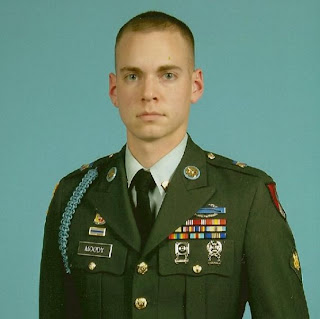
Call To Action: Support The Release Of Security Contractor Nicholas Moody From UAE Detention

     This is another one of those deals where the legal system of another country has completely gone overboard with the application of their laws on foreign citizens. How many thousands of contractors have transited through their airport over the course of this war, all spending money in their shops or even staying at local hotels, and this is how you treat them? Last I checked, the UAE and the US were still friendly towards one another, and this is how they treat a citizen of the US?

     Nicholas Moody served his country in the National Guard during the war, and he was serving his country again as a security contractor, and this is no way to treat a veteran like this. Especially imprisoning the guy over something as stupid as carrying a weapons cleaning kit and a forward grip, or whatever minor parts he needed to do his job. The US Embassy in the UAE should be all over this one.

     Now if he had an RPG or AK 47 in his bag, I might see the logic with the UAE detaining him. But for something as petty and as stupid as this, and for over seven weeks? Shame on the UAE.  Commonsense should dictate here, and I highly recommend everyone to friend request the Facebook Page for freeing Nicholas Moody and write the US Embassy in the UAE, and do what you can to support his release. –Matt

Security contractor from Nevada locked up in UAE for 7 weeks

By Greg Botelho

A security contractor from Nevada has been locked up for seven weeks in the United Arab Emirates, his mother said Thursday, as his family seeks answers about what landed him in prison and how long he’ll remain there.

Having served in Iraq and then Afghanistan as part of the California and then Nevada National Guards, Nicholas Moody, 23, was working for a private security contractor when he stopped over in Abu Dhabi, his mother Lorina Moody told CNN. He was arrested on September 29, during an 18-hour layover while heading back from Iraq, for carrying firearms accessories — parts that could accompany a gun, though no firearm itself — which is illegal in the United Arab Emirates, his mother said.

“Our son is the type of individual who would not have willingly broken the law,” said Moody, of Susanville, California. “Now, we’re caught in a situation where we don’t [know] where to turn to. We don’t really have any way of knowing what’s going to happen to him.”

The U.S. State Department confirmed that Nicholas Moody has been detained, saying that U.S. consular officers visited him on September 30, October 6 and November 10.

“During those visits, he conveyed he was being treated fairly,” State Department spokesman Mark Toner said in a statement. “We will continue to monitor the case.”

(more…)

Tuesday, November 16, 2010

Publications: 2010 International Code Of Conduct For Private Security Service Providers

2010 International Code of Conduct for Private Security Service Providers

Afghanistan: The Largest US Embassy In The World, Just Got Bigger–511 Million Dollars Bigger!

     Not to mention the 40 million dollars being spent to build two Consulates, one in Mazar-I-Sharif and the other in Herat. So technically, it would be 551 million dollars. No doubt there will also be cost overruns, so this price will go higher.

     A couple of points about this contract worth noting. During the Iraq Embassy debate, there was much heartache about the size and cost of that thing. Of course this was one more dig for the opponents of the war and of the Bush administration. Now fast forward to this Embassy in Kabul, and it’s size and cost, and there was nothing really mentioned about it?  Politically speaking, it was barely a whimper in the news and I heard no bashing of the Obama administration over this move. Hell, I just found out about it today, and I track this stuff. lol

    And yet the expansion and due date of it being built, completely conflicts with the idea that we are wanting to pull out of Afghanistan any time soon. If anything, it just indicates a continuation of our commitment there. That kind of thing is the stuff that pisses off the Taliban big time.  Although I certainly hope that Crazy Karzai will get the picture that he needs to stop making deals with the Taliban, and put a little faith in the process under the new command of Petraeus.

    This Embassy expansion also signifies a certain future that the security contracting community will be a big part of. That would be the WPS program and all of it’s security requirements. These Consulates and Embassy will be packed with civilian specialists and diplomats, all tasked with going out into the hinterlands of Afghanistan to do their business. Private security contractors in the form of PSD teams will be the guys to get them out there and back in one piece. PSC’s will also be the guys protecting these Consulates and Embassy, and as the military draws down in the future, these folks will be very important to the static security mission there.

     Iraq will also be the one to watch as this progresses. There will be many lessons learned in Iraq that can be applied to Afghanistan and elsewhere in the world. The WPS program will certainly be an intriguing wartime venture between private industry and government to watch as this unfolds. –Matt

US to spend 500 million dollars on embassy in Afghanistan

Nov 3, 2010

KABUL — The United States is bolstering its presence in Afghanistan with a 500 million dollar expansion of its Kabul embassy and the construction of two consulates, it announced Wednesday.

Washington’s Kabul embassy is already its biggest in the world, with about 1,100 employees, projected to rise to 1,200 by the end of the year, officials said.

Hundreds have arrived over the course of this year as part of a “civilian surge” bringing development experts into the country to compliment the military effort already in its 10th year.

The United States and NATO have 150,000 troops in Afghanistan fighting the Taliban-led insurgency, following a military surge aimed at speeding an end to the war.

The embassy expansion contract was worth 511 million dollars and had been awarded under US law to an American company, Caddell Construction Inc., ambassador Karl Eikenberry said.

Another two contracts, worth 20 million dollars each, have been awarded for the construction of consulates in Herat, the main city in western Afghanistan, and Mazar-I-Sharif in the north, he said.

(more…)

« Newer PostsOlder Posts »

Powered by WordPress