Feral Jundi

Tuesday, June 29, 2010

Technology: Using Hyperspectral Satellites To Find IED’s, Tunnels, Caves And Other ‘War Stuff’

     Exactly what sorts of objects and substances ARTEMIS is able to pick out of its region-spanning hyperspectral cubes is a military secret. However this briefing pdf given in 2006 by US airforce lab officials suggests that it was expected to pierce overhead camouflage that would deceive optical or thermal sensing; that it would be able to spot disturbed earth and “concealed adits” (that is cave or tunnel entrances invisible from above) and generally “detect and identify” unspecified “targets”.

     Evidently the TacSat-3 can do at least some of this, as we now learn that following a year as an experiment it has proved so successful that it is now being handed over to US air force Space Command to become a full-time operational asset – America’s first hyperspectral spy sat.

*****

   If true, this could be pretty significant.  A satellite like this could also be used to identify minerals in certain areas, enemy emplacements, tunnels, you name it.  I am sure there will be an army of analysts going over the information, as well as super computers, all with the focus of uncovering the battlefield secrets of our wars. That is pretty cool if it can work as advertised.

   It also looks like a commander in the field who has a AN/PRC 117F, can actually tap into the feeds of this hyperspectral satellite, and get some close to real time information on his battle space.  I am sure the satellite can identify all sorts of stuff that might be valuable to a commander out in the field, and give him the heads up on targets and things of interest. There might even be some non-military applications for this thing, that could help out the commander as well. (farming, road construction, etc.)

    Also, a satellite like this might help to find Osama Bin Laden.  I mean if it can find caves or tunnels, then we could conceivably find the coordinates of every tunnel in our areas of focus in Pakistan or Afghanistan. You could also probably fine tune the satellite to pick up the signatures of any of the tools of warfare that these guys would have.  Sat phones, bombs, gun metal, etc. Who knows, but I do know that this project was given top priority and fielded at a break neck speed. Interesting stuff.

   For this industry, the one thing that this satellite could do, to help out the enormous contractor logistics battle we are fighting, is to watch the roads for us, and somehow get that information out to the masses if there is an IED hole or whatever.  Stuff like this could not only save the lives of military folks, but contractors as well, and increase the success rate of cargo delivery.

    Finally, one idea for this thing is to use bomber drones who can drop sensor drones on top of these targets identified by the satellite.  The idea being is that you could use thousands of sensor drones (that are also equipped with warheads), and land them on these targets identified by the satellites.  If these sensor drones actually had sniffers or small cameras to identify wires or whatever, the sensor drone could report that to the operator and they could determine the course of action. What is great about sensor drones like this, is that you could use them to detonate the IED, or to kill the enemy if they try to destroy the drone.(use it drone archer style)  If it is a child or innocent that is just curious, just fly the sensor drone away to keep it out of their hands. Or give commands through the thing, and tell them to stay away. If you cannot recover the drone, then just blow it up or use a safer self destruct ‘elephant chisel’ mechanism. And the way things are going now, drones that could perform this task are getting cheaper, smaller, smarter, faster, and more feasible for this kind of mission. –Matt

——————————————————————

New prototype US spy satellite rushed into active use

‘Hyperspectral cube’ eye can spot buried bombs, tunnels

By Lewis Page

June 11, 2010

An experimental “hyperspectral” spy sat which is able to detect buried roadside bombs and concealed cave or tunnel entrances has been handed over to the US forces for operational use in the Wars on Stuff.

The TacSat-3 was launched aboard a Minotaur-1 rocket along with several other small satellites from Wallops Island, Virginia, in May 2009. The TacSat was designed to prove the US concept of “operationally responsive space”, where a military user can make a request and a small inexpensive satellite can be in a suitable orbit within days rather than months or years.

Thus the TacSat is designed to be fitted with a variety of different payloads as required by an operational commander. TacSat-3, as a prototype, carried one in particular known as the Advanced Responsive Tactically Effective Military Imaging Spectrometer, or ARTEMIS. This is a “hyperspectral” sensor able to detect not just visible light but infrared and ultraviolet as well.

The idea of hyperspectral sensing is not, however, merely to “see” in the usual sense of optical telescopes, infrared nightscopes and/or thermal imagers. This kind of detection is used on spy satellites and other surveillance systems, but it suffers from the so-called “drinking straw effect” – that is, you can only view a small area in enough detail to pick out information of interest. It’s impossible to cover an entire nation or region in any length of time by such means; you have to know where to look in advance.
(more…)

Monday, June 28, 2010

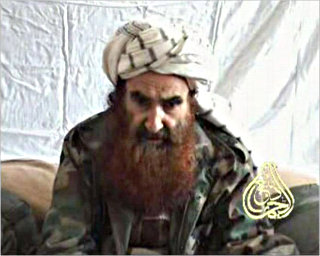
Bounties: To Find Guys Like Siraj Haqqani, And Earn Millions Of Dollars In Bounties, Just Follow Crazy Karzai!

     Crazy Karzai really is crazy. He could of turned in that bastard Haqqani and made a cool $5 million! That’s hero stuff there, and yet he let ol’ red beard go… tisk.. tisk.

     I say that any of you aspiring bounty hunters in Afghanistan want to get lucky, just follow the Karzai crew. Hell, they might even meet with Bin Laden!  Because I guarantee he will be meeting with more booger eaters in the future, and that could be some serious money for you.

     And if you don’t feel like taking credit or snagging this bounty, just give me the tip anonymously and I will report the information to the Rewards For Justice program myself. Missed opportunities….. lol –Matt

—————————————————————–

Sirajuddun Haqqani

Wanted : Sirajuddun Haqqani Up to $5 Million Reward

Date of Birth : Circa 1973

Weight : 150

Height : 5’ 7”

Hair : Black

Complexion : Light, with wrinkles

Sex : Male

Nationality : Afghan Pashtun

Status : Fugitive

Aliases : Siraj Haqqani, Khalifa

Sirajuddin Haqqani, a senior leader of the Haqqani terrorist network founded by his father Jalaladin Haqqani, maintains close ties to al-Qa’ida. During an interview with an American news organization, Haqqani admitted planning the January 14, 2008 attack against the Serena Hotel in Kabul that killed six people, including American citizen Thor David Hesla.

Haqqani also admitted to having planned the April 2008 assassination attempt on Afghan President Hamid Karzai. He has coordinated and participated in cross-border attacks against U.S. and Coalition forces in Afghanistan. He is believed to be located in the Federally Administered Tribal Areas of Pakistan.

Link to Rewards For Justice here.

——————————————————————

The Long War Journal: Afghan president meets with Siraj Haqqani: Report

Written by Thomas Joscelyn & Bill Roggio

June 27, 2010

Reports from Afghanistan indicate that the president of Afghanistan, the head of Pakistan’s military intelligence service, and Pakistan’s army chief all met recently with the al Qaeda-linked leader of the Haqqani Network, one of the most dangerous terror groups operating in the country.

Afghan President Hamid Karzai; General Ashfaq Parvez Kayani, Pakistan’ top military leader; and Lieutenant General Ahmed Shuja Pasha, the chief of Pakistan’s notorious Inter-Services Intelligence directorate, are reported to have met with Sirajuddin Haqqani earlier this week to negotiate an end to the insurgency, according to Al Jazeera. The location of the purported meeting was not disclosed.

(more…)

Publications: GAO Report On DoD’s Progress And Challenges For Logistics In Afghanistan

     Thanks to David Isenberg for identifying this report and pointing out all the goodies. What was interesting to me was how absolutely vital contractors are to the logistics of the war in Afghanistan.  Especially for the routes coming out of Pakistan, because US military forces are not allowed to escort that stuff.  Nothing new, but as you go through this report, you get the idea of how essential we really are.  It also signifies how important it is that we get a handle on how to manage it all, because logistics is going to be big…. really big.

   Some of the things that jumped up at me as obvious fixes for some of the problems, is to stop depending on Fedex type tracking measures and gadgets, and start depending on humans as the tracking mechanism of this stuff. Because Afghan and Pakistani companies will do all they can to get rid of those GPS trackers, or not even care about these tracking mechanisms.  What matters to them is money and their ability to pilfer the cargo and blame it on a combat loss or whatever. No one is there to stop them or witness them doing this, and they will do whatever they want.  I say put competent expat companies in charge of these deliveries, with expat convoy leaders and teams, and use local Pakistani or Afghani drivers and guards as the manpower/interpreters.  This is the optimum set up if you cannot use the military to escort this stuff, and especially on the Pakistan side.

     The point is, is that you need a human that you can trust on these convoys, because gadgets can be defeated. But you also need something else that is lacking for these convoys.  And that is communications, appropriate fire power and support.  In order to have communications, appropriate fire power and support, you need folks who can help facilitate that.  Because without these basic tools for the defense of convoys, you will continue to see them get attacked and pilfered.

     As more troops pour into Afghanistan, the stability of logistics will be crucial and the current set up is unacceptable. I say put expat companies in charge, set up Pakistani QRFs and air support on their side, and US military QRF and air support on the Afghan side, and call it a day.  These forces are purely dedicated to protecting the contractor led convoys in Pakistan, and if we want, we attach military escorts as they cross into Afghanistan. Hell, we might actually kill a few bad guys along the way, and use these convoys as decoys. If the enemy wants them that bad, they will have to pay a price to get them.

     Or we can allow our logistics to be torn apart by the enemy, and we can allow untrained, mismanaged, corrupt and undisciplined Afghani or Pakistani companies to do whatever they want with that stuff. They will continue to pilfer, they will continue to shoot wildly into towns and villages as they protect convoys, and they will continue to pay off the enemy for safe transport.  That is unacceptable to me, and there is a better way.

     Might I also add that we put expat companies in charge of convoys in Iraq, and that arrangement works far better for any kind of unity of effort between civilian and military forces sharing the roads. Companies like Armorgroup definitely bet their lives on the delivery of goods and people, and they did an outstanding job(they also lost a lot of guys due to their brave work). Our lessons learned from Iraq were also built on this concept of expats being in charge, and not the other way around with Afghanis or Pakistani companies in charge of this stuff.

     Hell, in Iraq, you would see military convoys join in the protection of a expat convoy operations.  But when it came to all Iraqi security companies, military convoys or patrols would have nothing to do with them because they had no way of communicating and they really didn’t trust them. It pays to have expats in charge of operations, and it really pays when those expats have all the tools and support necessary to be successful for those convoy operations.

    I also mentioned in an earlier post about the aviation side of logistics.  The report further emphasized the difficulties that come with aviation logistics in Afghanistan.  It seems we do not have enough space on runways to handle these large transport aircraft. It will take a massive effort to construct more landing strips that can handle the large aircraft, because unfortunately, that stuff requires modern and durable runways.  In Iraq, this wasn’t an issue, but in Afghanistan this is definitely an issue. That is why I thought the STOL aircraft/paracargo contract was interesting. That is the kind of capability that can answer the call for immediate cargo or transport needs, when the troops are in trouble and things are locked up at one of the big air bases. Small and many versus the few and large for logistics. Well, check out the report and let me know what you think. –Matt

——————————————————————

GAO: Preliminary Observations On DoD’s Progress And Challenges In Distributing Supplies And Equipment To Afghanistan

June 25, 2010

Within Afghanistan, cargo is moved to forward operating bases primarily by means of contractor-operated trucks, though military trucking assets are used in some instances.

*****

Because no U.S. military transportation units operate in Pakistan, DOD must rely solely on private contractors to transport supplies and equipment along ground routes through the country and to provide security of the cargo while in transit. Privately contracted trucks can transport cargo through Pakistan via two routes: the northern, which crosses into Afghanistan at the border town of Torkham, and the southern, which crosses at the border town of Chaman.

*****

Limitations on what items can be transported through Pakistan and the amount of damage sustained by cargo transiting through Pakistan also can delay the delivery of necessary supplies and equipment to U.S. forces in Afghanistan. Private trucking contractors do not transport sensitive equipment on the Pakistani ground routes. Instead, such equipment must be flown into Afghanistan and then be installed onto the vehicles in Regional Command-East.

(more…)

Strategy: Secrets From Inside The Obama War Room

Filed under: Afghanistan,Strategy — Tags: , , , , , , , — Matt @ 2:01 PM

     I know this is a little old, but it is totally relevant to today’s discussion about the future of Afghanistan.  As you read through this story, you come to understand why McChrystal or any other military leader in this war might be frustrated.  I said this before, and I will say this again.  There is not a general out there that thinks that declaring a withdrawal date is a good idea in the context of winning wars.  This administration is set on July 2011, and General Petraeus has made his promises to that administration that he could finish this in that time frame. It is a promise he will have to break in my view.

     Most of all, the Taliban love this date, and it is a countdown to their victory. The enemy will certainly pour it on as this date gets closer, and I just don’t see how this is helpful for any kind of plans with Afghanistan. Or the Taliban will just sit and wait, and then pour it on as soon as we leave. It just makes no strategic sense.

     Petraeus has a lot of work to do in turning around the war. There is alleviating the fears that Karzai has with this date, there is letting our troops fight the way they see fit and allowing them to win battles, there is dealing with Pakistan and ensuring they continue their fight, there is the training of the ANA and police so they can take control of the country, and all of this is dependent on changing that stupid date for withdrawal. Or Petraeus can keep his promise of defeat and go down with the ship. Only time will tell, and the clock is ticking. –Matt

——————————————————————

Secrets From Inside the Obama War Room

by Jonathan Alter

May 15, 2010

The first of 10 “AFPAK” meetings came on Sept. 13, when the president gathered 16 advisers in the Situation Room in the basement of the White House. This was to be the most methodical national-security decision in a generation. Deputy national-security adviser Tom Donilon had commissioned research that backed up an astonishing historical truth: neither the Vietnam War nor the Iraq War featured any key meetings where all the issues and assumptions were discussed by policymakers. In both cases the United States was sucked into war inch by inch.

The Obama administration was determined to change that. “For the past eight years, whatever the military asked for, they got,” Obama explained later. “My job was to slow things down.” The president had something precious in modern crisis management: time. “I had to put up with the ‘dithering’ arguments from Dick Cheney or others,” Obama said. “But as long as I wasn’t shaken by the political chatter, I had the time to work through all these issues and ask a bunch of tough questions and force people to sharpen their pencils until we arrived at the best possible solution.”

(more…)

Thursday, June 24, 2010

Cool Stuff: Paul Romer’s Charter Cities Idea….. Afghanistan?

Filed under: Afghanistan,Cool Stuff — Tags: , , , , , — Matt @ 5:52 PM

« Newer PostsOlder Posts »

Powered by WordPress