Feral Jundi

Thursday, June 26, 2014

History: The Battle For Najaf, By Travis Haley

This is an excellent story on this famous battle, fought by the contractors and military assigned to protect the CPA in Najaf, Iraq back in 2004. By now, most folks familiar with the battle have seen this video of the battle circulating around the net, and it gives a snapshot of what these guys were up against. Travis has added more detail to the big picture of what was happening at the time, to include lessons learned.

You can also read more about Travis and his history and contribution to the training industry over at his website. –Matt


Tuesday, March 4, 2014

Industry Talk: Afghanistan To Disband The APPF!

Filed under: Afghanistan,Industry Talk — Tags: , , , , — Matt @ 10:45 AM

U.S. Army Col. Jane Crichton, a spokeswoman for the U.S.-led coalition, said there had been no immediate impact on security.
“We are not aware of any decisions or significant changes to support that affect the coalition in the near-term,” she said. “We are evaluating possible courses of action, including providing our own security or using contract security, among others. At present, the APPF is still providing convoy security escorts with no plan to cease.”

This is big, and good riddance. The APPF was a joke from the get go, and more than likely the money earned by this venture was squandered away by a corrupt government–hence why they are disbanding it. Also, I had been getting reports over the last couple weeks from contractors saying that APPF guards were not getting paid and that there was rumor that this was going to happen.

Now the question is, how will this security vacuum be filled? Well, that quote up top says it all. Either these clients will just pack up and go home, or if they decide to stay, they will be requiring contract security. Which I am sure there will be plenty of companies willing to step in and do this.

Although there is one caveat with that statement. The Afghan government has been seizing weapons and communications gear like crazy for the last several years, and it could be very difficult for companies to get that stuff back to do the job. So going back to the corrupt government theme, I could see lease or rental type agreements for weapons or some kind license scheme that will cost oodles of money for companies to get set up.  Who knows, but at least the APPF is going away.

If anyone has other elements to report about this development, let me know in the comments. Especially if security becomes an issue because of the way this has worked out. There is still a war going on and I imagine if APPF guys are just walking off post because they are not getting paid or are fed up with the whole thing, then that will not be cool. What a mess….

It also reminds me of the mess with the TWISS contracts in Iraq. When the Ugandans would not get paid or whatever forces being used were not getting paid, they often had walks offs and labor strikes.  Meaning guards not showing up to posts. Several times, contingencies in Iraq required military folks to step in to do these jobs as labor issues were being handled out in the field. So as this APPF thing develops, I imagine we will see similar acts if they are not getting paid and there is confusion as to who will pay them or whom they work for.

Another point is perhaps they will not like being rolled into the MOI or being made into a military unit or police unit. Perhaps the ANA or ANP will not like having to dip into their budgets to pay for these APPF salaries. Who knows…. –Matt


Afghanistan to Disband Crucial Guard Force
March 4, 2014
By Nathan Hodge
The Afghan government is moving to dissolve a crucial guard force that protects military supply convoys, international aid programs and foreign installations, creating new uncertainty over security as the U.S. and its allies withdraw.
The Afghan Ministry of Interior said in a statement Monday that Kabul would disband the Afghan Public Protection Force.
While APPF is a government agency, its services are paid for commercially by the clients, such as the U.S. Agency for International Development. It replaced a host of private security contractors.
Top Afghan officials recently issued a directive that would disband the force and fold it into the Ministry of Interior. But U.S. and coalition officials say it is unclear how, exactly, the Afghan government plans to implement this new order—and who will take over the job of protecting internationally funded reconstruction projects.

(more…)

Saturday, February 22, 2014

Industry Talk: The UN Talks Shop About Their Use Of PMSC’s

Last year in July, I wrote about this debate that the UN was having about it’s use of PMSC’s, now and into the future. This is the final review panel about this debate, and it was interesting to hear the current view point of the UN.

One of the things that came up that I thought was interesting, is that the UN still does not know how many contractors it uses, either for guard work or for logistics. So I think they should at least dedicate some time and effort towards getting a firm grasp on this. Perhaps an online database that gives a transparent view of everyone they are using, both past and present. They could also add to that database if that company was fired or not, or what they thought of their performance? Anything to add to the history of the use of contractors.

They also talked in great length about codes of conduct and other initiatives to get companies to self-regulate. My thoughts are that if the UN actually published violations of these codes as a record for the public, kind of like what POGO does with companies in the US, then that would keep the world and the UN better informed as to the true track records of companies. That kind of history and track record is essential information if you want to truly find the best value company for the money. Companies would also fight to not be on that list, and especially if it impacted bidding.

The other surprising thing is that they couldn’t list how much money was spent on contractors, past or present. So a database should absolutely list those costs so that member donors to the UN can see exactly how their money is being spent. Also, other companies can see how much a service costs, and find out if they can provide that service cheaper or at least get a feel for what it would take to spin up a contract. So a UN contractor database would be an excellent investment, if the UN is interested in transparency and effectively using this industry.

I was also taken aback when the panel was asked around the 28:30 point of this video, what they thought about the lack of accountability for member nation troops that continue to violate human rights during peace keeping operations. No one wanted to take that question and it was left ‘wide’ open. I thought the silence said everything…

There was also numerous questions about the definition of mercenary and how that applied to PMSC’s. Or how their group was called the UN Working Group On The Use of Mercenaries, and yet they were tasked with evaluating PMSC’s that were not mercenaries by definition. I think the choice of group title is somewhat counterproductive for such a panel, if they wanted to be perceived as objective in their research of this industry. With that said, the group at least tried to differentiate between mercenaries and PMSC’s.

If the video below does not show up, here is a link to the video. It is about 50 minutes long and worth your time. The panel’s final report should be coming out sometime this year, and I will post it when it surfaces. –Matt


Thursday, February 20, 2014

Maritime Security: Two Trident Group Contractors Found Dead On The Maersk Alabama

Traces of narcotics and hypodermic needles found with the bodies of two American security officers on the container ship Maersk Alabama suggested the deaths resulted from drug overdoses, a Seychelles government official told CNN on Thursday. –CNN

Sad deal. This is the second death report I have done here on the blog recently, and this is never fun to put out there. My heart goes out to the friends and family of the fallen.

As to the cause, the Seychelles government says there were narcotics and hypodermic needles found with the bodies. If true, perhaps heroin was the cause of death? I say this drug, just because there has been an increase in heroin related deaths in the US and around the world. Most notably the actor Seymour Hoffman just died from a heroin overdose. The only way to confirm that these guys died from an overdose or from tainted drugs is through an autopsy.

Also, where did the drugs come from? Were they locally bought when they came into port or did they transport them from the US? Who knows…

What is significant is the company reaction, which leads me to believe that they know more than what is openly being said. Here is the quote:

The Maersk Alabama’s owner, the Norfolk, Va.-based Maersk Line Ltd. also has said the deaths were not related to security duties or ship operations. The ship has since left the African port. Speers statement says the company has a zero tolerance policy when it comes to drugs and alcohol, and that based on past experience working with The Trident Group, it believes this is an isolated incident.
Still, the company is responding by requiring reviewing its personnel records to confirm that drug tests and background checks are current, among other things. Speer said The Trident Group will also implement a random drug testing program to increase the frequency it screens security personnel.

There is a problem with drug screening and contracting that needs to be emphasized here. If guys know that they will be tested as a requirement of work, then they will simply not take the contract until they are clean. When they accept the contract they know they are ready to take the test the company gives ‘randomly’, because they waited an adequate amount of time for the drugs to clear the body. That is the problem with drug testing and independent contractors. You might get a clean contractor upon hiring, but have no idea about their history.  That, and as soon as they pass the test, they go right back into drug use mode when they get on that contract. That’s if they have access to those drugs and they are not able to control their craving or dependence.

The same goes for alcohol. Companies do not test for alcohol and it is very difficult for companies to maintain a ‘zero tolerance’ for alcohol use out in the field, if their leaders don’t care. Or the leaders are drinking as well, and could care less about the policy. It all goes back to how strong of a leadership program the company has, and are the leaders in the field truly aligned with the company’s policies/strategies/goals?

Back to the dynamics of contracting, if these guys are actual employees that are employed ‘full time’ with the company, then I could see random drug tests as being effective. They could administer the things at any time, and know that they could truly catch those folks. But still, people are all the same, and they will always find a way to bypass these tests. Or the leaders out in the field could care less about what the company wants and will give a heads up to the guys that a test is coming.

You know, I can’t emphasize enough how damaging that kind of environment is. Weak leaders, or leaders that could care less about holding their people accountable, is a recipe for disaster when it comes drugs or alcohol. Fitzsimmons comes to mind as a reminder of why contracting and alcohol doesn’t mix. Or the AGNA episode. Or the Jorge Scientific video.

Another thing to remember is that some tests are not able to pick up all drugs. Or certain drugs are taken by contractors because they do not last in the body, which makes it easy to play the system. For example, there are some types of steroids that last in the body for 4 days. So a contractor could do a cycle, and time it for when they would be accepting a contract, and then they would take the drug test at the right time when they are clean.

Then of course there is the management of contractors and being aware of the signs of drug and alcohol use. Does the company’s leaders pay attention to this stuff, or are they looking the other way?  Who knows what happened in this deal, but if guys are standing post on a ship and high on drugs or drunk, then that just doesn’t sit well with fellow guards or the client. It’s the type of thing that gets people killed or it leads to companies losing contracts and gaining poor reputations.

I also want to talk about that last part. Reputation is everything, and the competition out there is fierce. There are numerous companies worldwide, all fighting for contracts in the maritime security industry, and the members of these companies can sometimes act pretty negatively (trash talking) towards other companies that are on the skyline.

Trident Group was the victim of this kind of trash talking after their contractors were involved in a shooting incident awhile back. The video of the incident went viral and numerous companies and contractors out there were trying to depict the men involved as out of control, even though they had no idea about the context of what was seen. That the boat had actually been attacked by the same pirate group twice in 72 hours! But hey, Trident Group still had a peanut gallery out there trying to talk down the company and make them out to be reckless or out of control.

With this current incident, this just gives the competition the ammunition they need to steal Trident Group’s business. That is the reality of it, and the speed of new media and social networking is relentless when it comes to spreading rumor or half truths.

Although with this particular contract, Maersk owes the Navy SEALs big time for the rescue of Capt Phillips, complete with a movie to document the whole thing. Given that quote about the company’s response to this incident, I imagine they are doing all they can to restore Maersk’s trust in the contractors they send out to protect them. I hope the company is taking a good look at it’s leadership out in the field as well.

When the autopsy comes up, I will make the edit. A big hat tip to everyone that contacted me via Facebook and sent me emails about this. I don’t think I have ever had that many people forward a story like that, and this really was some unique news for our industry. Everyone was trying to give me the heads up on this and I really appreciate that. –Matt
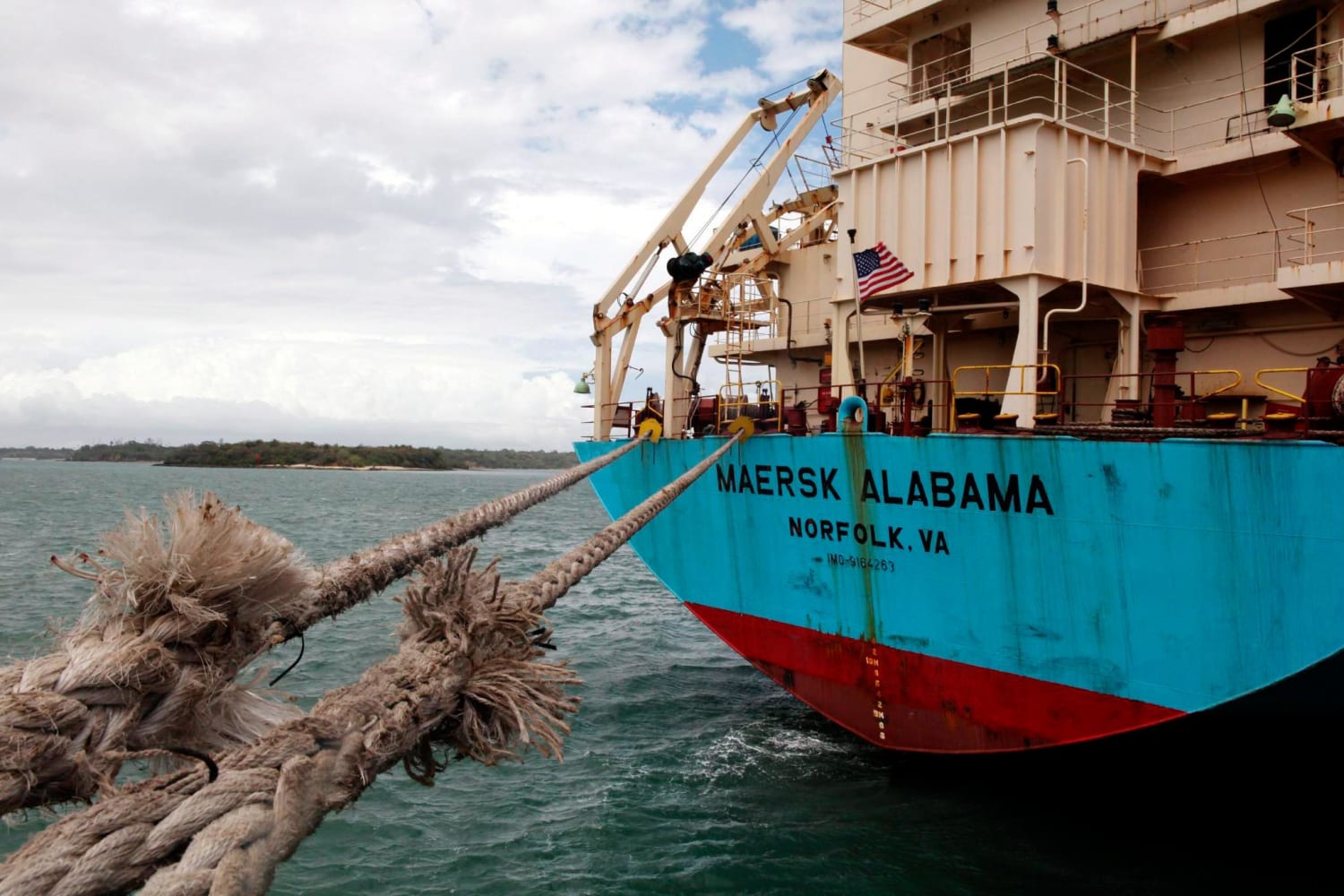


Drugs on Maersk ship where 2 ex-SEALs died
February 20, 2014
Drugs were in the room where two former Navy SEALs were found dead aboard the Maersk Alabama, a ship that was the focus of a 2009 hijacking dramatized in the movie “Captain Phillips,” a company spokesman said Thursday.
Police from the African island nation of Seychelles have given no cause of death for Mark Daniel Kennedy, 43, and Jeffrey Keith Reynolds, 44. The Americans were security contractors who were found dead Tuesday in a cabin on the ship while berthed in Port Victoria in the Indian Ocean.
“We are saddened by the tragedy and our thoughts are with the family and friends of the deceased men,” Maersk Line Ltd. spokesman Kevin Speers said in a statement.
Speers said the Seychelles police report includes observations about the presence of drugs and paraphernalia in the room where the two men were found dead, although the type of drug is unknown.
On Thursday, police spokesman Jean Toussaint, noted that officials were awaiting autopsies and said, “As far as I know there is no evidence of physical trauma” on either man’s body. Speers said the Maersk Alabama was cleared to leave Seychelles following the onboard investigation and that it is already underway.
The Maersk Alabama is a Norfolk, Va.-based container ship that provides feeder service to the east coast of Africa and employs security contractors to provide anti-piracy services. The two men who were found dead worked for a Virginia Beach, Va.-based maritime security firm, The Trident Group.
In a statement posted on its website, The Trident Group President Thomas Rothrauff said there “is no immediate indication as to the cause of death, but the deaths were not caused by operational activity.” Rothrauff wrote that the next of kin have asked that no further information be released and that their privacy be respected.
The Maersk Alabama’s owner, the Norfolk, Va.-based Maersk Line Ltd. also has said the deaths were not related to security duties or ship operations. The ship has since left the African port. Speers statement says the company has a zero tolerance policy when it comes to drugs and alcohol, and that based on past experience working with The Trident Group, it believes this is an isolated incident.
Still, the company is responding by requiring reviewing its personnel records to confirm that drug tests and background checks are current, among other things. Speer said The Trident Group will also implement a random drug testing program to increase the frequency it screens security personnel.
The Trident Group was founded by former Navy SEALs and hires former special warfare operators to perform security. On Thursday, the Navy confirmed that Kennedy and Reynolds belonged to the SEALs, an elite unit of the military’s special operations forces who are sometimes called upon to combat piracy. (more…)

Thursday, February 13, 2014

Industry Talk: Two DynCorp Contractors Killed In VBIED Attack In Afghanistan

Rest in peace to the fallen and my heart goes out to the friends and family of both men. Very tragic that these guys were going home when this happened. Michael was on his way to getting married this Valentines day.

A VBIED is what killed the two men, and no word on the condition of everyone else that was wounded. –Matt


Two Killed in Kabul, Afghanistan
February 10, 2014
On February 10, 2014, two DynCorp International personnel working on the Combined Security Transition Command – Afghanistan (CSTC-A) program were tragically killed in an explosion near Kabul, Afghanistan.
Paul Goins, 62, of Crosby, Texas, joined DI in February 2013. A veteran of the U.S. Marine Corps, Mr. Goins had more than 35 years of experience in the correctional and compliance fields, working with the Department of Justice, the Federal Bureau of Prisons, and in the private sector. His professional contributions were made at home in the United States, and abroad in Iraq and Afghanistan, where he worked to share his knowledge with developing countries.
Michael Hughes, 38, of Washington, Montana and Nevada, joined the DI team in Afghanistan in November 2010. Having worked for several years with the Department of Corrections in Washington State, Mr. Hughes’ areas of expertise included training, emergency management, incident command, as well as hostage and crisis negotiations.
DynCorp International chairman and chief executive officer Steve Gaffney commented, “The world lost two heroes in this attack. They volunteered to travel to places they had never been, to help people they had never met. I ask that you please keep them, along with their families, loved ones, and colleagues who continue to support the mission, in your thoughts and prayers.”

(more…)

« Newer PostsOlder Posts »

Powered by WordPress