Feral Jundi

Saturday, April 24, 2010

Publications: RAND–How Insurgencies End, By Ben Connable

The RAND study found:

Modern insurgencies last approximately 10 years and the government’s chances of winning increase slightly over time.

Withdrawal of state sponsorship cripples an insurgency and typically leads to its defeat, while inconsistent or impartial support to either side generally presages defeat.

Pseudo-democracies do not often succeed against insurgencies and are rarely successful in fully democratizing. 

*****

   This first story and introduction from RAND is a run down of the conclusions of the study.  What I like about studies like this, is that they draw upon a wide array of past insurgencies, and it tries to find patterns and consensus. That is good, and we should be learning from these insurgencies.

   The last point up top in the quote, is the one I am concerned with. Can we do this with a weak government?  Or can we do business with the tribes and local leadership of cities and towns until we get a good government in place?  The article below points out that it is possible to do this without a strong government, but it certainly does not help the effort.  Check it out. –Matt

——————————————————————

Study highlights problems for U.S. strategy in Afghanistan

Ben Arnoldy

April 23, 2010

NEW DELHI — While current U.S. counterinsurgency doctrine in Afghanistan broadly conforms to historical best practices, the Taliban have a number of advantages that have produced insurgent success in the past, according to a new study of 89 past and ongoing insurgencies worldwide.

The factors that favor the Taliban include receiving sanctuary and support in another country, learning to be more discriminating in their attacks and fighting a government that’s weak and reliant on direct external support.

The historical trends suggest that the Taliban’s Achilles heel would be the loss of their Pakistani sanctuary, while the principal American vulnerability is Afghan President Hamid Karzai’s weak pseudo democracy.

The study, said the author, cannot be predictive, but it can help the U.S. address or exploit these vulnerabilities.

“A lot of the things being done in the current (U.S. military) plan are along the lines of successful things we’ve seen in the study,” said Ben Connable, the lead author of “How Insurgencies End,” published by the RAND Corp. in Washington.

(more…)

Afghanistan: The Taliban Fear Contractors

Filed under: Afghanistan,Industry Talk,Strategy — Tags: , , , , , , — Matt @ 1:52 AM

    The attacks “are not about armed confrontation. They are about subversion of the government,” said Terrence K. Kelly, a senior researcher at the Washington-based RAND Corporation who has studied how rebuilding efforts work in war zones. America’s strategy counts on development work to increase the legitimacy and reach of the Karzai government. With these attacks the Taliban can “turn off the delivery of services — which makes the government look bad,” he said.

    USAID insists it will not scale back its work in Afghanistan because of the attacks, according to Rebecca Black, the agency’s deputy mission director for Afghanistan.

*****

    Break guerillas’ moral-mental-physical hold over the population, destroy their cohesion, and bring about their collapse via political initiative that demonstrates moral legitimacy and vitality of government and by relentless military operations that emphasize stealth/fast-tempo/fluidity-of-action and cohesion of overall effort.

     *If you cannot realize such a political program, you might consider changing sides! -Page 108, Patterns of Conflict, Col. John Boyd

*****

   They must fear us, if they feel it is necessary to attack us. They know that we are out in the towns of Afghanistan, connecting with the people, and winning them over with jobs and support.  And when we say we are doing this in the name of the Afghan government, and people see the fruits of this labor, well then that makes the government look good.  Happy people, happy government, and sad sad sad Taliban. lol  It also makes the Taliban’s shadow government sad, because now they have to contend with the goodwill the contractors are spreading.

   So what does this mean?  From a strategist point of view, and from a COIN point of view, my people (contractors) are actually connecting with the Afghans and making an impact.  We are the civilian face of the war effort, and the Taliban fear us. They must, if they are purposely trying to attack us–I thought we didn’t matter?

   It also means that we should be doing more of it.  If the Taliban fear what we are doing, then I say increase the effort and further support the various programs that we are involved with out there. Focus on the programs that make the Afghan government look good, and makes the Taliban shadow government look frivolous and pathetic. Keep connecting with the people and providing them with jobs and purpose.

   Now on to another factor of these attacks.  Because the US and ISAF militaries are so hung up on living on the big box FOBs and commuting to work, the Taliban and their shadow government is pushing around the population and terrorizing them into doing what they want.  That is what shadow governments do–they undermine the current government with the idea of making them look illegitimate or ineffectual.  That shadow government will do everything it can to either win over the population, or impose their will on the population.  In order to stop that shadow government, you need to provide a ‘big stick’ in the area that will put the smack down on these guys. You also have to be better at influencing the people than the shadow government. It also helps that the current government is legitimate and not corrupt in the eyes of the people.

   And that is a big problem.  Crazy Karzai and his clown posse is not helping things at all, and in turn, the people have no respect for the government. It will also hurt the troops and police morale, both of the Afghans and of the Coalition.  No one likes working for a loser.

   Ideally, if you can’t change Karzai’s tune, then he should be voted out by the people. Unfortunately, Karzai is rigging the voting booths, and that simple act of screwing with the electoral process is to me the one area that needs to be fixed.  Why would people vote to change out a leader, if they cannot trust that their vote is being counted?  If we are in this war for the long haul, the goal should be to clamp down on election fraud and use every bit of muscle we can to ensure that it is fair. In fact, we should be planning for the next election, and learn from past efforts of worthless elections. We can also use a big stick to beat down this shadow government in the meantime.

   We must get the troops out into the population centers. (FOBs equals few and large, COP’s equals many and small-New Rules of War)  Do it Ramadi style, and convoy right into the worst parts of these towns and cities, and move right on in with a well supported platoon or company. Pick a city block, pay the owners of the block and homes really well, and then walk the beat like a cop.  The image the people should have, is a troop presence, mixed with an Afghan police presence, all with the expressed desire of protecting the people and pushing out this shadow government and enemy forces.  This would be the big stick in these areas, and with this kind of presence, they could also protect the various contractors out there that are trying to get aid out to the people. Clear, hold, build.

    We must protect and serve the people, and to do that, we need to get out there and live where they live.  Or troops can continue to commute to their job site, and protect the people when it is convenient.  Meanwhile, the contractors outside the wire, will continue to be the focus of the Taliban, and the Taliban shadow government will continue to do what they want. Ideally, we must have sound leadership in the Afghan government as well or something the people can respect. Boyd made a point on emphasizing this as well. (see quote up top)

   I would also like to say that I am not alone in this thinking.  Tim from Free Range International has an excellent post on the same subject and I highly recommend his blog to further your research on the matter.-Matt

——————————————————————

Attacks against contractors surging in Afghanistan

By NOOR KHAN and TIM SULLIVAN

April 24, 2010

KANDAHAR, Afghanistan — The message, very often, is sent with bloodshed.

A suicide bombing last week on a fortified Kandahar guesthouse shared by Western contracting companies killed four Afghans and injured several Americans. An Afghan engineer was shot dead in March as he helped inspect a school not far from the Pakistan border. An Afghan woman who worked for a U.S.-based consulting firm was shot by motorbike-riding gunmen as she headed home in this southern city.

(more…)
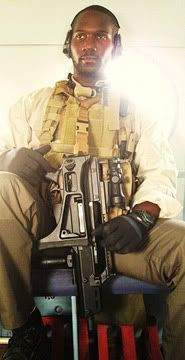
Monday, April 19, 2010

Industry Talk: U.N. Security Officer Louis Maxwell ‘Executed By Afghan Police’

   I posted a deal about the brave actions of Louis when this originally happened and hoped that the UN would recognize his bravery and sacrifice with the Dag Hammarskjold Medal.  Now that this story came out, this adds even more tragedy to the mix.  Imagine surviving all of that fighting, and then getting executed by the so called ‘police’?  Perhaps these were not police at all, and were just the enemy dressed like the police? This doesn’t sound like friendly fire to me.  Who knows and I certainly hope the UN continues the investigation on this. –Matt

—————————————————————–

 Louis Maxwell

Louis Maxwell. 

UN bodyguard ‘executed by Afghan police’

A United Nations bodyguard who saved 17 colleagues by holding back Taliban fighters who stormed a guesthouse was minutes later executed by Afghan police, according to a video which has been seen by officials.

 By Ben Farmer in Kabul17 Apr 2010

Louis Maxwell, a UN security officer from the United States, was among five international UN workers who died in the early morning October 28 attack in Kabul.

Mr Maxwell climbed onto a roof of the privately-run Bakhtar guesthouse and held the suicide attackers at bay with an assault rifle so colleagues could escape.

(more…)

Saturday, April 17, 2010

Afghanistan: Taliban Targets U.S. Contractors Working On Projects In Afghanistan

Filed under: Afghanistan,Industry Talk — Tags: , , , , , — Matt @ 5:44 AM

   Rest in peace to all those contractors who have fallen at the hands of the Taliban.  My heart goes out to the friends and families of these heroes.

   What I also want to mention is that it sounds like what these contractors are doing, is a threat to the Taliban.  That is awesome!  These USAID implementing partners are the ones going around and dishing out the money and projects that make the government look good, and keep potential Taliban fighters busy with work.  I say double the size of the program if this is the effect it has, and give these guys what they need for success.

   I also want to highlight all the Afghan guards that have perished in the defense of these folks.  Just read all the incidents below and it is filled with Afghan security contractor KIA’s.  Perhaps it is time to supplement the security for these implementing partners with some expat security, just to make sure that security is being properly done?  Or dress up some military folks to look like civilians, and have them soup up the security for these guys?  The point is, if this current aid strategy is a threat to the Taliban, then maybe we should work a little harder on providing proper security for it? Or maybe these Afghan security forces are sufficient? Tim would probably have something to say about it. –Matt

——————————————————————

Taliban targets U.S. contractors working on projects in Afghanistan

By Joshua PartlowSaturday, April 17, 2010

KANDAHAR, AFGHANISTAN — The Taliban has begun regularly targeting U.S. government contractors in southern Afghanistan, stepping up use of a tactic that is rattling participating firms and could undermine development projects intended to stem the insurgency, according to U.S. officials.

Within the past month, there have been at least five attacks in Helmand and Kandahar provinces against employees of U.S. Agency for International Development contractors who are running agricultural projects, building roads, maintaining power plants and working with local officials.

The USAID “implementing partners,” as they are known, employ mainly Afghans, who are overseen by foreigners. The companies’ role is becoming increasingly important as more aid money floods into southern Afghanistan as part of a dual effort to generate goodwill and bolster the Kabul government.

(more…)

Friday, April 16, 2010

Afghanistan: Why Private Guards Are Crucial To The Afghanistan Mission

    This came from the Times Online, and I was kind of surprised they used the word ‘guard’ as opposed to ‘mercenary’ in the title.  I was even more surprised that this was an article describing how important we are to the mission in Afghanistan.  You just don’t hear that kind of language in the media, and it is refreshing to hear. It is a realist point of view, and it is definitely a respectful point of view.

    There are more contractors than soldiers in Afghanistan, and we have our deaths and injuries too.  It’s nice to hear that someone in the media actually recognizes our contribution and importance to the mission. –Matt

—————————————————————–

Why private guards are crucial to the Afghanistan mission

April 16, 2010

Michael Evans

Western contractors, whose numbers have proliferated in Afghanistan in recent years, are as much in the front line as the military because of the constant threat of suicide bombers.

The most vulnerable among them are security guards, working for private companies such as the British ArmorGroup International. They can be seen standing sentry outside every base, every embassy, and protecting diplomats, aid officials and visiting VIPs. The operations in Iraq and Afghanistan have provided tens of thousands of jobs for former special forces soldiers and other military and law enforcement personnel.

(more…)

« Newer PostsOlder Posts »

Powered by WordPress