Feral Jundi

Thursday, April 15, 2010

Afghanistan: Afghan IEDs Show Rapid Adaptation

   Mr. Grant put together a great summation of the research done on IED’s.  Bottom line, today’s booger eaters throughout the world are learning to make this stuff faster than their other booger eater predecessors. That is the down side of the internet and open source media.  Everyone can play bomb maker these days.

   There are some down sides to this for the enemy.  It still takes skill and experience to safely make these things, and this statistic below does not show how many ‘oops’ deaths have been caused by this explosion of open source IED manufacturing.  A prime example is the Frontline video on the Taliban, which showed this beautifully.

   One thing that bothers me about this, is that contractors continue to be killed by this stuff and there really isn’t an effort focused on protecting them like there is with the military.  Is this a case where it is every company for itself, or should there be an effort to coordinate the civilian operations or create a JIEDDO group for contractors so we can work to minimize our deaths as well? The irony is that contractors are used in this organization, but they really don’t do much to help out contractors.  Has anyone from JIEDDO talked with any of the expat companies to go over IED survival or the latest counter measures? Or how about collect information from contractors, to add to the matrix being set up at your JKnIFE shops?

   Personally, I know the answer to this question. The military could care less. So companies adapt and they have their own ways of learning how to deal with IEDs.  Everyone talks with everyone out there, and after a few hits on your company, guys really start focusing on and refining countermeasures for IEDs.  Some companies can afford all the cool gadgets to stop or detect this stuff, where others have to resort to other cheaper methods. Or you get some of the local national companies that just take the hits, and could care less about armor or gadgets–partly do to cost and partly do to a lack of any regulation for such a thing.  With that said, it would still be cool to hear about JIEDDO or someone similar address the issues that contractors face on the road. (by the way, check out their FB page here)  Contractors after all are bringing in the food, ammo, water, fuel, and everything else that the military needs to wage war, and with a little help we might actually get more of that stuff to the military in one piece. Not to mention save a few of those lowly contractor lives. –Matt 

——————————————————————

Afghan IEDs Show Rapid Adaptation

By Greg Grant

Monday, April 12th, 2010

At a New America Foundation sponsored event today in Washington, researcher Alec Barker presented an impressive collection of data on IED attacks in southern Afghanistan and western Pakistan that show not only more attacks but an acceleration of bomb making skill and use.

Thoroughly schooled in Iraq, where techniques were refined over the years, the IED bomber guild has increased in size and skill and taken their know-how on the road, compressing the training cycle. The rapid pace of innovation in consumer electronics which are used in most triggering devices, has allowed bombers to jump from one triggering method to another as soon as countermeasures show up in the field. With plenty of targets in the form of foreign troops, Afghan insurgents, as with Iraqi insurgents, are able to continually refine and evolve their tactics.

(more…)

Industry Talk: Contractor Deaths Accelerating In Afghanistan As They Outnumber Soldiers

Filed under: Afghanistan,Industry Talk — Tags: , , , — Matt @ 1:19 AM

   Lots of meat in this nice little post from Mr. Miller.  All of this is nothing new to those of us in the industry that know the real deal.  But I love posting this stuff and spreading the word to those readers who are looking for information about contractors in this war.  We are making great sacrifices and we outnumber today’s military, yet these facts are also the most ignored element of the war.

   The other factor I want to bring up is that when guys get killed on your contract,  that is the time when you see the great epiphany happen within a small percentage involved.  Those who were in it purely for the money are usually the ones that cut and run after seeing their co-worker blown up in front of them. But for those that are in the game not just for the money but because they actually believe in the cause and truly despise the enemy and all they represent is a different story. For them, to stay and press on is the only option.

   In my view, and from what I have seen in this war, the guys who stay and press on far outnumber that 1 percent of 1 percent who shouldn’t be there in the first place. Years of contracting in war zones, tends to weed out those that do not have the heart for this stuff–which is good. It is also an indicator to me, that there are more contractors driven by something other than profit.

    With that said, no one feels that their life is cheap.  Even soldiers do not ‘volunteer’ for military service.  The military and my industry have families to feed and no one does this work for free.  A soldier joins the military to fight for their country, but they also join the military to get a new and better life than the one they left behind. That includes sign on bonuses, paycheck, medical care, dental, housing allowance, insurance, valuable training or clearances, clothes, food, shelter, tax breaks, education, retirement plan, job security, veterans preference for federal jobs and the GI Bill. Wow, that doesn’t sound like volunteer work to me. lol. (I have actually heard of contractors going back to the military because it was a better deal for them and their family)

   I highly doubt that if the military was to ask a civilian population to work for free as a soldier in a long war such as this, that they could get anyone at all.  How would those soldiers feed their families, or would the military only hire single people with no life?  Yet again, tell me how that would work?  The point is with contractors and soldiers, is that the government and war planners don’t get our pound of flesh for free.  Our service has value, our deaths or injuries have value. At least that is how I view things. –Matt

—————————————————————-

Contractor Deaths Accelerating in Afghanistan as They Outnumber Soldiers

by T. Christian Miller

April 14, 2010

A recent Congressional Research Service analysis [1] obtained by ProPublica looked at the number of civilian contractors killed in Afghanistan in recent months. It’s not pretty.

Of the 289 civilians killed since the war began more than eight years ago, 100 have died in just the last six months. That’s a reflection of both growing violence and the importance of the civilians flooding into the country along with troops in response to President Obama’s decision to boost the American presence in Afghanistan.

The latest U.S. Department of Defense numbers show there are actually more civilian contractors on the ground in Afghanistan than there are soldiers. The Pentagon reported [2] 107,292 U.S.-hired civilian workers in Afghanistan as of February 2010, when there were about 78,000 soldiers. This is apparently the first time that contractors have exceeded soldiers by such a large margin.

(more…)

Monday, April 12, 2010

Jobs: Protective Security Specialist, Afghanistan

   I am not the point of contact or recruiter for this.  Be advised that this company does not have the contract yet and I haven’t a clue about their background. The only activity I have seen from them, was that they were looking for MI17 pilots for the CNTPO program. Other than that, that is all I have heard, so job hunter beware.  Good luck and let me know how it goes if they do get the contract and you get the call. –Matt

—————————————————————–

Title: Protective Security Specialist

Closing Date: 2010-05-31

Employment Type: Contingent Upon Contract Award Location: Afghanistan

Description: Responsible for OCONUS-based mobile PSD security operations of assigned International Preparedness Associates (IPA) program(s) under the direction of the Personal Security Detail (PSD) Team Leader. Develops and implements PSD security plans to affectively ensure mission compliance. The PSD Team members will assist in the review and development of PSD policies, guidelines and procedures to ensure mission required performance.

Functions: Performs personnel protective service detail assignments as they pertain to assigned programs:

• Perform day to day protective security functions as specified in daily post and detail orders

• Responsible for safe operations of assigned PSD transportation to ensure for principals safety to include (water, air, and ground) operations

• Utilize special weapons and tactics to ensure mission success

• Maintain protective formation positions daily

• Conduct advanced security reconnaissance of projected routes

• Provide static security details when directed by management

• Ensure proper behavior both on and off duty

• Preclude behavior that would reflect poorly on the DI, USG, the Department of State, or the local Government requesting the additional security support

Required Education: See Requirements.

Desired Education:

Requirements: Essential Skills and Experience

 (1) Have current knowledge and experience in:

• Vehicle Dynamics

• Defensive Tactics

• Basic PSS Operations

• PSS Advanced Operations

• Weapons training

• Advanced weapons training

• Medical Training

• Current weapons qualifications (M9, M4, M240G, M249)

(more…)

Sunday, April 11, 2010

Afghanistan: Polish and Kyrgyz Black Swan Events

   My heart goes out to Poland.  How incredibly tragic.  My heart goes out to the folks in Kyrgyzstan as well, and political upheaval is certainly a traumatic event for the people there.

   I put this in the Afghanistan category, because as we speak, there are several thousand Polish troops in Afghanistan that could possibly be called back to deal with their crisis. When the entire leadership is wiped out by an unfortunate air crash, there are just too many possibilities of what could happen. There was not much support for the war in Afghanistan, and new leadership might change direction on Poland’s involvement in the war.  I think it would be wise for today’s war planners to set in place some contingency stuff, if in fact Poland wants or even needs their troops back home.

   So that brings up the question, who would replace those troops if they had to scoot?  I brought this up a couple weeks ago in regards to NATO forces faltering and for whatever reason, having to leave the Afghan war. That contractors can be used to back fill, as NATO or ISAF finds replacement forces.

   In Kyrgyzstan, there has been some political unrest that has impacted Manas operations.  They actually halted all flights out of there today, and that is not good.  If logistics cannot depend upon the Manas air base there, then other options will have to be looked at.  The problem is though, that so much logistics goes through Manas, that there is a risk that operations will be negatively impacted in Afghanistan because of this hiccup. So will this mean that a new route or new air base will come on to the scene?  Will transportation on land increase because of what is going on, and what will that mean for private industry?

   I also called these incidents a Black Swan event, because they were not predicted, they will change the political landscape, and war planners will now have to look at contingency plans to deal with problems related to both of these countries. –Matt 

—————————————————————–

Poland’s President, Central Bank Governor Die in Plane Crash

April 10, 2010

By David McQuaid and Piotr Skolimowski

April 11 (Bloomberg) — Polish President Lech Kaczynski and central bank Governor Slawomir Skrzypek were killed yesterday along with several key members of the country’s political elite when their plane crashed in western Russia, where they were to mark the 70th anniversary of a massacre of Polish officers.

The 60-year-old president’s wife, Maria, and leaders of the country’s main opposition parties and military, including the Army Chief of Staff Franciszek Gagor, also died, Foreign Ministry spokesman Piotr Paszkowski said in a phone interview. The crash, which happened as the aircraft was on approach for landing in Smolensk, killed all 96 on board, according to Russia’s Emergency Ministry.

Under Poland’s constitution the duties of the president, which are largely ceremonial, will be assumed by the speaker of the lower house of parliament, Bronislaw Komorowski. He will set a date for a presidential election within two weeks and the vote must be held within 60 days. Komorowski is the candidate of Prime Minister Donald Tusk’s Civic Platform party and polls show he was poised to defeat Kaczynski in presidential elections, originally scheduled for the second half of the year.

(more…)

Sunday, April 4, 2010

Afghanistan: Afghan Marksmanship Is A Fable, Bring Back The Jezailchis

     One day, after a few hours of fighting in which the Taliban had not yet hit any Marines, a corporal from Second Platoon stood upright, exposing himself above the waist and looking over a wall as bullets flew high overhead. He didn’t flinch. “What’s everybody ducking for?” he said. He cupped his hand to his mouth and shouted an expletive-laden taunt at the Taliban gunmen shooting from concealment on the opposite side of a field. The editors would never allow the corporal’s words to be printed here. But they amounted to this: You guys can’t shoot.

*****

    Thanks to Doug for bringing this to my attention. Man, did the Italian Carabinieri just show up the DynCorp police instructors or what? lol Training folks requires patience and a profound understanding of the fundamentals.  Good on the Italians for correcting the issue.  But it also highlights the importance of standardizing this contract, so you don’t have companies or even the military doing whatever they want.

    I cut that one little piece of reportage out of this first article posted below, just to get the ball rolling for this post.  Marksmanship is something contractors are teaching to Afghans, Iraqis, Ugandans, Nepalese, you name it, and there are so many issues that come up when trying to teach this life saving and essential skill to the troops.  For this post, I will highlight the Afghan issues and present the six points that Mr. Chiver’s mentioned in his excellent reportage on this topic. I am not saying these apply to all forces being trained, but for Afghanistan, this is what has been identified.  So with that said, let’s get started.

   In a prior post, I mentioned the concept of the Jezailchis Scouts (JS).  Or basically create a scout/sniper force in Afghanistan that would pride itself as being the premier Afghan tracking and killing/capture force. Something along the lines as the Selous Scouts.  A force that all Afghans would look up to and highly respect.  This force would be the go to guys for hunting humans up in the mountains, and they would have great utility (pseudo operations, sniper operations, scouting, snatch and grab, etc.).  Marksmanship and the ability to track and survive on their own, would be the hallmarks of this crew.  It would also draw from that fabled history of the Afghan being a good marksman, hence the Jezailchi reference in the name of the group.

   But as the reader will find out, Afghans on both sides of the conflict, suck at marksmanship.  Mr. Chivers boiled it down to the six areas that are contributing factors to poor marksmanship on the side of the Taliban (but could easily apply to Afghan Army or Police forces)

   Here they are.

   1. Limited knowledge of marksmanship fundamentals.

   2. A frequent reliance on automatic fire from assault rifles.

   3. The poor condition of many of those rifles.

   4. Old and mismatched ammunition that is also in poor condition.

   5. Widespread eye problems and uncorrected vision.

  6. Difficulties faced by a scattered force in organizing quality training.

   The second Chiver’s article also mentioned what happens when a enemy force can’t shoot–they adapt.  In this case, AK 47’s were used to cause reactions in patrols.  Meaning, if an ambushing force fires the weapons and the patrol of Marines runs to the closest protection that happens to be pre-rigged with IED’s, then that ambushing force could command detonate and kill the Marines that way.  So the enemy knows it sucks when it comes to shooting, so they just use the weapon as a catalyst to get our forces into traps or to delay our forces.  Nothing new, and this is a tactic used over and over again in the history of warfare.

   But going back to the marksmanship thing, I personally think that this is a weakness that would should be exploiting.  We exploit it by creating some good ol fashion kick ass Afghan shooters, coupled with Coalition snipers and marksmanship mentors. We also have the coalition bring in weapon systems that can reach out and touch someone, and has optics. I continue to read reports that this last part is happening, and that is good.  We should be picking these guys off from across the canyons or at distances that the Taliban cannot engage at.

   That brings up the other point of the article.  The two weapons systems that the Taliban are able to actually hit people with, are the PKMs and sniper rifles (with trained snipers using them).  The PKMs makes sense, because a machine gunner can adjust fire easily, and concentrate fire better and at distance.  It is the only weapon system that suits the capabilities and limitations of the kind of fighters using it. (please refer to the six points up top)

   Now for the Afghan Army and Police, there are a few things we could do to bring them up to speed quickly.  Giving them eyeglasses would be a start. lol  Also, some accountability must be shown for the quality and functionality of all weapons and ammo issued.

   Some ideas off the top of my head would be to modify the AK or the issued M-16 to only shoot semi-auto.  It would force these guys to shoot one shot at a time, as opposed to the spray and pray technique.  The other thing that could be done, is to put reflex sites on these weapons–stuff that is AK tough and does not require batteries. That way, you have a weapon that is Fisher Price simple for the Afghans to use, and they won’t be able to use it like a fire hose. If the weapon is better suited to the user, then the other aspect of teaching marksmanship fundamentals will go a lot easier. There should also be an effort to cull the best of the best from these groups, and get them in marksmanship focused group like the JS or whatever special forces that has been created.

   Finally, marksmanship could be promoted in Afghan society once again.  Competitions could be held, cash or goats could be issued as prizes, and competent Afghan shooters could be identified and approached for recruitment into the JS or Army. Hunters could be rewarded for meat collected, or hide or whatever, and they could be approached as well.  Hunters throughout the world are all the same, and I am sure there are plenty in Afghanistan who are very good at it and enjoy the sport.  You just have to develop an outlet to attract these guys.  Even in the Army and Police, I am sure there are those who could really shine with marksmanship if they had an outlet for such a thing. Especially if marksmanship billets paid more–you would definitely increase the interest in such a thing. Stuff to think about, and thanks to Mr. Chivers for some excellent information on the matter. –Matt

Edit: 04/11/2020 Here is the next article Mr. Chivers wrote about Afghan Army and Police marksmanship. Awesome.

——————————————————————
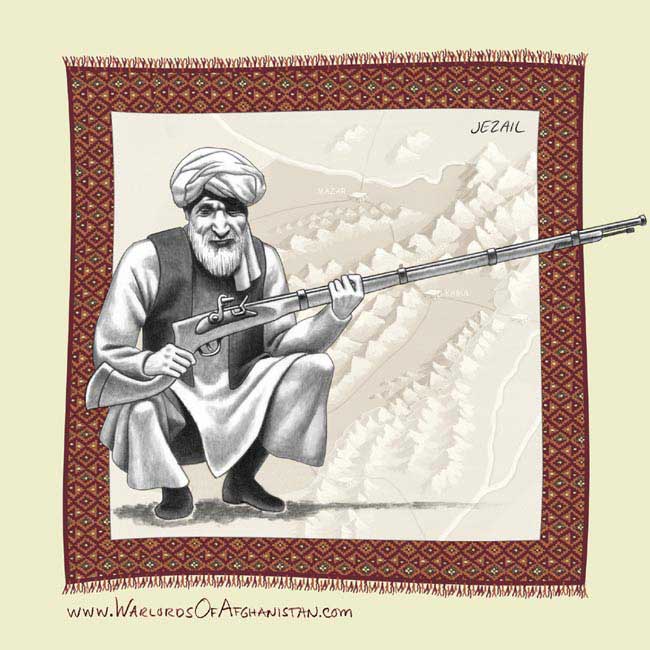
Jezail

The Gang That Couldn’t Shoot Straight

Six billion dollars later, the Afghan National Police can’t begin to do their jobs right—never mind relieve American forces.

By T. Christian Miller, Mark Hosenball, and Ron Moreau

Mar 29, 2010

(Only a portion of the article is posted, and follow the link to read the entire thing)

At Kabul’s police training center, a team of 35 Italian carabinieri recently arrived to supplement DynCorp’s efforts. Before the Italians showed up at the end of January for a one-year tour, the recruits were posting miserable scores on the firing range. But the Italians soon discovered that poor marksmanship wasn’t the only reason: the sights of the AK-47 and M-16 rifles the recruits were using were badly out of line. “We zeroed all their weapons,” says Lt. Rolando Tommasini. “It’s a very important thing, but no one had done this in the past. I don’t know why.”

The Italians also had a different way of teaching the recruits to shoot. DynCorp’s instructors started their firearms training with 20-round clips at 50 meters; the recruits couldn’t be sure at first if they were even hitting the target. Instead the carabinieri started them off with just three bullets each and a target only seven meters away. The recruits would shoot, check the target, and be issued three more rounds. When they began gaining confidence, the distance was gradually increased to 15, then 30, and then 50 meters. On a recent day on the firing range only one of 73 recruits failed the shooting test. The Italians say that’s a huge improvement…..

Story here.

—————————————————————–

Afghan Marksmen — Forget the Fables

By C.J. CHIVERS

March 26, 2010

The recent Marine operations in and near Marja brought into sharp relief a fact that contradicts much of what people think they know about the Afghan war. It is this: Forget the fables. The current ranks of Afghan fighters are crowded with poor marksmen.

This simple statement is at odds with an oft-repeated legend of modern conflict, in which Afghan men are described, in clichés and accounts from yesteryear, as natural gunmen and accomplished shots. Everyone who has even faintly followed the history of war in Central Asia has heard the tales of Afghan men whose familiarity with firearms is such a part of their life experience that they can pick up most any weapon and immediately put it to effective work. The most exaggerated accounts are cartoonish, including tales of Afghan riflemen whose bullets can strike a lone sapling (I’ve even heard “blade of grass”) a hilltop away.Without getting into an argument with the ghost of Rudyard Kipling, who was one of the early voices popularizing the wonders of Afghan riflery, an update is in order. This is because the sum of these descriptions does not match what is commonly observed in firefights today. These days, the opposite is more often the case. Poor marksmanship, even abysmally poor marksmanship, is a consistent trait among Afghan men. The description applies to Taliban and Afghan government units alike.

Over the years that Tyler Hicks and I have worked in Afghanistan’s remote and hostile corners, we have been alongside Afghan, American and European infantrymen in many firefights and ambushes. These fights have involved a wide set of tactical circumstances, ranges, elevations, and light and weather conditions. Some skirmishes were brief and simple. Others were long and complex, involving as many as a few hundred fighters on both sides. One result has been consistent. We have almost always observed that a large proportion of Afghan fire, both incoming and outgoing, is undisciplined and errant, often wildly so. Afghans, like most anyone else with a modicum of exposure to infantry weapons, might be able to figure out how to make any firearm fire. But hitting what they are aiming at, assuming they are aiming at all? That’s another matter.

(more…)

« Newer PostsOlder Posts »

Powered by WordPress