Feral Jundi

Tuesday, December 8, 2009

Industry Talk: GAO Report Critical of State Department’s Diplomatic Security Bureau

     FP is right.  The surge is happening, and the civilian surge will be coming right along with it.  All of those folks are gonna need security, and DoS needs to prepare for that big time. I didn’t know that DoS was this bad off, and you would think that there would have been plenty of lessons learned to guide them and prepare them for future needs.  WPPS will be big in Afghanistan, and how anyone could have missed the planning and preparation for this, is beyond me. –Matt

Edit: 12/09/09 Check out Danger Room’s post on the same thing here.

——————————————————————

Exclusive: GAO report rips State Department’s Diplomatic Security Bureau

From Foreign Policy

Mon, 12/07/2009

The State Department is tripling its civilian presence in Afghanistan, which will require a huge increase in the amount of security needed to look after those civilians. But State’s bureau in charge of protecting its personnel is already stretched thin and the Afghanistan surge could only exacerbate its administrative and strategic shortfalls, according to a soon-to-be-released GAO report, obtained exclusively by The Cable.

It’s a fact of life that operations in Iraq, Afghanistan, and Pakistan are a now a huge part of the mission for the State Department’s Bureau of Diplomatic Security (DS), which protects diplomats all over the world. That’s somewhat a legacy of Condoleezza Rice’s “Transformational Diplomacy” initiative, which was meant to expand the U.S. diplomatic presence to include more robust efforts in more dangerous places. Outposts that might have been closed have been kept open, such as in Lahore, Pakistan, putting added burdens on the diplomatic security infrastructure, the report states.

Success in Afghanistan depends on improving the Afghan government and “that makes civilian efforts as vital as military operations and of longer duration,” Secretary of State Hillary Clinton said just before last Tuesday’s announcement by the president. “We have begun to elevate diplomacy and development alongside defense in our national security strategy, and we are certainly engaged in doing so in Afghanistan.”

(more…)

Strategy: How the Taliban Take a Village, and How We Can Take it Back

Filed under: Afghanistan,Strategy — Matt @ 7:27 AM

   This is a simple matter of understanding the Taliban strategy, and the best way to counter it.  I highly suggest reading Maj. Jim Gant’s paper on his Tribal Engagement Teams TET concept, and then reading these three articles and posts below about what the Taliban are actually doing in Afghanistan.

   My personal opinion is that this TET plan will be a necessity as we force all the Taliban out of the main population centers, and they run for the hills.  The insurgent will always attack weakness with strength, and if we don’t care about these villages and tribes up in the hills, well then that will be the target of the insurgent.  And in their case, they will go where we cannot or will not go.  Geography, distance, manpower, money are all things that stops the government and the coalition forces from being everywhere at once.  Geography is what separates these small villages and tribes from the government.  The Taliban will only help to add to that separation by insuring that they are the nodes of influence out there in the hinter lands.  Will our surge of troops be able to protect those villages in a country the size of Texas, and completely divided up by rough terrain? Or would a smaller operation like the TET program do a better job?

   I think if we want to be successful in the war effort there, then use the troops to secure the population centers and create a safe haven for those local populations.  But use the TET game plan for the various tribes located in the backwoods. It makes sense, and is more cost effective.  The goal should be to be to take back the villages or help out those that need it, install the nodes of influence necessary to keep the tribes and villages on our side, and hunt the ‘Big T’ or hard core Taliban like dogs and keep them off balance, confused, and fearing for their lives.

   That last sentence is important to me, and should be important to this strategy.  Protecting the populations center should not all be just defense.  Offense is necessary too, and these TET programs will provide some excellent intelligence and some excellent recruits for future offensive operations.  We must empower the tribes to not only defend themselves from these Big T schmucks, but teach them how to keep these guys on the run.  The Jezailchis Scouts is one concept that Cannoneer #4 and myself have been talking about for a bit, and it is worth a look.  Because not only must we teach the tribes to defend self, we must also teach them how to hunt and eradicate a mutual enemy. It would be the gift that would keep giving, long after we have left Afghanistan and that tribe.

     What the Jezailchis Scouts would look like will be another post. Think of them as a combination of well trained snipers, with excellent man tracking and scouting skills. You could also form them up, much like the Selous Scouts formed up their teams, and use these scouts in similar ways. (collecting information as undercover Taliban, etc.) These guys would be the best hunters and the pride and joy of the tribes.  The Jezailchis Scouts would be a killing mechanism, that would be designed to keep doing it’s thing naturally and efficiently, well after everyone is gone.  It would be good for us, good for Afghanistan, good for the tribes and hellish for the Taliban and Al Qaeda. –Matt

—————————————————————-

On War #325: How the Taliban Take a Village (Lind/Sexton)

William S. LindDecember 7, 2009

EDITOR’S NOTE: The following is a guest column, written by a reserve NCO with Special Forces, Mark Sexton. It is based on his personal observations in Afghanistan. It represents his analysis only, not any position taken by DOD, the U.S. Army, or any other agency of the U.S. government. In my opinion, it represents exactly the sort of intelligence analysis we need but seldom get.

How the Taliban Take a Village

A current method used by Taliban in Afghanistan to gain control of an area deemed of strategic interest to the Taliban leadership operating from safe havens in Pakistan or within Afghanistan is to identify and target villages to subvert. The Taliban have recognized the necessity to operate with the cooperation of local population with the modus operandi being to gain their cooperation through indoctrination (preferred) or coercion (when necessary).

VILLAGE NODES OF INFLUENCE

For a non-Afghan or foreigner to understand how the Taliban can subvert a village, we can use a simple social structure model to identify the key nodes of influence within a typical Afghan village. A village can be divided into three areas that most affect how daily life is lived. These areas generally fall under political and administrative, religious, and security. These three areas can be considered key nodes of influence in every Afghan village. Of the three nodes the one that is the most visible to outsiders is that of the Malik and village elders. The Malik and village elders represent the political aspects of the village. A second key node of influence is the Imam. The Imam represents the religious node of influence within a village. A third Local node of influence is the individuals and system of security found within a village. Security is traditionally conducted by the men of each individual village. If one of the parts or nodes of influence is controlled by either the Taliban or the Afghan government in each village, then they heavily influence or control villages and the area.

TALIBAN CONTROL OF VILLAGE NODES

(more…)

Monday, December 7, 2009

Afghanistan: Contractor Hirings in Afghanistan to Emphasize Locals

   Now if Walter was reading Feral Jundi, he would have picked up on this story earlier and really impressed his editor.  I posted this story back on the 19th of last month.  Walter could have also included the other FOB’s on that list of guard contracts. Either way, it is always cool to see some focus on this stuff from the MSM.

   The one to watch with this, is the expat contracts that will come down the pipe to manage these LN guard forces. And with that point, I would also like to remind folks how important it will be to really watch these guys and work with your guard force.  I also want to emphasize with the companies how important it will be to back up your guard force commanders and do some proper vetting to insure you have quality folks in charge of that stuff.  Trust but verify, and apply Kaizen to every aspect of the contract, and the companies will be happy.  The customer will be happy too, but you don’t get it for free.  You have to work hard to get customer satisfaction, and actually care what is going on with the contract. –Matt

——————————————————————

Contractor hirings in Afghanistan to emphasize locals

At least half of guards working at bases now required to be Afghans

By Walter PincusWashington Post Staff WriterMonday, December 7, 2009

New contract solicitations by the U.S. military for private guards at forward operating bases in Afghanistan require that at least half of those hired be Afghans who come from nearby towns or villages.

“The contractor shall hire a minimum of 50% of its guard force from within a 50 kilometer [30-mile] radius of the location requiring security,” reads a solicitation that the Joint Contracting Command-Iraq/Afghanistan posted Nov. 30 at FBODaily.com.

(more…)

Saturday, December 5, 2009

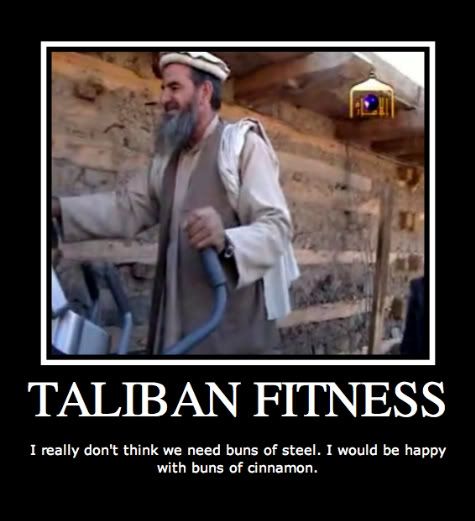
Funny Stuff: Taliban Fitness

Taliban Fitness

Tuesday, December 1, 2009

Afghanistan: 30,000 Troops Will Be Sent to Afghanistan–So How Many Contractors?

Filed under: Afghanistan,Military News — Tags: , , , , — Matt @ 7:05 AM

   So this is it. This is the magic number that everyone was anticipating.  I guess you could call this surge-light maybe? Anyway, my focus is on what does this mean for security contractors and contractors in general?  Well we can certainly expect to see a civilian contractor surge to accompany this troop surge, if history is any indicator.

   The difference this time around, as far as comparing the Iraq surge to the Afghanistan surge, is geography.  Everything depends upon geography.  That, and weather.  We can always count on the enemy to do what they do too. But the real deal is geography, and this is where the heart of the discussion should be.

   All of these troops will need a place to sleep, food to eat, ammo and spare parts for their guns, and transportation to get them around in a country the size of Texas.  In Iraq, the logistics were pretty smooth because we didn’t have mountains to worry about, and the roads were pretty decent.  We also had a port to ship stuff to, and Kuwait was right next door.  The geography was kind to us in Iraq.

   In Afghanistan, there are mountains galore, roads are crappy and in some places non-existent, and there are no ports to ship stuff to.  So the way this thing is going to shape up, is lots of aviation work-helicopters and transport.  And to top it off, an increase in convoy work through mountains infested with enemy.  There will also be an effort to provide stuff locally to fill the needs, but for things like fuel or ammo and all of our little goodies that the troops ‘have to have’, we will be depending largely on flying it in or convoy work through some very dangerous and rough terrain. Expect to see long serpentine style convoys, snaking through the mountain passes, and pissing off all sorts of people.  These convoys will be massive, and they will be juicy targets for the enemy.

   Of course the second story I posted is a little old, but still relevant.  Contractors currently out number the troops in Afghanistan.  In the realm of security contractor numbers, Afghan security contractors are the dominate force there.  They are also doing a lot of fighting and dying up in those hills as they transport those goods.  And in some cases, they are causing issues, and especially when they go through population centers and engaging with the enemy there. Think Nisour Square, but at a local level, and these guys are not winning many friends when it comes to fire discipline.

     As these security companies continue to get into trouble locally, and the Afghan government doesn’t do anything to shore up their PSC’s, then that will only hurt the overall war effort. The Taliban will narrate the whole thing as ‘these companies and militias are killing locals, and it is all the infidel’s fault because they want all of these supplies’. And there is even some piracy going on, with the enemy attacking these convoys and taking the loot. Pffft.  What will be interesting to see is that with this new surge of troops, will there be a new push to use expat contractors to insure the security contracting aspect of the surge does not hinder the war effort?

   The other area of concern are these damn pay offs to war lords and the Taliban.  That has to stop, and we must get a handle on this activity. These local PSC’s can be better managed by the Afghan government, and with this upturn in work, there must be an effort on our part to get this in order.  If not, PSC’s will be painted with a broad brush as corrupt and working with the enemy.  I think if contracts were properly written to reflect reality and to reflect what the desired outcome of the contract should be, then this could be fixed.  It takes leadership and a trust but verify attitude to ensure these contracts are being carried out properly.  If not, then withhold the money and claim a default on contract or do something similar.  The guy that writes the checks, should definitely demand quality of service, and should have all the power.

   Back to numbers.  Can we expect upwards of around 30,000 to 35,000 contractors (a one to one ratio maybe?)? I think that is a reasonable amount.  Could we see an increase in expat managed security contracts, as well as an increase of expat security contractors to keep local national teams in line?  I think so. Will we see an increase in helicopter contracts, along with security/support teams for helicopters and transport?  Most definitely. (I also predict a PMC search and rescue element emerging because of this increase) Will the enemy try to shoot down more of these contractor helicopters? You bet.  How about an increase in TWISS style contracts in Afghanistan, complete with local national guards and even Ugandan guards to man posts?  Yes, and I have posted several reports to indicate that.  Will more contractors die in the line of duty?  Unfortunately, yes.  Will the nation and the world recognize that sacrifice and the civilian contractor contribution to the war effort?  Probably not.

   Now onto strategy, or the lack there of, when it comes to this coming contractor surge.  Where is the talk about shoring up these local national PSC’s, so they ‘don’t’ ruin the COIN strategy we so carefully crafted?  Why is Karzai wanting to get rid of foreign PSC’s, yet has not discussed how he plans to keep his own PSC’s in line?  Or how about Karzai telling these local PSC’s to stop paying protection money to the enemy? Or what is being done to insure all expat security contractors and LN contractors that will be interacting with and around the local populations, will not negatively impact COIN strategy in Afghanistan? I have yet to hear a General or think-tanker address this specifically, yet there are more contractors than troops in Afghanistan?  Hmmmm, how frustrating.

     Finally, if logistics is key to winning wars, and it will be contractors primarily tasked with protecting those logistics in Afghanistan, then what are we doing to insure their success? Are we going to actually give these convoy teams the means to protect themselves, or give them communications gear for unity of effort in the fight, or assign aviation assets to watch over these essential war goods?  Will we actually use these convoys as a means to engage with the enemy, and draw him out for the fight?  Who knows, but these are a few things that I have yet to hear being talked about in regards to the war effort in Afghanistan.

     We need to start talking about some of this stuff, because the surge is on like Donkey Kong, and there will be a whole bunch of us security contractors and regular contractors coming in right beside these 30,000 troops. –Matt

Edit: I noticed after today’s speech, the numbers have changed from 34,000 in reports, to 30,000.  So as you can see, I have made the edits up top.

——————————————————————

34,000 troops will be sent to Afghanistan

OBAMA DETAILS PLAN FOR ALLIES

Other nations to be asked for more forces

By Karen DeYoung and Scott WilsonWashington Post Staff WriterTuesday, December 1, 2009

President Obama will outline Tuesday his intention to send an additional 34,000 U.S. troops to Afghanistan, according to U.S. officials and diplomatic sources briefed Monday as Obama began informing allies of his plan.

The new deployments, along with 22,000 troops he authorized early this year, would bring the total U.S. force in Afghanistan to more than 100,000, more than half of which will have been sent to the war zone by Obama.

The president also plans to ask NATO and other partners in an international coalition to contribute 5,000 additional troops to Afghanistan, officials said. The combined U.S. and NATO deployments would nearly reach the 40,000 requested last summer by U.S. Gen. Stanley A. McChrystal, the coalition commander in Afghanistan, as part of an intensified counterinsurgency strategy.

The new troops are to be sent in stages beginning in January, with options to delay or cancel deployments, depending on the performance of the Afghan government and other factors. Defense officials said that, beyond Marine units deploying next month, no final decisions have been made about specific units or the order in which they would be sent.

Details of Obama’s plan emerged on the eve of his prime-time address from the U.S. Military Academy at West Point, N.Y. He will use the Tuesday speech to explain his Afghan strategy to an American public that is increasingly pessimistic about the war after eight years and rising casualties.

Even as he escalates U.S. involvement, Obama will lay out in his speech what amounts to an exit strategy, centered on measures to strengthen the Afghan government so that its security forces can begin taking control of their own country. He is expected to specify benchmarks for Afghan progress on both the military and political fronts, according to U.S. and allied officials who spoke on the condition of anonymity about the strategy.

White House officials remained tight-lipped, but British Prime Minister Gordon Brown — with whom Obama spoke Monday — offered a preview of aspects of the strategy when he addressed Parliament.

The military objective, Brown said, is “to create the space for an effective political strategy to work, weakening the Taliban by strengthening Afghanistan itself.” Over the next year, he said, the Afghan army will be expanded from 90,000 to 134,000 troops, with 10,000 of them going to Helmand province, where U.S. Marines and British forces have focused their fight against the Taliban. Further increases are envisioned for later.

(more…)
« Newer PostsOlder Posts »

Powered by WordPress