Saturday, January 23, 2010
Thursday, January 14, 2010
Publications: Is The Privatization Of Force Organic To Western Liberal Democracy?, By Matthew C. Armstrong
Ok folks, this is cool. Sometimes I stumble upon stuff that really gets the juices flowing, and this is one of those deals. Matt has written a very interesting paper that basically talks about using the Letter of Marque as a mechanism to control and manage PMC’s. That with our current system, there is not an efficient means of putting checks and balances on what PMC’s do in the name of the country, and that a direct link with congress, via the LoM, would be far more efficient. It would help to alleviate many of the problems that we are bumping up against now.
This was written back in 2007, but I still think the ideas are spot on, and something to rally around. I also have Matt’s permission to post this. Be sure to check out Matt’s excellent blog called Mountain Runner. It is a fascinating look at strategic communications with tons of conversations about power and influence.
By the way, I have also started a Letter of Marque category, just to add another means of easily finding information about the concept. You can also use the Feral Jundi search box, or hit one of the tags. The search box would be the best to retrieve other past discussions about the LoM. –Matt
—————————————————————-
Is The Privatization Of Force Organic To Western Liberal Democracy?
By Matthew C. Armstrong
Abstract:
Popular wisdom maintains that the State holds a monopoly on the use of force and that private military forces are usurpers of this monopoly. Popular wisdom also suggests the use of private military forces is antithetical to the idea of liberal democracy. A review of history shows neither of these are true. By bringing history back into the discussion it is clear the use of private military forces results from decisions based on political economy independent of liberal democratic theories.
This paper reviews the reality of private military forces and suggests the marginalization and disfavor of mercenaries on land and sea was the result of a political economy and not liberal democratic theories. Reaching back four millennia before Westphalia gives witness to much the same. Sealing off the present from the past leads to false assumptions of the factors that led to the marginalization, but not disappearance, of private force in the nineteenth century. This bracketing of historic events and processes blinds us and prevents seeing and understanding engines of change. Investigating history and it is apparent the history of mercenaries on land and sea begins with the history of war and was subject to changing infrastructural power of the state. The evolution and introduction of liberal democratic principles had little impact on the wholesale removal of mercenaries from the battlefield.
The return of mercenaries today is marked by systemic changes similar to those of the nineteenth century that pushed private military forces out of mainstream use. However, the return is not complete as the institutional and theoritical structures of before have not been adopted, especially in the central example of the paper, the United States. Whereas the US Congress explicitly authorized and licensed private military force in the past it has implicitly done so now. Before, it explicitly controlled the contracts and monitoring. Today, it does nothing. Through public law and investigative powers, Congress has the power restrict the use of PMCs. These powers were exercised before in the interest of the state to protect the national execution of US foreign policy. The failure to act today is an abrogation of the responsibility intended through words and deeds of the Founding Fathers in striking parallel to the culpability at the root of Machiavelli’s misdirected warning. As war is a continuation of politics and military force is central to this, it is understandable private military companies are an increasingly important solution tool in the toolbox of US foreign policy in an era of accountability. However, unlike the past, oversight is absent and the agent may represent the principal in distasteful ways without repercussion or acknowledgement.
The return to mercenaries has not been complete in that the rules governing their use by the employer have not been resurrected. This is not a failure of democracy, liberal or not, but a failure of the hiring client. In fact, in many ways private military companies today have re-democraticized war by allowing almost anyone to participate as they did in the past. It might also be said that instead of outsourcing, we have temporarily “in-sourced” war for the past one hundred and fifty years. Perhaps with that in mind, we can get beyond the hyperbole and discuss privatization in terms of real impact while acknowledging that many of the faults today are rooted in the use and not existence of private forces.
View paper here.
Link to Mountain Runner blog here.
From the author:
“Go ahead and post the paper, but please include the caveat that the author understands it is still a draft, at least in presentation. The arguments are sound but there are likely errors in grammar and punctuation. I do not have any updates nor do I plan to make any.”
Friday, December 18, 2009
Publications: CNAS–Contractors in American Conflicts, by John Nagl and Richard Fontaine
Ok folks, this is pretty important. CNAS, like I have mentioned before, has the ears of the guys that advise the President on matters like this one. As you can see, John Nagl is personally involved on this working paper, and you can read his stamp all over this thing. I have been waiting for this paper for awhile, and I am glad they are finally pulling the trigger.
It is a quick read and the best I could come up with on this, is that CNAS is trying to make the administration feel better for using contractors in the war. To say ‘it’s ok, we have been using them for awhile, and contractors are the way of the future’. Oh, and we are going to rebrand contractors by calling them ES&R contractors. (Blackwater, eat your heart out)
You get the idea. President Obama owns this ‘just war’ now and the increase in the use of contractors is under his watch. Matter of fact, contractor use has gone up under his leadership, and in Afghanistan we outnumber the troops. Yee haw. Finally there is a recognition of that fact over at CNAS, and this paper is proof of that.
With that said, the administration needs ammo for the conversations they have with those who oppose the use of contractors within their party. Especially with President Obama’s far left supporters and even his more moderate supporters. He needs us for this war, and his party needs some convincing as to the why.
The reason why I mention the political aspects of this paper, is because the mention of Bosnia and the use of contractors there under the Clinton Administration was very much emphasized. Nagl and company wanted the reader to know that contractors are not just a tool of the Bush administration and the Republicans. That the Democrats have a pretty good history of using and enjoying the benefits of contractors during times of conflict as well. Or better yet, we are a tool of America and not some political party.
So why do I like this paper? Well it is finally a legitimization of this industry, and at the highest levels of defense think tankery. CNAS has the ear of all the President’s men, and generals for that matter. These guys are saying we are a necessity for the war and for future wars, and it is time to figure out how to properly use this tool of warfare called contracting. It is about smart contracting and dealing with reality.
Personally, I just think we need strong leadership to make the common sense/necessary decisions to square away contracting. To demand quality service from contractors, trust but verify that service, and insure tax payer dollars are wisely spent. And then just apply Kaizen to the whole thing to make sure it remains kick ass. If you guys need more people in government to manage these contracts, then get off your ass and hire some folks to get the job done. We are in a recession right now, and I am sure you could get some more people to help out.
Below I have also put up a few critiques of the paper. (bold is my statement, quoted chunks are CNAS) One is about the new name CNAS came up for us–‘ES&R contractors’. It has a terrible ring to it. lol The other is about a lack of proper historical reference–no mention of privateers or the Indian Wars. Buffalo Bill Cody was a contractor that received a Medal of Honor, and no mention of that? Wow, talk about selective history recollection? The final one is just a little bit of slam on ‘smart contracting’. We need good leaders who know their stuff, have the courage to do what is right, and takes care of their people. Once we have those, then we can implement smart contracting or whatever strategy you want to pursue. Overall, good stuff and I can’t wait for the final product.-Matt
—————————————————————-
Contractors in American Conflicts: Adapting to a New Reality
Publication Type: Working Papers
Publication Date: 12/16/2009
Author(s): Richard Fontaine , John Nagl
When our nation goes to war, contractors go with it. Contractors have become an enduring feature of modern American conflicts, and the United States cannot now engage in hostilities or in reconstruction and stabilization operations without them. At their peak, there were more contractors on the ground in Iraq than American troops in uniform and there are more contractors today in Afghanistan than there are U.S. troops on the ground.However, while private security contractors (PSC) like Blackwater (now knows as Xe Services) have gotten the bulk of public and congressional attention, they only compromise about 5 percent of all contractors in hostile environments – this working paper, which is part of the CNAS project Contracting in Conflicts , addresses the other 95 percent. That 95 percent represents the vast majority of all the tasks carried out by U.S. contractors in theater, and it has been plagued by its own set of problems – including insufficient oversight, inadequate integration into operational planning, and ambiguous legal status. In order for the United States to adapt to the key role that contractors will play in future hostilities, it must establish new policies and rules of the road.
PDF for paper here.
Edit: 12/22/2009 – CBS posted a story about this as well.
Tuesday, December 15, 2009
Saturday, December 12, 2009
Publications: RAND–The Phoenix Program and Contemporary Counterinsurgency
I read these two articles by Mr. Haddick, and I took issue with a few points. First, a viable COIN/Phoenix program would not only identify the enemy within an area, but it could also collect info on potential leaders to fill the gap once that enemy is removed. And those leaders, in my view, are the natural tribal leaders that these folks would follow anyway. But really, that would be part of the mission as well, and that is to identify the best replacement leaders in a tribe or village and insure everything is in place before any action is taken.
Or maybe you don’t take any action at all and just use that information that was collected for some bigger picture stuff. My point is that we need to understand the nodes of influence in these tribes and villages, and use that information to drive the strategies in our war efforts. Kill, capture, or just watch and learn–disrupt, dismantle, or destroy.
I guess it would be nice if we could say that the government could fill in those vacancies, but in all actuality, a tribal leader would be better suited to watch over his people if some Taliban jackass was taken out of the picture. It would be nice if the government could control all of these tribes and rule over every square inch of their land, but at this time, and within the time frames we are trying to operate under, it is unrealistic. I say co-op with the tribes, and co-op with the government at the same time, and maybe some day in the future the government can actually apply some rule of law and control in these remote areas. Besides, once the government is something that is appealing to the tribes, and there is actually some benefit, then they will naturally gravitate towards that kind of thing. But with all the corruption and inability to protect anyone up in the hills, sorry, I don’t see it happening for them. There are no Lions of Panjshir that I know of in government right now.
Now the kind of program that I would like to see, is one that works with the types of tribes that support our efforts. The kind of tribes that hate the Taliban and do not want them to come back. Next is to help these tribes, like with Maj. Gant’s TET concept, to defend themselves so they are strong enough to beat back the Big T.
Then recruit from these tribes to form a crew that has the guts and intelligence to do the kinds of operations that would keep up the pressure on the Taliban and company well into the future. That is where the Jezailchis Scouts would come in. The JS would be the special forces of that tribe, and these scouts are the types that would be perfect for future Phoenix type programs. Especially if we wanted to send folks disguised to be Taliban, into regions that are under the Taliban death grip. You need smart and capable recruits for that kind of duty, much like the Selous Scouts were back in their war, and the Jezailchis Scouts could be the answer.
The way I envision these scouts, is that they would be fully committed to the concept of killing Taliban and practicing their deadly trade of sniping and tracking. These are the heroes and warriors of the tribes who would pride themselves on how well they shoot and maneuver in the mountains. These are the real mountain men of the region, and once this is in full swing, we could be tapping into this deadly resource for all types of missions. That is the kind of folks you would need to do really specialized types of operations, like what a Phoenix program would require. And if we were to look at how the Selous Scouts were able to assemble similar types of teams, then you would see the logic behind this and how lethal it could be. You could even recruit former Taliban for something like this, and they would be ideal candidates because of their intimate knowledge of the enemy.
That is my thoughts on the matter, and I would like to hear what you guys think? Either way, check out this paper on the Phoenix program and see if you can ‘build a snowmobile’ out of it. –Matt
——————————————————————-
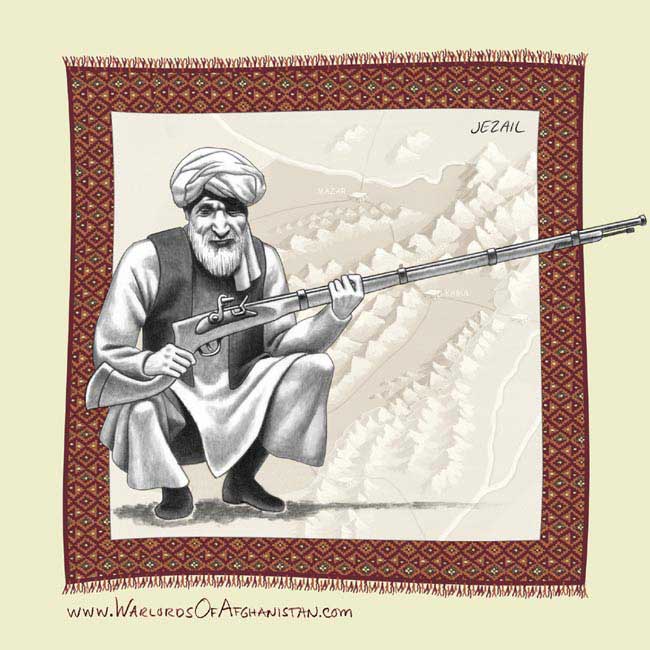
The Jezailchis Scout?
Does Afghanistan need a Phoenix Program?
By Robert Haddick
July 31, 2009
The Office of the Secretary of Defense hired the RAND Corporation to study the Vietnam-era Phoenix Program and recommend whether some of the program’s controversial techniques might be useful in Afghanistan. RAND’s researchers endorsed a Phoenix-like effort for Afghanistan and in the process, attempted to dispel some of the program’s myths.
What was the Phoenix program? RAND’s relatively brief report summarizes its history: In 1967 the U.S. military command and the CIA created a program — later called Phoenix — that began as an effort to improve intelligence-sharing among a long list of U.S. and South Vietnamese agencies.